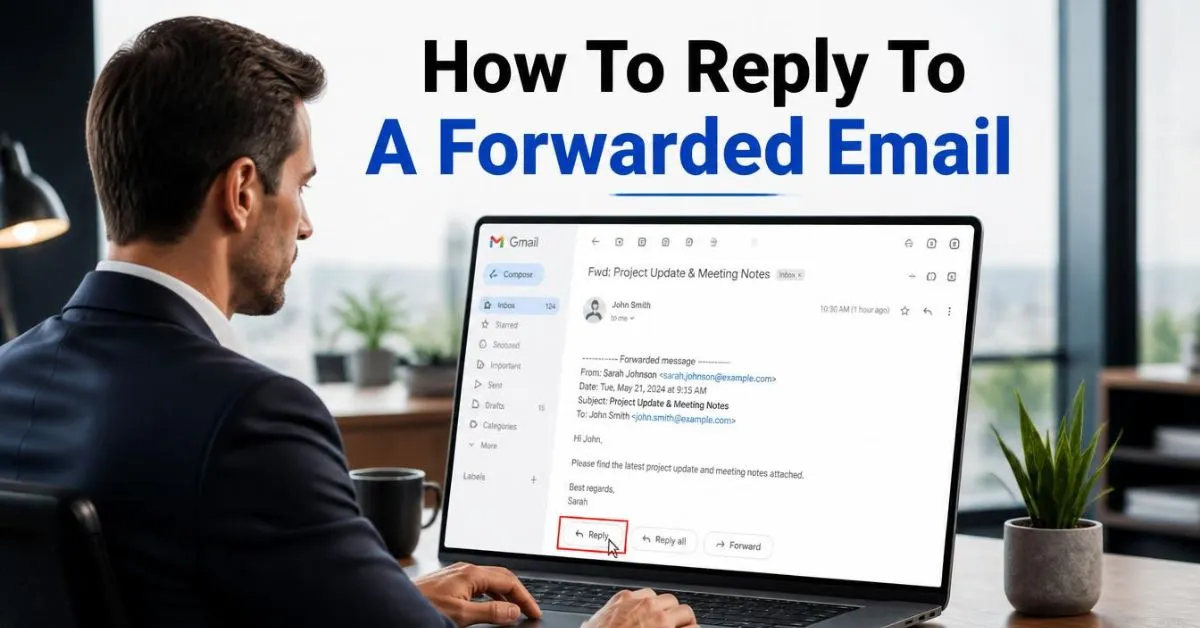
Knowing how to reply to a forwarded email can feel surprisingly tricky. You may understand the information in the forwarded message, but still wonder what the sender expects from you.
Should you simply acknowledge it, respond to the original sender, review an attachment, or take some action?The answer depends on why the email was forwarded.
This guide provides 50+ professional forwarded email reply examples you can copy, personalize, and send. You’ll find responses for coworkers, managers, clients, attachments, follow-ups, urgent requests, unclear instructions, and other common workplace situations.
Quick Answer
To reply to a forwarded email, first identify why it was sent to you. Then acknowledge the message, confirm that you understand what is needed, and state your next action when appropriate.
A simple professional reply is:
“Thanks for forwarding this. I’ll review the details and get back to you shortly.”
If you are unsure what the sender wants:
“Thanks for forwarding this. Could you let me know what you’d like me to review or take action on?”
The best response is usually short, specific, and connected to the sender’s purpose.
The Best Way to Reply to a Forwarded Email
A forwarded email does not automatically require a long response. Before replying, read both the forwarding message and the original email carefully.
Then ask yourself:
- Why was this forwarded to me?
- Does the sender want me to take action?
- Do they want my opinion or approval?
- Is there a deadline?
- Do I need more context?
- Should I respond to the person who forwarded it or the original sender?
Once you know the purpose, your reply becomes much easier.
A useful professional framework is:
Acknowledge + Understand + Action
Acknowledge
Confirm that you received the forwarded email.
“Thanks for forwarding this.”
Understand
Show that you understand what needs attention.
“I understand that the client is requesting an updated proposal.”
Action
Explain what you will do next.
“I’ll review the requirements and send you an update this afternoon.”
Combined:
“Thanks for forwarding this. I understand that the client is requesting an updated proposal. I’ll review the requirements and send you an update this afternoon.”
You don’t always need all three parts. For a simple informational email, acknowledgment alone may be enough. For an action request, however, confirming your next step helps prevent confusion.
Best Forwarded Email Reply Types at a Glance
| Reply Type | Best For | Tone | Example |
| Simple acknowledgment | Information shared with you | Polite | “Thanks for forwarding this. I’ve received it.” |
| Review confirmation | Someone wants you to check something | Professional | “Thanks for sending this over. I’ll review it and follow up.” |
| Action confirmation | You need to take action | Direct | “Got it. I’ll take care of this and keep you updated.” |
| Clarification | The request is unclear | Professional | “Could you let me know what you’d like me to focus on?” |
| Approval | You need to confirm a decision | Clear | “I’ve reviewed this and I’m happy to move forward.” |
| Attachment confirmation | A document was included | Brief | “Thanks. I received the attachment and will review it.” |
| Follow-up | You have already reviewed it | Professional | “I’ve reviewed the information and wanted to follow up.” |
| Urgent request | Immediate action is required | Direct | “Thanks for forwarding this. I’ll prioritize it and update you shortly.” |
50+ Professional Replies to a Forwarded Email
Simple Acknowledgment Replies
Use these when someone forwards information mainly to keep you informed.
- Thanks for forwarding this. I’ve received it and will keep it in mind.
- Thanks for sending this over. I appreciate the update.
- Thanks for passing this along. I’ve received the information.
- Got it, thanks for forwarding this.
- Thanks for sharing this. I’ve had a chance to see it.
- I appreciate you forwarding this. Thanks for keeping me updated.
- Thanks for sending this through. I’ve received it.
- Thanks for forwarding this. I’ll keep the information on hand.
- Received, thank you for forwarding this.
- Thanks for passing this along. I appreciate the information.
Replies When You Need to Review the Email
Use these when the sender expects you to read, assess, or review the forwarded message.
- Thanks for forwarding this. I’ll review the details and get back to you once I’ve had a chance to look everything over.
- Thanks for sending this over. I’ll take a closer look and follow up with my thoughts.
- I appreciate you forwarding this. I’ll review the information and let you know if I have any questions.
- Thanks for sharing this. I’ll review the email and follow up with you shortly.
- Thanks for forwarding this. I’ll go through the details and let you know what I find.
- I’ve received it. I’ll review the information and get back to you with any relevant feedback.
- Thanks for sending this. I’ll take a look and follow up once I’ve reviewed the details.
- I appreciate you sending this over. I’ll review it and let you know if anything needs further attention.
Replies When You Need to Take Action
When the forwarded email requires you to do something, confirm ownership and your next step.
- Thanks for forwarding this. I’ll take care of it and keep you updated.
- Got it. I’ll handle this from here and let you know once it’s done.
- Thanks for sending this over. I’ll take the necessary action and follow up with you.
- I’ve received this. I’ll take care of the next steps and keep you posted.
- Thanks for forwarding this. I’ll follow up with the relevant team and update you once I hear back.
- Understood. I’ll handle this and send you an update once I have more information.
- Thanks for passing this along. I’ll take care of the requested action.
- I understand what’s needed. I’ll take care of it and follow up when complete.
Replies When You Need More Context
If the forwarding message does not explain what you are supposed to do, ask instead of guessing.
- Thanks for forwarding this. Could you let me know what you’d like me to review?
- Thanks for sending this over. Is there anything specific you’d like me to focus on?
- I received this, thanks. Could you give me a little more context on what you need from me?
- Thanks for forwarding this. Could you clarify what action you’d like me to take?
- I appreciate you sending this. Would you like me to review it or respond to the original sender?
- Thanks for sharing this. Could you let me know how you’d like me to proceed?
- I’ve received the forwarded email. Could you clarify what you’d like me to do with it?
- Thanks for forwarding this. Is there a particular issue in the email that you’d like me to address?
Replies When the Email Includes an Attachment
When a document, spreadsheet, proposal, or other file is included, confirm that you received it when necessary.
- Thanks for forwarding this. I received the email and attachment and will review both.
- Thanks for sending this over. I’ve received the attached document and will take a look.
- I received the attachment. I’ll review it and follow up with my feedback.
- Thanks for forwarding the document. I’ll review the file and let you know if I have any questions.
- Thanks for sending this. I’ve received the attachment and will review the details today.
- I received the file successfully. I’ll take a look and get back to you.
Replies When You Have Already Reviewed the Email
If you’ve already looked through the forwarded content, don’t send a generic acknowledgment.
- Thanks again for forwarding this. I’ve reviewed the information and wanted to follow up on the points you mentioned.
- I’ve had a chance to review the forwarded email. Everything looks clear from my end.
- Thanks for sending this over. I’ve reviewed the details and I’m happy to move forward.
- I’ve reviewed the information and have no concerns at this point.
- Thanks for forwarding this. I’ve gone through the details and have a few questions I’d like to discuss.
Replies When You Agree or Approve
- Thanks for forwarding this. I’ve reviewed it and I’m happy to move forward with the proposed approach.
- I’ve reviewed the details and agree with the suggested next steps.
- Thanks for sending this over. Everything looks good from my side.
- I’ve reviewed the proposal and I’m comfortable moving forward.
- Thanks for forwarding this. I’ve reviewed the information and approve the proposed approach.
Replies When You Need More Time
Sometimes you cannot review a forwarded email immediately. Give the sender a realistic expectation.
- Thanks for forwarding this. I’ll need some time to review the details and will get back to you tomorrow.
- I’ve received this. I’ll review it when I have a chance and follow up by the end of the day.
- Thanks for sending this over. I’m tied up at the moment, but I’ll review it and get back to you as soon as I can.
- I’ve received the email and will review it this afternoon. I’ll update you once I’ve had a chance to go through it.
Replies for Urgent Forwarded Emails
If the sender clearly needs immediate attention, make your response action-focused.
- Thanks for forwarding this. I’ll prioritize it and get back to you shortly.
- Received. I’ll look into this right away and update you as soon as I have more information.
- Thanks for sending this over. I’ll review it immediately and follow up shortly.
- I’ve received this and will take care of it as a priority.
How to Reply When Your Manager Forwards an Email
When your manager forwards an email, keep the response concise, professional, and action-oriented.
If they want you to handle it:
Thanks for forwarding this. I’ll take care of it and keep you updated.
If you need clarification:
Thanks for sending this over. I’ll take a look. Please let me know if there’s a specific part you’d like me to prioritize.
If you have completed the task:
Thanks for forwarding this. I’ve taken care of the requested action and will let you know if anything else comes up.
If you need more time:
Thanks for sending this. I’ve reviewed the initial details and will need a little more time to complete the follow-up. I’ll update you by tomorrow afternoon.
How to Reply When a Coworker Forwards an Email
With a coworker, your response can be professional while still sounding conversational.
Simple:
Thanks for forwarding this. I’ll take a look and let you know what I think.
For action:
Thanks for sending this over. I’ll handle it from here and keep you posted.
For clarification:
Thanks for forwarding this. Do you want me to follow up with them directly?
After reviewing:
I’ve had a look through it. Everything seems clear from my end, but I’ll let you know if anything changes.
How to Reply When a Client’s Email Is Forwarded to You
Client-related forwarded emails often require extra clarity because the response may affect communication, deadlines, or expectations.
If you’re reviewing it:
Thanks for forwarding the client’s message. I’ll review the details and let you know how I recommend we proceed.
If you will respond:
Thanks for sending this over. I’ll review the request and follow up with the client directly.
If you need clarification:
Thanks for forwarding this. Before I respond, could you clarify the timeline you have in mind?
If you have completed the response:
Thanks for forwarding the client’s email. I’ve reviewed the request and followed up accordingly.
How to Reply When Someone Forwards an Email With No Message
This is one of the most common situations.
If someone forwards an email without explaining why, don’t automatically assume they want you to take action.
You can say:
Thanks for forwarding this. Could you let me know what you’d like me to review or respond to?
Other options:
Thanks for sending this over. How would you like me to proceed?
I received this, thanks. Is there anything specific you’d like me to take care of?
Thanks for forwarding this. Could you give me a little context on what you need from me?
These responses are polite while making the sender’s expectation clear.
How to Reply When You Are Asked to Respond to the Original Sender
Sometimes a coworker forwards an email specifically so you can take over the conversation.
If that’s clear, you can acknowledge the handoff:
Thanks for forwarding this. I’ll follow up with them directly and keep you updated.
Or:
Got it. I’ll take it from here and respond to the original sender.
If you need additional information first:
Thanks for forwarding this. I can follow up with them directly. Before I do, could you confirm the deadline?
How to Reply to a Forwarded Email When You Don’t Know the Sender
If the forwarded email comes from someone you don’t recognize, avoid making assumptions about your responsibility.
You could write:
Thanks for forwarding this. I’ve received the message. Could you clarify how you’d like me to proceed?
This is especially useful when the forwarded email contains a request that wasn’t originally addressed to you.
How to Personalize a Forwarded Email Reply
Professional does not have to mean robotic.
Instead of sending the same generic sentence every time, include one specific detail about what you’re going to do.
Basic:
Thanks for forwarding this. I’ll review it.
More useful:
Thanks for forwarding this. I’ll review the proposal and check the pricing details before getting back to you.
Even more specific:
Thanks for forwarding this. I’ll review the proposal and pricing details this afternoon and send you my feedback before tomorrow’s meeting.
The more important the task, the more useful it can be to mention the specific action and timing.
A Simple Formula for Writing Your Own Reply
When you don’t know what to say, use:
Acknowledge + Action + Timing
Acknowledge
“Thanks for forwarding this.”
Action
“I’ll review the document.”
Timing
“I’ll get back to you by tomorrow afternoon.”
Combined:
“Thanks for forwarding this. I’ll review the document and get back to you by tomorrow afternoon.”
For a clarification request:
Acknowledge + Clarify
“Thanks for forwarding this. Could you let me know what you’d like me to focus on?”
For an approval:
Acknowledge + Decision
“Thanks for sending this over. I’ve reviewed it and I’m happy to move forward.”
For an urgent task:
Acknowledge + Priority + Action
“Thanks for forwarding this. I’ll prioritize it and update you as soon as I have more information.”
Common Mistakes When Replying to a Forwarded Email
1. Saying Only “Thanks”
A simple “Thanks” may be fine when someone is only sharing information, but it can be too vague when they expect action.
Instead:
“Thanks for forwarding this. I’ll review it and follow up.”
2. Repeating the Entire Forwarded Email
You usually don’t need to rewrite or summarize everything the sender already knows.
Focus on what you are going to do.
“Thanks for sending this. I’ve reviewed the key details and will follow up with the requested information.”
3. Guessing What the Sender Wants
If the forwarding message is unclear, don’t assume.
Instead:
“Thanks for forwarding this. Could you let me know what you’d like me to do with it?”
4. Using an Overly Casual Tone
“Yep, got it!” may work with a close coworker, but it isn’t always appropriate for managers, clients, or formal workplace communication.
A safer alternative:
“Thanks, I’ve received it. I’ll take a look and follow up if needed.”
5. Making Vague Promises
“I’ll handle it” doesn’t always tell the sender enough.
Instead:
“I’ll review the document today and send you an update by tomorrow morning.”
6. Ignoring the Deadline
If the sender mentions a deadline, acknowledge it when appropriate.
For example:
“Thanks for forwarding this. I’ll review the document and send my feedback before Friday’s deadline.”
7. Responding to the Wrong Person
Before clicking Reply, check who needs your response.
If your manager forwarded an email and asked you to handle it, they may expect you to respond directly to the original sender rather than simply replying to your manager.
When unsure, clarify.
Should You Reply to the Person Who Forwarded the Email or the Original Sender?
It depends on the instruction.
Reply to the person who forwarded it when:
- They are asking for your opinion.
- They want you to review the information.
- They are keeping you informed.
- They are asking you to take an internal action.
Reply to the original sender when:
- The person who forwarded it specifically asks you to respond.
- You have been asked to take over the conversation.
- The original sender needs information only you can provide.
If the instruction isn’t clear, ask:
“Would you like me to respond directly to the original sender, or should I send my feedback to you?”
This prevents unnecessary confusion.
How Professional Should Your Reply Be?
Your tone should match the relationship and situation.
Manager or executive
Use concise, professional language:
“Thanks for forwarding this. I’ll review it and follow up with an update.”
Coworker
You can be slightly more conversational:
“Thanks for sending this over. I’ll take a look and let you know.”
Client
Use polished, professional wording:
“Thank you for forwarding the information. I’ll review the details and follow up with you shortly.”
Close teammate
A brief response may be enough:
“Got it, thanks. I’ll take care of it.”
The important thing is that the tone should fit the professional relationship.
FAQs:
What should I say when someone forwards me an email?
Acknowledge the email and state your next step if action is required. “Thanks for forwarding this. I’ll review it and get back to you.” If no action is required, a simple acknowledgment may be enough.
How do you politely respond to a forwarded email?
Keep the response clear and professional. “Thanks for sending this over. I’ve received it and will review the details.” Add a specific next step when necessary.
Is “Thanks for forwarding” professional?
Yes. “Thanks for forwarding this” is a natural and professional acknowledgment in workplace email communication. If the sender expects action, add what you plan to do.
What if I don’t know why someone forwarded an email?
Ask for clarification instead of guessing. “Thanks for forwarding this. Could you let me know what you’d like me to review or respond to?”
How do I reply when someone forwards an email for action?
Confirm that you received it and state your next step. “Thanks for forwarding this. I’ll take care of it and keep you updated.”
Should I reply to the forwarded email or the original sender?
It depends on what the person forwarding the email expects. If they specifically ask you to respond to the original sender, follow that instruction. Otherwise, replying to the person who forwarded it may be appropriate.
How do I respond to a forwarded email with an attachment?
Acknowledge the attachment if it is relevant: “Thanks for forwarding this. I received the attachment and will review the document.”
How do I reply when a manager forwards an email?
Keep your response concise and action-focused: “Thanks for forwarding this. I’ll review it and take care of the next steps.”
How do I respond to a forwarded email that needs an urgent response?
Confirm that you’ve received it and state that you’re prioritizing it: “Thanks for forwarding this. I’ll prioritize it and get back to you shortly.”
How do I reply when I need more time?
Give a realistic timeframe: “Thanks for sending this over. I’ll review the details and get back to you by tomorrow afternoon.”
Conclusion:
The best way to reply to a forwarded email is to keep your response clear, professional, and connected to the sender’s purpose.
First, determine why the email was forwarded. Then acknowledge that you’ve received it, confirm what you understand, and state your next action when necessary.
A simple formula can make almost any forwarded email easier to answer:
Acknowledge + Understand + Action.
The goal isn’t to write a long response. It’s to make sure the sender knows you received the information, understand what is needed, and know what happens next.
CTA
Use This Simple Reply Formula
Next time someone forwards you an email, ask yourself:
- Why was this sent to me?
- What does the sender need from me?
- What is my next action?
- Is there a deadline I should acknowledge?
Then write the shortest professional response that answers those questions.
For most situations, this simple template works:
“Thanks for forwarding this. I’ll review the details and [next action] by [time/date].”

Olivia Smith is a professional author at ReplyGenius.com, where I create clear and engaging content on communication and writing.