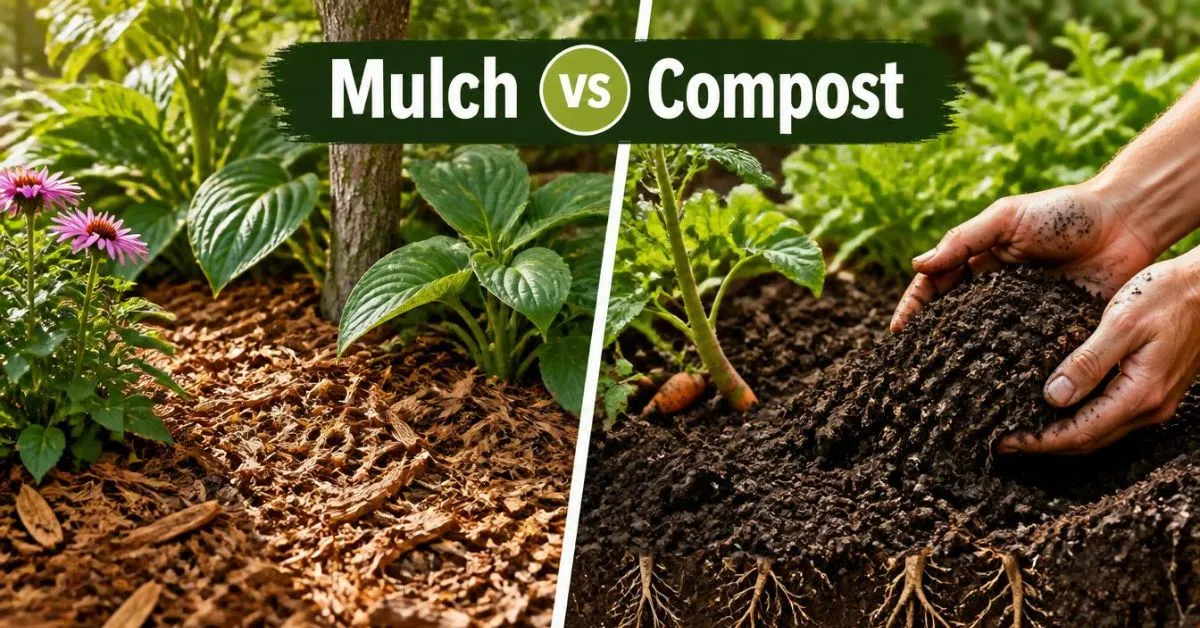
Mulch and compost serve different purposes. Mulch is placed on top of soil to reduce weeds, slow moisture loss, protect roots, and moderate soil temperature.
Compost is added to soil to increase organic matter and improve soil structure, drainage, and water retention. Many gardens benefit from using compost first and mulch on top.
Key Takeaways
- Compost improves the soil, while mulch protects the soil surface.
- Use compost when your soil needs more organic matter or better structure.
- Use mulch to help control weeds and reduce moisture loss.
- Organic mulch can slowly add organic matter as it breaks down.
- You can use both compost and mulch in the same garden.
- For most garden beds, compost and mulch are complementary rather than competing choices.
What Is the Difference Between Mulch & Compost?
The easiest way to remember the difference is:
Compost feeds and improves the soil. Mulch covers and protects it.
Compost is decomposed organic material that is added to soil. It can improve soil structure, increase organic matter, and help soil hold or drain water more effectively.
Mulch is a layer of material placed on top of the soil. Common examples include wood chips, bark, straw, shredded leaves, and pine needles. Some mulch materials, such as gravel and stone, are inorganic.
Because they work in different places, mulch vs compost is not always an either-or decision.
If your soil needs improvement, compost is usually the more relevant choice.
If the soil is already in good condition but you want to protect it, mulch is usually more useful.
Mulch vs Compost: Quick Comparison
| Feature | Mulch | Compost |
| Main purpose | Protect soil | Improve soil |
| Location | Soil surface | In or on soil |
| Weed suppression | Excellent | Limited |
| Moisture conservation | Excellent | Helps soil hold water |
| Soil structure | Gradual benefit with organic types | Directly improves soil |
| Organic matter | Adds slowly as it decomposes | Adds directly |
| Temperature control | Yes | Not its main purpose |
| Common materials | Wood chips, bark, straw, leaves | Decomposed organic material |
| Best use | Soil protection | Soil improvement |
| Can you use both? | Yes | Yes |
The biggest difference is function. Mulch is primarily a protective layer, while compost is primarily a soil amendment.
What Is Mulch?
Mulch is any material spread over the soil surface to protect the ground and create a better growing environment.
Common Types of Mulch
Organic mulch includes:
- Wood chips
- Bark
- Straw
- Shredded leaves
- Pine needles
- Grass clippings when used appropriately
Inorganic mulch can include:
- Gravel
- Stones
- Landscape rock
Organic mulch gradually breaks down. As it decomposes, it can contribute organic matter to the soil.
What Does Mulch Do?
Mulch can help:
- Reduce evaporation
- Suppress weeds
- Protect soil from erosion
- Moderate soil temperature
- Reduce soil surface compaction
- Protect the soil from heavy rain
- Improve the appearance of garden beds
For example, bare soil can dry quickly during hot weather. A suitable layer of mulch can reduce direct exposure to sun and wind, helping the soil stay moist longer.
What Is Compost?
Compost is organic material that has decomposed into a stable, soil-like material.
It can be made from materials such as plant residues, leaves, and other suitable organic matter.
Finished compost is generally dark, crumbly, and has an earthy smell.
What Does Compost Do?
Compost can help improve:
- Soil structure
- Organic matter
- Water retention
- Drainage
- Aeration
- Nutrient-holding capacity
- Biological activity in the soil
This makes compost especially useful when soil is poor, compacted, sandy, or heavy with clay.
Compost is also different from fertilizer. Fertilizer is generally used to supply specific plant nutrients, while compost is primarily valued as an organic soil amendment.
When Should You Use Mulch?
Choose mulch when your main goal is protecting the soil surface.
Mulch is useful around established:
- Vegetable plants
- Flowers
- Shrubs
- Trees
- Perennials
It can reduce weed growth by blocking light from reaching the soil surface. It can also slow water loss, which may reduce how quickly soil dries.
A common mulch depth is around 2 to 4 inches, depending on the material and location. Avoid piling mulch directly against tree trunks or plant stems.
More mulch is not automatically better. Excessively deep layers can cause problems with moisture, oxygen, pests, or plant health.
When Should You Use Compost?
Choose compost when your main goal is improving the soil itself.
Compost is particularly useful when:
- Soil is low in organic matter.
- Sandy soil dries too quickly.
- Clay soil drains poorly.
- A new garden bed is being prepared.
- Existing soil needs better structure.
For example, if water quickly disappears through sandy soil, adding suitable organic matter can improve its ability to retain moisture.
If clay soil is dense and drains poorly, compost can help improve soil structure over time.
The amount needed depends on the soil and garden. Avoid assuming that adding more compost will always produce better results.
Can You Use Mulch & Compost Together?
Yes, and this is often the most useful approach.
Compost and mulch can perform two different jobs in the same garden.
A simple approach is:
- Improve the soil with finished compost when needed.
- Plant your flowers or vegetables.
- Apply an appropriate layer of mulch around the plants.
- Keep mulch away from stems and trunks.
- Replace or refresh the mulch as it breaks down.
In this setup, compost improves the soil while mulch protects the surface.
You do not need to choose one simply because the article topic says “mulch vs compost.” In many situations, the better question is how can I use both correctly?
Mulch vs Compost for Vegetable Gardens
For vegetable gardens, both materials can be useful.
Compost for Vegetable Gardens
Use compost when preparing soil or when the soil needs additional organic matter.
It can help create a better environment for plant roots by improving soil structure and water management.
Mulch for Vegetable Gardens
Use mulch after planting to help:
- Reduce weeds
- Slow moisture loss
- Protect the soil surface
- Reduce soil temperature swings
The exact mulch material should match the crop and growing conditions.
For example, straw is commonly used around some vegetable crops, while wood-based mulches are often more suitable for paths or perennial beds.
Mulch vs Compost for Flower Beds
For established flower beds, mulch is often useful because it provides a clean soil covering and helps suppress weeds.
Compost can be added when the soil needs improvement.
A practical approach is to improve the soil with compost and then use mulch as the protective top layer.
This gives the garden both soil improvement and surface protection.
Mulch vs Compost for Trees & Shrubs
Mulch is especially useful around established trees and shrubs.
A proper mulch layer can reduce competition from grass and weeds while helping protect the soil around the root zone.
However, avoid creating a thick mound of mulch around the trunk.
The familiar “mulch volcano” shape is not a good practice. Mulch should be spread broadly rather than piled tightly against the tree.
Compost may also be useful when improving the surrounding soil, but it should not be treated as a replacement for proper tree care.
Which Is Better: Mulch or Compost?
There is no universal winner because they solve different problems.
Choose compost if:
- Your soil needs more organic matter.
- You want to improve soil structure.
- Your soil holds too little or too much water.
- You are preparing a new garden bed.
Choose mulch if:
- You want to suppress weeds.
- You want to reduce moisture loss.
- You want to protect the soil surface.
- You want to moderate soil temperature.
Choose both if:
- Your soil needs improvement and protection.
- You are preparing a garden bed for long-term use.
- You want to improve the soil and reduce maintenance.
Common Mistakes to Avoid
Putting Mulch Against Tree Trunks
Do not pile mulch directly against tree trunks or plant stems. Leave an appropriate gap so the base of the plant stays exposed.
Using Too Much Mulch
A deeper layer is not always better. Excess mulch can create unfavorable conditions around plant roots.
Adding Too Much Compost
Compost is beneficial, but excessive applications can contribute unwanted nutrients or other soil problems.
Use compost based on the needs of the soil rather than assuming that more is always better.
Using Unfinished Compost
Use properly finished compost for direct garden applications. Material that has not fully decomposed may cause problems for plants.
Treating Compost Like Fertilizer
Compost contains nutrients, but it should not automatically be treated as a substitute for a fertilizer program.
If plants show nutrient deficiencies, a soil test can help determine what the soil actually needs.
FAQs:
Is mulch better than compost?
Neither is always better. Mulch is mainly used to protect the soil surface, suppress weeds, and reduce moisture loss. Compost is mainly used to improve soil structure and add organic matter. Your choice should depend on whether your main problem is soil quality or soil protection.
Can compost be used as mulch?
Yes, compost can be applied as a surface layer, but it is not always the best long-term mulch. Traditional mulch materials such as wood chips, bark, straw, or leaves can provide more durable surface protection.
Should I put compost down before mulch?
Generally, if the soil needs compost, it makes sense to apply the compost first and then use mulch as the surface covering. This allows the compost to serve as a soil amendment while the mulch provides protection.
How thick should mulch be?
A common general range is 2 to 4 inches, but the ideal depth depends on the material, plant, soil, and growing conditions. Avoid piling mulch against tree trunks and plant stems.
Does mulch improve soil?
Organic mulch can improve soil over time as it decomposes and adds organic matter. However, its main short-term role is protecting the soil surface. Compost is generally the more direct choice when the goal is to amend soil.
Does compost stop weeds?
Compost is not primarily a weed-control material. It can improve soil, but it does not provide the same surface weed-suppression benefits as an appropriate mulch layer.
Can you put mulch directly on soil?
Yes. Mulch is designed to be placed on the soil surface. Before applying it, remove major weeds and spread the material evenly without covering plant stems or tree trunks.
Conclusion:
The easiest way to remember mulch vs compost is:
Compost improves the soil. Mulch protects the soil.
Use compost when your soil needs more organic matter or better structure. Use mulch when you want to conserve moisture, suppress weeds, and protect the soil surface.
For many gardens, the best approach is not choosing between them. Use compost to improve the soil, then use mulch to protect it.
That combination can make garden beds easier to maintain while supporting healthier soil over time.

Emily Carter is a dedicated author at ReplyGenius.com, creating helpful, natural, and engaging content focused on replies, messages, and everyday conversations.