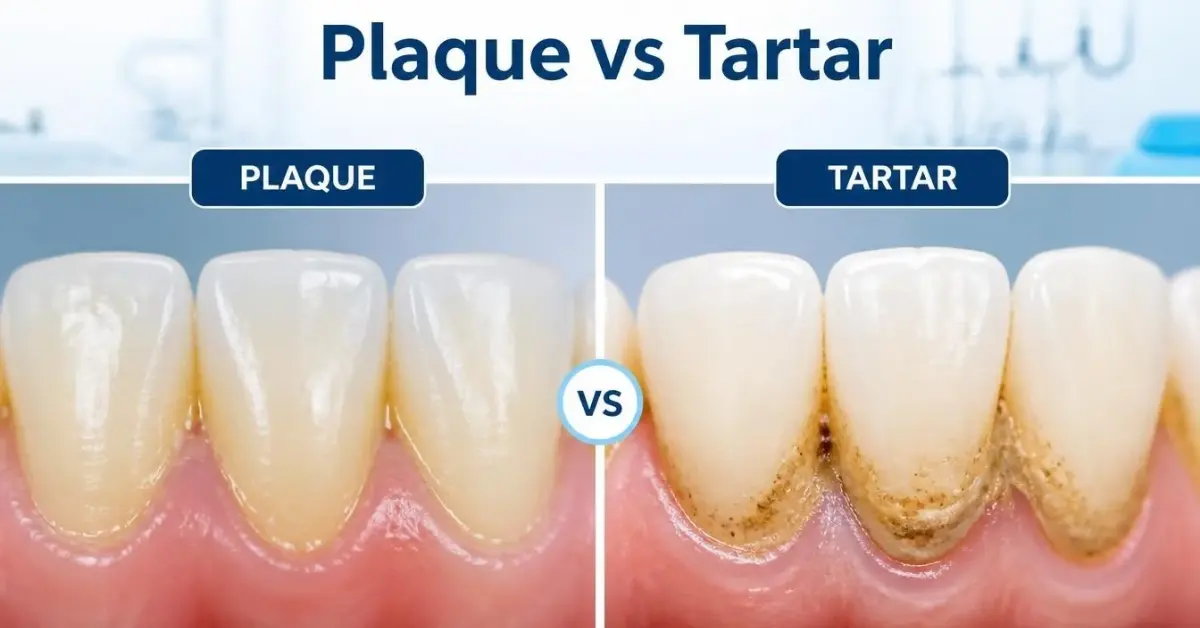
The main difference between Plaque vs Tartar is their texture and how they are removed. Plaque is a soft, sticky film of bacteria that forms on teeth and can be removed through regular brushing and flossing.
Tartar is hardened plaque that attaches firmly to teeth and requires professional dental cleaning for removal.
Key Takeaways
- Plaque is a soft, sticky bacterial film that constantly forms on teeth.
- Tartar develops when plaque hardens through mineralization.
- Daily brushing and flossing help remove plaque before it becomes tartar.
- Tartar cannot be safely removed with a regular toothbrush or floss.
- Professional dental cleanings help remove tartar and protect gum health.
What Is Dental Plaque?
Dental plaque is a sticky, usually colorless film of bacteria that forms on the surfaces of your teeth. It develops naturally throughout the day, even when you maintain good oral hygiene.
Plaque contains bacteria that feed on sugars and starches from food and drinks. These bacteria produce acids that attack tooth enamel and increase the risk of cavities.
If plaque collects along the gumline, it can also irritate your gums and contribute to gingivitis, the early stage of gum disease.
The good news is that plaque is relatively easy to control. Regular brushing and cleaning between your teeth can remove it before it hardens into tartar.
How Plaque Forms on Teeth
Plaque begins forming when bacteria in your mouth attach to tooth surfaces. Food particles, saliva, and bacteria contribute to the development of this sticky film.
Here is how the process works:
- Bacteria naturally present in your mouth attach to your teeth.
- A thin bacterial film develops on tooth surfaces.
- Sugars and starches from food provide fuel for certain bacteria.
- These bacteria produce acids that can weaken tooth enamel.
- If you do not remove plaque regularly, it can contribute to cavities and gum inflammation.
Plaque can develop between teeth, around dental restorations, and near the gumline. That is why brushing alone may not clean every area effectively.
Common Signs of Plaque Buildup
Plaque is not always easy to see because it is usually colorless.
However, you may notice:
- A fuzzy feeling when you run your tongue over your teeth.
- A sticky coating around the gumline.
- Persistent bad breath.
- Gums that look red or feel irritated.
- Plaque collecting between teeth.
Plaque-disclosing tablets can also help identify areas you may miss while brushing.
What Is Tartar?
Tartar, also called dental calculus, is plaque that has hardened after absorbing minerals from saliva.
Unlike soft plaque, tartar forms a hard deposit that attaches firmly to tooth surfaces. It commonly develops near the gumline, between teeth, and behind the lower front teeth.
Tartar may appear yellow or off-white when it first develops. Over time, it can become darker because it collects stains from foods, drinks, and tobacco.
The main concern is that tartar creates a rough surface where additional plaque can collect. This makes effective cleaning more difficult and increases the risk of gum irritation and other dental problems.
Once tartar forms, brushing and flossing cannot remove it. A dentist or dental hygienist must remove it during a professional cleaning.
How Plaque Turns Into Tartar
Plaque does not remain soft forever if you fail to remove it regularly.
Minerals in saliva gradually accumulate within the plaque, causing it to harden. This process is called mineralization.
The process generally follows three stages:
- Plaque formation: Bacteria create a sticky film on your teeth.
- Mineralization: Minerals from saliva accumulate within the plaque.
- Tartar formation: The plaque hardens into a firm deposit that sticks to the tooth surface.
The exact timing varies. However, plaque can begin hardening within a relatively short period, which makes consistent oral hygiene important.
Common Signs of Tartar Buildup
Unlike plaque, tartar is often easier to identify because it forms visible deposits.
Common signs include:
- Yellow, brown, or darker deposits on teeth.
- Hard, rough areas near the gumline.
- Persistent bad breath.
- Red or swollen gums.
- Bleeding during brushing or flossing.
Tartar can also form below the gumline, where you may not be able to see it. A dental examination can help identify these deposits.
Plaque vs Tartar: Key Differences
Although plaque and tartar are closely related, they are not the same. The biggest difference is that plaque remains soft, while tartar becomes a hardened mineral deposit.
Here is a side-by-side comparison:
| Feature | Plaque | Tartar |
| Definition | Sticky bacterial film | Hardened plaque |
| Texture | Soft and sticky | Hard and rough |
| Color | Usually colorless or pale yellow | Yellow, brown, or darker |
| Formation | Develops continuously | Forms when plaque mineralizes |
| Removal | Brushing and flossing | Professional dental cleaning |
| Location | Teeth and gumline | Above or below gumline |
| Main concerns | Cavities and gingivitis | Gum inflammation and periodontal problems |
| Prevention | Daily oral hygiene | Regular plaque removal |
The simplest way to remember the difference: Plaque is the soft buildup you can remove at home, while tartar is the hardened buildup that requires professional dental care.
Is Plaque or Tartar Worse For Your Teeth?
Both plaque and tartar can harm your oral health, but they create problems in different ways.
Plaque is an important cause of tooth decay and gum inflammation. When bacteria in plaque break down sugars, they release acids that weaken tooth enamel. If plaque remains along the gumline, it can also trigger gingivitis.
Tartar creates an additional problem because its rough surface allows more plaque to collect. It can also make brushing and flossing less effective around affected areas.
If tartar remains untreated, it may contribute to persistent gum inflammation and periodontal disease.
Neither condition should be ignored. However, plaque is easier to control through daily home care, while tartar requires professional removal.
Can You Remove Plaque and Tartar At Home?
You can remove plaque at home, but you cannot reliably remove hardened tartar with ordinary brushing and flossing.
Understanding this difference helps you choose safe and effective dental care.
How to Remove Plaque
Follow these everyday oral hygiene practices to control plaque:
- Brush your teeth twice daily using fluoride toothpaste.
- Brush for two minutes each time.
- Clean between your teeth once daily using dental floss or another suitable interdental cleaner.
- Brush gently along the gumline and reach every tooth surface.
- Replace your toothbrush when its bristles become worn.
- Limit frequent sugary snacks and drinks.
These habits help remove bacterial plaque before it hardens and contributes to dental problems.
Why Tartar Requires Professional Removal
Once plaque becomes tartar, it attaches firmly to the tooth surface. A regular toothbrush cannot break down or remove this hardened deposit.
Dentists and dental hygienists use specialized instruments to remove tartar safely. This procedure is commonly called scaling.
If tartar has collected below the gumline or gum disease has developed, your dentist may recommend additional treatment, such as scaling and root planing.
Avoid trying to scrape tartar off with sharp tools or household objects. Doing so can damage your gums or teeth.
How to Prevent Plaque and Tartar Buildup
Preventing tartar starts with controlling plaque. You cannot stop plaque from forming completely, but you can remove it regularly.
Use these habits to support healthy teeth and gums:
- Brush twice daily: Use fluoride toothpaste and a soft-bristled toothbrush.
- Floss once daily: Clean between teeth where toothbrush bristles cannot reach effectively.
- Choose balanced meals: Limit frequent sugary snacks and drinks.
- Drink water: Water helps rinse away food particles and supports normal saliva production.
- Consider an appropriate mouthwash: Ask your dentist whether a therapeutic mouthwash would benefit your oral health.
- Schedule dental visits: Get professional examinations and cleanings as recommended by your dentist.
The ADA recommends brushing twice daily and cleaning between teeth once a day. Your dentist can also suggest a cleaning schedule based on your individual needs.
When Should You See a Dentist?
Regular dental visits help identify plaque-related problems and remove tartar before it contributes to more serious complications.
Consider scheduling a dental appointment if you notice:
- Hard deposits attached to your teeth.
- Gums that bleed repeatedly during brushing.
- Persistent bad breath.
- Red, swollen, or tender gums.
- Gum recession or changes around your teeth.
- Discomfort when chewing.
Do not wait for tooth pain before seeking dental advice. Some gum problems develop gradually without causing noticeable pain in the early stages.
Your dentist can examine your teeth and gums, determine whether tartar is present, and recommend appropriate treatment.
FAQs:
1. What Is the Main Difference Between Plaque and Tartar?
Plaque is a soft, sticky film of bacteria that forms naturally on teeth. Tartar is hardened plaque that develops when minerals accumulate within it. You can remove plaque through regular brushing and flossing, but tartar requires professional dental cleaning.
2. Is Tartar Harder to Remove Than Plaque?
Yes. Plaque is soft and can usually be removed with proper brushing and flossing. Tartar is a hardened mineral deposit that attaches firmly to teeth. Removing it requires specialized dental instruments used by a dentist or dental hygienist.
3. Can Brushing Remove Tartar?
No. Regular brushing can remove soft plaque and help prevent additional tartar buildup, but it cannot remove established tartar. A dental professional must remove hardened deposits through a cleaning procedure.
4. How Quickly Does Plaque Turn Into Tartar?
The timing varies depending on oral hygiene, saliva composition, and individual factors. Plaque can begin to mineralize within a relatively short period if it remains on teeth. This is why brushing twice daily and cleaning between teeth every day are important.
5. Can Tartar Cause Gum Disease?
Yes. Tartar can contribute to gum inflammation because its rough surface allows additional plaque to collect. Bacterial buildup around tartar can irritate gum tissue and contribute to gingivitis and periodontal disease if left untreated.
6. Does Everyone Develop Plaque and Tartar?
Plaque forms naturally in everyone’s mouth, even with good oral hygiene. However, the amount of tartar that develops varies between individuals. Consistent brushing, daily interdental cleaning, and professional dental care help control buildup.
Conclusion:
Understanding the difference between Plaque vs Tartar can help you make better decisions about your oral health. Plaque is a soft bacterial film that you can remove through regular brushing and flossing, while tartar is hardened plaque that requires professional dental cleaning.
The best way to prevent tartar buildup is to maintain a consistent oral hygiene routine. Brush twice daily with fluoride toothpaste, clean between your teeth every day, and visit your dentist for regular checkups and cleanings. Taking these simple steps can help protect your teeth, support healthy gums, and reduce the risk of cavities and gum disease.

Aiden Robert, an author at ReplyyGenius.com, where I share smart conversation tips, flirty replies, and practical communication ideas to help people reply with confidence.