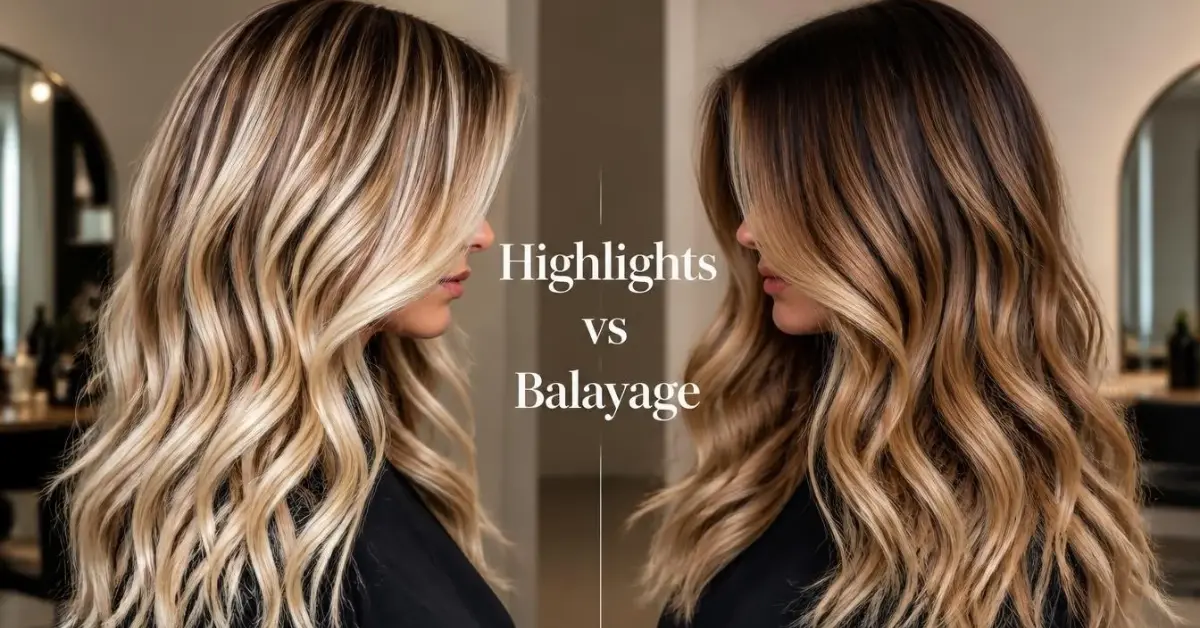
The main difference between Highlights and Balayage is how color is applied. Traditional highlights usually use foils to lighten selected hair sections from roots to ends, creating brighter, more defined results.
Balayage uses a freehand painting technique to create softer, blended, sun-kissed color with less noticeable root regrowth.
Key Takeaways
- Highlights use foils to create brighter, more consistent sections of lighter hair.
- Balayage involves hand-painting color for a soft, natural-looking finish.
- Balayage generally requires fewer full-color appointments because it grows out more gradually.
- Highlights are often better for achieving noticeable brightness and precise color placement.
- Both techniques involve chemical processing, so the potential for damage depends on the products, application, and condition of your hair.
What Are Highlights?
Highlights are a hair-coloring technique that lightens selected sections of hair to create contrast and dimension. Instead of changing your entire hair color, a stylist adds lighter strands throughout your natural or existing color.
Traditional foil highlights are one of the most common methods. A colorist separates small sections of hair, applies lightener, and wraps them in foil during processing.
This method provides controlled color placement and can create anything from subtle brightness to a noticeable blonde transformation.
Highlights also work with different base colors. For example, someone with dark brown hair might choose caramel highlights, while someone with light brown hair might prefer golden or beige blonde strands.
How Highlights Are Applied
The highlighting process usually involves these steps:
- The stylist sections the hair according to the desired result.
- Selected strands are separated using a comb.
- Lightener or hair color is applied to those sections.
- The sections are wrapped in foil when using the traditional foil technique.
- The color processes before the stylist rinses and finishes the hair.
Foils help isolate selected strands and allow the stylist to control the lightening process.
Different Types of Highlights
Common highlighting options include:
- Full highlights: Color is added throughout the head, including the back and underneath sections.
- Partial highlights: The stylist focuses on selected areas, such as the crown, top layers, or around the face.
- Babylights: Very fine highlights create delicate, subtle dimension.
- Chunky highlights: Wider sections produce more noticeable contrast between lighter and darker strands.
Each option offers a different level of brightness and dimension.
What Is Balayage?
Balayage is a French hair-coloring technique that involves painting lightener onto selected sections of hair by hand. The word comes from a French term meaning “to sweep.”
Unlike traditional foil highlights, balayage often focuses on the mid-lengths and ends while leaving more of the natural color near the roots.
This creates a gradual transition between darker and lighter shades. The result often resembles the natural lightening effect of sunlight.
Balayage can be customized for different base colors, including brunette, blonde, black, and red hair. Popular combinations include caramel balayage on brown hair and honey blonde balayage on darker bases.
How Balayage Is Applied
A typical balayage appointment follows a freehand painting process:
- The stylist examines the natural hair color and desired result.
- Hair is divided into sections for controlled application.
- Lightener is painted onto selected strands, often concentrating on the mid-lengths and ends.
- The color develops according to the desired level of brightness.
- The stylist rinses, tones if needed, and finishes the hair.
Some balayage techniques use foils or other methods to increase lightening power. The exact process depends on the hair and the desired result.
What Makes Balayage Different?
The biggest difference is its softer color placement.
Balayage usually creates a blended appearance rather than clearly defined highlighted strands. Because the natural root color can remain visible, new growth often blends more gradually into the lighter sections.
This makes it a popular option for people who prefer dimensional color without frequent root touch-ups.
Highlights vs Balayage: Key Differences
Both techniques add lighter tones and dimension, but they produce different results.
| Feature | Highlights | Balayage |
| Application | Usually applied with foils | Usually painted by hand |
| Appearance | Defined, brighter strands | Soft, blended color |
| Root coverage | Can extend close to the roots | Often leaves natural roots |
| Color placement | Precise and controlled | Freehand and customized |
| Contrast | Can create stronger contrast | Often creates gradual transitions |
| Regrowth | Usually more noticeable | Usually softer |
| Maintenance | Often more frequent | Often less frequent |
| Best for | Consistent brightness | Natural-looking dimension |
The main distinction is the application technique, not the color itself. Both can create warm, cool, subtle, or dramatic results.
For a professional perspective, L’Oréal Professionnel’s guide to balayage and foil highlights explains how the two methods differ in lightening power, placement, and maintenance.
Pros and Cons of Highlights and Balayage
Neither technique is automatically better. Each has benefits and limitations depending on the desired appearance.
Benefits and Drawbacks of Highlights
Benefits:
- Create noticeable brightness throughout the hair.
- Offer precise placement using foils.
- Work well for full-head and partial color services.
- Can produce stronger blonde results.
- Provide consistent color patterns.
Drawbacks:
- Root regrowth may become more noticeable.
- Regular salon appointments may be necessary.
- Repeated lightening can affect hair condition.
- Maintaining very bright shades may require additional toning.
Highlights are worth considering if you want brighter strands distributed throughout your hair.
Benefits and Drawbacks of Balayage
Benefits:
- Creates soft, blended color transitions.
- Offers a natural-looking, sun-kissed appearance.
- Usually has less noticeable root regrowth.
- Can work with many natural hair colors.
- Allows customized color placement.
Drawbacks:
- May not provide enough brightness for some blonde looks.
- Results depend heavily on the stylist’s technique.
- A full transformation can require a longer appointment.
- Lightened ends may need careful maintenance.
Balayage is a practical option if you prefer blended color and want more flexibility between full-color appointments.
Which Is Better For Different Hair Types and Goals?
The right technique depends more on your preferred color result, starting shade, and maintenance expectations than on a single hair type.
Here are some common situations:
For dark brown or black hair: Balayage can add caramel, chocolate, or honey tones while preserving a darker root area. Foil highlights can provide stronger lightening when a brighter contrast is the goal.
For blonde hair: Highlights can refresh brightness throughout the hair. Balayage can add depth and softer transitions between blonde shades.
For straight hair: Both techniques work well. Fine highlights can create even dimension, while balayage can produce a gradual color transition.
For curly or wavy hair: Balayage can emphasize different sections and create visible dimension through the lengths. Highlights can also add contrast and brightness throughout the curls.
For a low-maintenance color routine: Balayage is often a convenient choice because the softer root transition makes regrowth less obvious.
For maximum brightness: Foil highlights are often more suitable because they provide controlled processing and can achieve stronger lightening.
Your hair’s previous color treatments and current condition also matter. A stylist should consider these factors before recommending a technique.
Highlights vs Balayage: Cost and Maintenance
Cost and maintenance are important factors when choosing between the two services.
Neither option has one fixed price across the United States. Salon location, stylist experience, hair length, service complexity, and additional treatments can all affect the final bill.
| Factor | Highlights | Balayage |
| Initial cost | Varies by partial or full service | Varies by placement and complexity |
| Touch-ups | Often every 6–10 weeks | Often every 3–4 months |
| Root maintenance | Usually more noticeable | Usually less noticeable |
| Toner | May be needed | May be needed |
| Upkeep | Often more frequent | Often less frequent |
These appointment intervals are general estimates, not strict rules. Your preferred brightness, natural root contrast, and hair growth can change the schedule.
Balayage may cost more initially because freehand application can require detailed placement and additional stylist time. However, fewer full-color appointments may make it convenient over time.
Highlights may have a lower starting price in some salons, but regular root maintenance can increase the overall expense.
Before booking, ask whether the quoted price includes toner, gloss, styling, and any additional treatments.
Can You Combine Highlights and Balayage?
Yes. Highlights and balayage can be combined to create a customized hair-color result.
One popular option is foilayage, which combines freehand painting with foil application. The stylist paints selected sections using a balayage-inspired placement and then wraps them in foils to achieve additional lightening.
This approach can provide the soft transitions associated with balayage while adding the brightness possible with foil processing.
Another option is combining fine foil highlights around the face and crown with balayage through the mid-lengths and ends. The best combination depends on your starting color and the result you want.
FAQs:
Is balayage better than highlights?
Balayage is often better for people who want soft, natural-looking color and less noticeable root regrowth. Highlights are generally better for achieving brighter, more uniform lightness throughout the hair. Neither technique is universally better because the right choice depends on your preferred appearance and maintenance routine.
Which lasts longer, highlights or balayage?
Balayage generally has a longer interval between full-color appointments because its blended application makes new growth less noticeable. Highlights often need more frequent touch-ups to maintain consistent brightness near the roots. Both can benefit from occasional toning or gloss services.
Is balayage more expensive than highlights?
Balayage can cost more initially because it often involves detailed hand-painting and customized placement. However, the final price depends on the salon, stylist, hair length, and service. Highlights can also become expensive over time if frequent root touch-ups are needed.
Does balayage damage hair less than highlights?
Neither technique is completely damage-free because both may involve lightener. The amount of damage depends on the hair’s condition, processing strength, application, and previous chemical treatments. Balayage does not automatically protect hair from damage, especially when previously lightened sections are processed again.
Can you get balayage over existing highlights?
Yes. A stylist can apply balayage over existing highlights to create softer transitions or add dimension. However, the result depends on your current color, previous treatments, and hair condition. A consultation helps determine whether additional lightening is appropriate.
Which looks more natural, highlights or balayage?
Balayage generally creates a more natural, sun-kissed appearance because the lighter sections blend gradually into the base color. However, fine highlights or babylights can also look natural when applied with careful placement and a suitable color combination.
Conclusion:
When comparing Highlights vs Balayage, the best choice comes down to the color effect you prefer and how much maintenance you want.
Choose highlights if you want brighter, more defined strands and consistent lightness throughout your hair. Choose balayage if you prefer soft transitions, blended dimension, and less noticeable root regrowth.
Both techniques can produce beautiful, customized results. Before making a decision, discuss your preferred color, previous treatments, and hair condition with a professional colorist. Bringing reference photos can also help communicate exactly what you want.

Emily Carter is a dedicated author at ReplyGenius.com, creating helpful, natural, and engaging content focused on replies, messages, and everyday conversations.