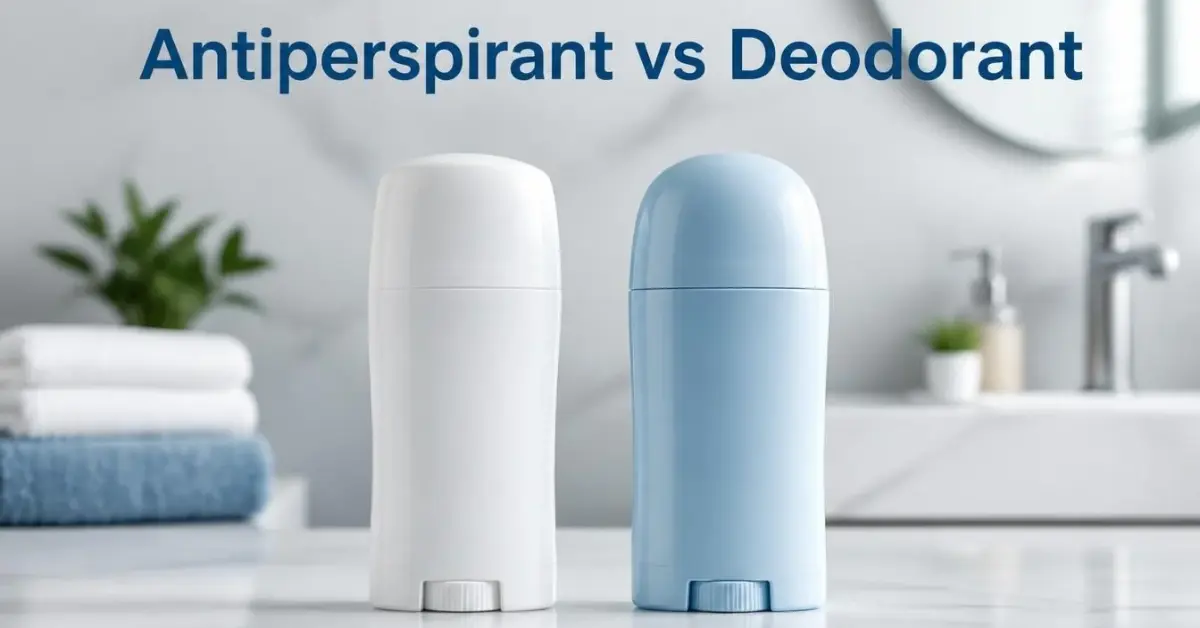
The main difference between Antiperspirant and Deodorant is how they manage sweat and body odor. Antiperspirant reduces sweating by temporarily blocking sweat ducts, usually with aluminum-based ingredients.
Deodorant controls body odor by masking unpleasant smells or reducing odor-causing bacteria. Some products combine both functions to provide sweat and odor protection.
Key Takeaways
- Antiperspirant reduces the amount of sweat released onto your skin.
- Deodorant controls body odor but does not prevent sweating.
- Many antiperspirants contain aluminum-based ingredients that temporarily block sweat ducts.
- Some products combine antiperspirant and deodorant benefits.
- Your choice depends on whether you want to manage sweating, body odor, or both.
What Is An Antiperspirant?
An antiperspirant is a personal care product designed to reduce sweating. It works by temporarily blocking sweat ducts, which limits the amount of perspiration reaching the skin’s surface.
Most conventional antiperspirants contain aluminum-based compounds, such as aluminum chloride, aluminum chlorohydrate, or aluminum zirconium. These ingredients help control moisture, particularly in the underarm area.
Antiperspirants are available in several forms, including:
- Roll-on liquids
- Solid sticks
- Aerosol sprays
- Creams and gels
- Clinical-strength formulas
Unlike ordinary deodorants, antiperspirants directly reduce sweat production at the treated area.
How Antiperspirants Work
Antiperspirants use aluminum salts to form temporary plugs within the upper portions of sweat ducts. These plugs reduce the amount of sweat that reaches the skin’s surface.
As a result, the treated area stays drier. Reduced moisture can also help limit the conditions that allow odor-causing bacteria to produce unpleasant smells.
For example, someone who experiences noticeable underarm sweating during warm weather may benefit from an antiperspirant because it addresses the moisture itself.
However, antiperspirants do not stop the body’s natural sweating process everywhere. They mainly reduce perspiration where the product is applied.
Common Antiperspirant Ingredients
Some commonly used active ingredients include:
- Aluminum chloride: An aluminum salt used in products designed to reduce sweating.
- Aluminum chlorohydrate: A common ingredient in many everyday antiperspirants.
- Aluminum zirconium compounds: Ingredients frequently found in over-the-counter sweat-control products.
The specific ingredient and its concentration depend on the product’s formulation.
What Is A Deodorant?
A deodorant is a personal care product designed to control or mask body odor. Unlike antiperspirants, ordinary deodorants do not reduce the amount of sweat your body produces.
Fresh sweat generally has little or no noticeable odor. Underarm odor develops when bacteria on the skin break down substances found in sweat.
Deodorants help manage this smell through fragrance, odor-neutralizing ingredients, antimicrobial ingredients, or a combination of these approaches.
Common deodorant formats include:
- Spray deodorants
- Roll-on liquids
- Solid sticks
- Cream deodorants
- Gel formulas
Deodorants are available in scented and fragrance-free options. Some formulas are also marketed for sensitive skin.
How Deodorants Work
Deodorants manage odor without blocking sweat ducts.
Depending on the formulation, they may work in two main ways:
- Masking unpleasant smells: Fragrances help cover existing body odors with a different scent.
- Managing odor-causing bacteria: Certain ingredients reduce bacterial activity or neutralize odor-producing compounds.
For example, someone who sweats normally but notices underarm odor after physical activity may find that deodorant provides enough odor protection.
However, deodorant does not prevent sweat marks or keep the underarms dry. It addresses odor rather than perspiration.
Common Deodorant Ingredients
Deodorant formulas may contain:
- Fragrance: Adds scent and helps mask unpleasant odors.
- Alcohol: Found in some formulas to support antimicrobial action.
- Baking soda: Helps neutralize certain odor-producing compounds.
- Odor-neutralizing ingredients: Help reduce unwanted smells.
- Moisturizing ingredients: Help condition the skin.
Not every deodorant contains the same ingredients. Checking the product label helps you understand how a particular formula works.
Antiperspirant vs Deodorant: Key Differences
Although people often use these terms interchangeably, antiperspirants and deodorants serve different purposes.
The biggest distinction is that antiperspirants reduce sweating, while deodorants control body odor.
Here is a side-by-side comparison:
| Feature | Antiperspirant | Deodorant |
| Main purpose | Reduces sweating | Controls body odor |
| Reduces sweat | Yes | No |
| Controls odor | Yes, often indirectly | Yes |
| Common ingredients | Aluminum salts | Fragrance and odor-control ingredients |
| Keeps underarms drier | Yes | No |
| Available as sprays | Yes | Yes |
| Available as sticks | Yes | Yes |
| FDA classification in the US | Over-the-counter drug | Generally a cosmetic |
One important detail is that many antiperspirants also contain deodorizing ingredients. This means a combination product can address both sweating and odor.
The FDA regulates over-the-counter antiperspirants as drugs because they affect perspiration. Ordinary deodorants are generally regulated as cosmetics because their primary purpose is controlling odor.
Is Antiperspirant Better Than Deodorant?
Neither product is automatically better. The right choice depends on what you want to manage.
Antiperspirant may be a better option if:
- You experience noticeable underarm sweating.
- You want to reduce moisture and wetness.
- Sweat marks are a concern.
- You want a product that addresses both sweating and odor.
Deodorant may be a better option if:
- Your main concern is unpleasant body odor.
- You do not need additional sweat control.
- You prefer an aluminum-free formula.
- You want fragrance or odor-neutralizing benefits without reducing perspiration.
For example, someone who experiences underarm odor but does not sweat heavily may be comfortable using deodorant alone. Someone who wants to manage both moisture and odor may prefer a combination antiperspirant-deodorant.
Your personal needs, skin sensitivity, and product preferences should guide the decision.
Can You Use Antiperspirant and Deodorant Together?
Yes. You can use separate antiperspirant and deodorant products if you want to address sweating and odor independently.
For example, you might apply an antiperspirant at night and use a separate deodorant in the morning if you want additional fragrance or odor protection.
However, you do not necessarily need two products. Many commercially available formulas combine sweat reduction and odor control in one application.
If you use separate products, follow their individual directions and avoid layering formulas that irritate your skin.
When Should You Apply Antiperspirant or Deodorant?
Application timing can affect how well these products work.
Best Time to Apply Antiperspirant
Many antiperspirants work best when applied to clean, completely dry skin before bedtime.
Sweat production is generally lower during sleep, giving the active ingredients time to form temporary plugs in the sweat ducts.
For better results:
- Apply the product to completely dry skin.
- Follow the instructions on the product label.
- Avoid applying it immediately after shaving.
- Do not apply it to broken or irritated skin.
Some antiperspirants are designed for different application schedules, so always follow the manufacturer’s directions.
The American Academy of Dermatology also recommends nighttime application to improve the effectiveness of antiperspirant treatment for excessive sweating.
Best Time to Apply Deodorant
Deodorant is commonly applied in the morning after bathing or washing the underarm area.
Applying it to clean, dry skin helps the product work as intended. You can also reapply it according to the product’s directions when additional odor protection is needed.
If your skin becomes irritated, consider stopping the product and checking its ingredients for possible triggers.
Are Antiperspirants and Deodorants Safe?
Both products are commonly used for personal hygiene when applied according to their instructions. However, individual ingredients can cause irritation or allergic reactions in some people.
A common concern involves aluminum in antiperspirants. Some people worry that aluminum-based products may increase the risk of breast cancer or other health problems.
However, current scientific evidence has not established a clear link between antiperspirant use and breast cancer. The American Cancer Society reports that there is no strong epidemiological evidence connecting antiperspirants with breast cancer risk.
Deodorants can also cause skin reactions, particularly when they contain fragrances or other irritating ingredients.
To reduce the likelihood of irritation:
- Read the ingredient list before choosing a product.
- Avoid applying products to damaged or irritated skin.
- Consider fragrance-free formulas if your skin is sensitive.
- Stop using a product if it causes persistent irritation.
If you develop a persistent rash, itching, or other skin reaction, consult a healthcare professional.
How To Choose Between Antiperspirant and Deodorant
Choosing between these products becomes easier when you identify your main concern.
Consider the following factors:
1. Your sweating needs
If you want to reduce underarm moisture, choose an antiperspirant. If you only need odor protection, deodorant may be sufficient.
2. Your skin sensitivity
Some products contain fragrances, alcohol, or other ingredients that may irritate sensitive skin. Check the ingredient list and consider fragrance-free options.
3. Your ingredient preferences
If you prefer to avoid aluminum-based ingredients, an aluminum-free deodorant is an option. However, remember that ordinary aluminum-free deodorants do not provide the same sweat-reducing benefits as antiperspirants.
4. Your daily routine
Consider whether you prefer a spray, stick, roll-on, or cream. The format does not determine whether a product controls sweat or odor. Its active ingredients and formulation do.
5. Your level of sweating
If you experience excessive sweating that interferes with everyday activities, an ordinary deodorant may not address the problem. A dermatologist can help identify suitable treatment options.
The American Academy of Dermatology notes that over-the-counter antiperspirants can help with mild hyperhidrosis, although some people need stronger treatments.
FAQs:
1. Can deodorant stop sweating?
No. Ordinary deodorant does not stop or reduce sweat production. It controls body odor by masking unpleasant smells or using ingredients that help manage odor-causing bacteria. If you want to reduce underarm moisture, choose an antiperspirant or a combination product that provides both sweat and odor protection.
2. Does antiperspirant prevent body odor?
Antiperspirant can help reduce body odor because it limits the amount of sweat reaching the skin’s surface. This reduces moisture and can limit the conditions that support odor-causing bacteria. Many antiperspirants also contain deodorizing ingredients, providing additional odor protection.
3. Is aluminum-free deodorant better?
Not necessarily. Aluminum-free deodorant may suit people who prefer products without aluminum-based ingredients. However, it does not reduce sweating like a traditional antiperspirant. Neither option is automatically better for everyone. Your decision should depend on your personal preferences, skin sensitivity, and need for sweat control.
4. Can you use antiperspirant every day?
Many over-the-counter antiperspirants are designed for regular use. However, application frequency varies by product and strength. Follow the instructions on the packaging, and avoid applying the product to damaged or irritated skin. If you experience persistent irritation, stop using it and seek professional advice.
5. What should you use if you sweat excessively?
An antiperspirant is generally more appropriate than ordinary deodorant when excessive sweating is the main concern. Some people benefit from clinical-strength or prescription treatments. If sweating is unusually heavy, persistent, or affects everyday activities, consult a dermatologist to discuss possible causes and treatment options.
Conclusion
Understanding the difference between Antiperspirant vs Deodorant makes it easier to choose the right personal care product. Antiperspirants reduce sweating by temporarily blocking sweat ducts, while deodorants manage unpleasant body odor without reducing perspiration.
If you want to control moisture and odor, an antiperspirant or combination product may be suitable. If odor is your only concern, ordinary deodorant may provide enough protection. Ultimately, the best choice depends on your needs, ingredient preferences, and skin sensitivity.