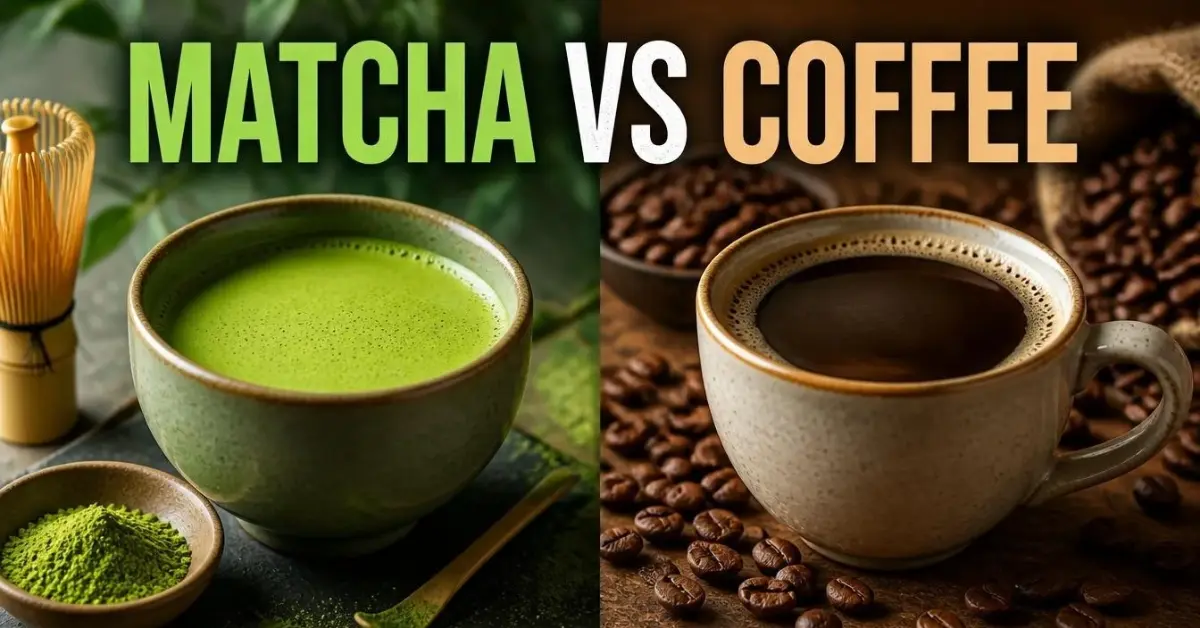
Matcha vs Coffee comes down to caffeine, taste, preparation, and potential health benefits. Matcha is powdered green tea that contains L-theanine and antioxidants, while coffee is brewed from roasted coffee beans and generally provides more caffeine per serving.
Both drinks contain beneficial plant compounds, but neither is automatically healthier for everyone.
Key Takeaways
- Matcha is powdered green tea, while coffee comes from roasted coffee beans.
- An average serving of coffee generally contains more caffeine than a typical serving of matcha.
- Matcha contains L-theanine and catechins, while coffee provides different antioxidants, including polyphenols.
- Coffee has a stronger, roasted flavor, whereas matcha has an earthy, grassy taste.
- The healthier choice depends on individual preferences, caffeine sensitivity, preparation, and overall dietary habits.
What Is the Difference Between Matcha & Coffee?
Matcha and coffee are two popular beverages with different origins, flavors, and nutritional properties. Both contain caffeine, but they come from different plants and undergo different preparation processes.
Understanding these differences can help explain why people experience them differently.
What Is Matcha?
Matcha is a powdered form of Japanese green tea made from specially grown tea leaves. Farmers shade the plants before harvesting, which influences their chlorophyll and amino acid content.
After harvesting, the leaves are steamed, dried, and ground into a fine green powder.
Unlike regular green tea, where leaves are steeped and removed, matcha is whisked directly into water. This means people consume the powdered leaves rather than drinking only an infusion.
Matcha contains caffeine, L-theanine, and plant antioxidants called catechins. One well-known catechin is EGCG, which has been studied for its potential health effects.
What Is Coffee?
Coffee is a beverage made by brewing ground, roasted seeds of the coffee plant. These seeds are commonly known as coffee beans.
The beans are harvested, processed, roasted, and ground before hot water extracts their flavor and caffeine.
Coffee is popular because of its rich aroma, bold taste, and stimulating effects. It also contains natural antioxidants and other plant compounds.
People commonly enjoy it as black coffee, espresso, cappuccino, cold brew, or latte.
Matcha vs Coffee: Nutritional Comparison
Matcha and coffee have relatively few calories when prepared without added sugar, cream, or flavored syrups. However, their nutritional compositions differ.
The following table provides an approximate comparison of typical plain servings.
| Nutritional Feature | Matcha | Coffee |
| Main ingredient | Powdered green tea | Roasted coffee beans |
| Typical serving | 2 grams of powder | 8 ounces brewed |
| Calories | Around 5 | Around 2 |
| Caffeine | 38–88 mg | Around 95–100 mg |
| Antioxidants | Catechins | Polyphenols |
| L-theanine | Present | Not a meaningful source |
| Taste | Earthy and grassy | Bold and roasted |
| Preparation | Whisked into water | Brewed with water |
Note: Values are approximate and depend on the powder, serving size, coffee beans, and preparation method. Matcha and coffee servings are not equal in volume. Nutritional comparisons are based on plain drinks.
One important difference is that matcha contains the whole powdered tea leaf. Coffee, by comparison, is a brewed extract of roasted beans.
Furthermore, adding milk, sugar, whipped cream, or flavored syrups can significantly change the calories and sugar content of either beverage.
Matcha vs Coffee: Which Has More Caffeine?
Coffee generally contains more caffeine than matcha when comparing typical servings. However, the exact amount depends on the preparation method and serving size.
Caffeine in Matcha
A typical serving made with approximately 2 grams of matcha powder contains around 38–88 milligrams of caffeine.
The amount varies according to the tea variety, growing conditions, powder quantity, and preparation.
Matcha also contains L-theanine, an amino acid naturally found in tea leaves. Research suggests that L-theanine combined with caffeine may support attention and cognitive performance.
However, this combination does not guarantee freedom from caffeine-related side effects.
Caffeine in Coffee
An 8-ounce cup of brewed coffee generally contains approximately 95–100 milligrams of caffeine.
However, espresso, cold brew, and stronger brewing methods can have different caffeine concentrations.
Coffee is often associated with a noticeable increase in alertness because caffeine blocks adenosine receptors in the brain. Adenosine is involved in promoting sleepiness.
The main takeaway: Coffee usually provides more caffeine per standard serving, but a strong matcha preparation can contain a considerable amount too.
Health Benefits of Matcha vs Coffee
Both beverages contain naturally occurring compounds that have been studied for their possible health benefits. However, research does not establish that one drink is universally healthier.
Potential Benefits of Matcha
Matcha contains several plant compounds that make it different from other beverages.
Some potential benefits include:
- Antioxidant content: Matcha contains catechins, including EGCG, which help protect cells from oxidative damage.
- L-theanine: This amino acid, together with caffeine, may support attention and certain aspects of cognitive performance.
- Plant compounds: Matcha provides chlorophyll and other naturally occurring substances found in green tea leaves.
- Heart health research: Green tea compounds have been studied for possible effects on cardiovascular health, although drinking matcha is not a treatment for heart conditions.
Because matcha uses the whole tea leaf, it can provide higher concentrations of certain compounds than traditionally brewed green tea.
However, more human research is needed to confirm many specific health claims about matcha.
Potential Benefits of Coffee
Coffee also provides several naturally occurring compounds that have attracted scientific interest.
Its potential benefits include:
- Antioxidants: Coffee contains polyphenols and other compounds that help protect cells against oxidative stress.
- Alertness: Its caffeine content can temporarily improve wakefulness and reduce feelings of tiredness.
- Mental performance: Caffeine may improve attention and reaction time in certain situations.
- Long-term health research: Observational studies have linked coffee consumption with several health outcomes, although these associations do not prove that coffee directly causes better health.
The nutritional value of coffee also depends on how it is prepared. Plain brewed coffee differs significantly from heavily sweetened specialty drinks.
Neither beverage should replace a balanced diet, adequate sleep, or appropriate medical care.
Matcha vs Coffee For Energy & Focus
Energy and concentration are two major reasons people compare matcha and coffee.
Coffee contains a relatively higher amount of caffeine per typical serving. As a result, it can provide a more noticeable stimulating effect for some people.
Matcha offers a combination of caffeine and L-theanine. Research on these compounds suggests they may work together to support attention and focus.
However, popular claims that matcha always produces smoother energy or prevents an afternoon crash are not firmly established.
Individual responses depend on several factors, including caffeine sensitivity, sleep quality, serving size, and overall health.
For younger people, caffeine is not a substitute for adequate sleep and should not become a routine way to manage tiredness.
Which Is Better For Digestion?
Digestive comfort is another important consideration when comparing matcha vs coffee.
Coffee is naturally acidic and can stimulate stomach acid production. Some people experience heartburn, reflux, or stomach discomfort after drinking it.
Matcha may feel gentler for certain individuals, but it is not guaranteed to prevent digestive problems. Its caffeine and plant compounds can also cause discomfort in sensitive people.
The response depends on individual tolerance, preparation, and whether the beverage is consumed with food.
People who regularly experience digestive discomfort should consider discussing their symptoms with a healthcare professional rather than assuming that switching beverages will solve the problem.
Matcha vs Coffee: Taste & Preparation
Taste is one of the easiest ways to distinguish these beverages.
Matcha has an earthy, grassy, slightly bitter flavor. Higher-quality matcha can also have mild sweetness and a smooth, savory quality known as umami.
Coffee has a roasted, rich flavor that may include nutty, chocolate-like, fruity, or caramel notes, depending on the beans and roasting process.
Preparation also differs:
- Matcha: The powder is mixed or whisked with water. Milk can be added to make a matcha latte.
- Coffee: Ground beans are brewed using methods such as drip machines, French presses, espresso machines, and pour-over equipment.
Both beverages can be served hot or cold. Their flavor and nutritional profiles change depending on the ingredients added.
Possible Side Effects of Matcha and Coffee
Although both drinks contain beneficial plant compounds, their caffeine content can cause unwanted effects in some people.
Possible effects include:
- Difficulty sleeping
- Increased heart rate
- Feeling restless or anxious
- Stomach discomfort
- Headaches in people who regularly consume caffeine and then stop suddenly
Coffee’s higher caffeine content in many common servings may make these effects more noticeable for caffeine-sensitive individuals.
Matcha is not caffeine-free, so it can also interfere with sleep or cause similar reactions.
Additionally, excessive consumption of concentrated green tea extracts has been associated with rare cases of liver injury. These extracts are different from an ordinary cup of prepared matcha.
The FDA notes that caffeine sensitivity varies and that too much caffeine can cause health problems, particularly for children and teenagers.
Which Is Better: Matcha or Coffee?
The choice between matcha and coffee depends on personal preferences, caffeine sensitivity, and what someone wants from their daily beverage.
Matcha offers a different combination of plant compounds, including catechins and L-theanine. Coffee generally contains more caffeine per typical serving and has a stronger roasted flavor.
Here is a simple way to understand their differences:
| Preference | Beverage Difference |
| Lower caffeine in a typical serving | Matcha |
| Stronger roasted flavor | Coffee |
| Contains L-theanine | Matcha |
| Contains coffee polyphenols | Coffee |
| Earthy, grassy taste | Matcha |
| Traditional morning beverage | Coffee |
| Powdered whole-leaf preparation | Matcha |
| Brewed bean preparation | Coffee |
Neither beverage is automatically the healthier choice. Both can provide beneficial plant compounds, but preparation and individual responses matter.
It is also worth remembering that caffeine is not necessary for good energy or concentration. Water, nutritious meals, and sufficient sleep are important parts of maintaining everyday well-being.
FAQs:
1. Is matcha healthier than coffee?
Matcha and coffee both contain antioxidants and naturally occurring plant compounds. Matcha provides catechins and L-theanine, while coffee contains polyphenols and caffeine. Neither is universally healthier. The better choice depends on individual tolerance, preparation, and overall dietary habits.
2. Does matcha have more caffeine than coffee?
Usually, no. A typical 2-gram serving of matcha contains approximately 38–88 milligrams of caffeine, while an 8-ounce cup of brewed coffee contains around 95–100 milligrams. However, stronger matcha preparations and different coffee brewing methods can change these amounts.
3. Does matcha provide more antioxidants than coffee?
Matcha is rich in catechins, particularly EGCG, while coffee contains polyphenols and other antioxidant compounds. They provide different types of antioxidants, so it is difficult to declare one the overall winner. Both contribute plant compounds to the diet.
4. Is matcha better for energy and focus?
Matcha contains both caffeine and L-theanine, which have been studied together for their potential effects on attention. Coffee generally provides more caffeine per typical serving. However, neither beverage guarantees better concentration, and individual responses can vary.
5. Can you drink matcha and coffee together?
Matcha and coffee can be combined in a beverage commonly called dirty matcha. It brings together the earthy flavor of green tea and the roasted taste of espresso. However, combining them also combines their caffeine, so the total amount and individual caffeine sensitivity matter.
Conclusion:
The comparison of Matcha vs Coffee shows that both beverages have unique qualities. Matcha stands out for its green tea catechins, L-theanine, and earthy flavor, while coffee is known for its higher caffeine content in typical servings and bold taste.
Neither drink is the perfect choice for everyone. Understanding their differences in caffeine, antioxidants, preparation, and potential side effects makes it easier to evaluate their nutritional properties.
Ultimately, the best approach is to prioritize overall health, sleep, hydration, and balanced nutrition rather than relying on caffeinated beverages for energy.

Aiden Robert, an author at ReplyyGenius.com, where I share smart conversation tips, flirty replies, and practical communication ideas to help people reply with confidence.