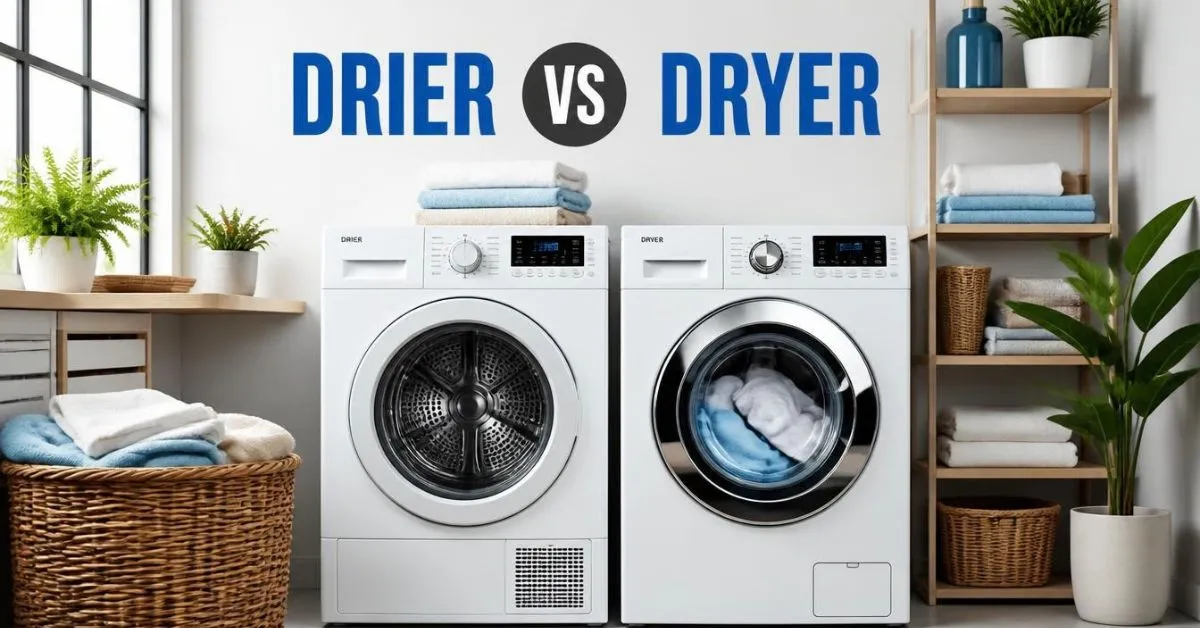
Drier usually means “more dry,” while dryer usually refers to a machine or device that dries something.
For example, you would say “The air is drier today,” but “Put the clothes in the dryer.” Both are real English words, but their usual meanings are different.
Key Takeaways
- Drier is normally the comparative form of dry.
- Dryer commonly means a machine or device that removes moisture.
- Say drier weather, drier air, or drier skin when comparing dryness.
- Say clothes dryer, hair dryer, or hand dryer when naming a device.
- Drier can also be used as a noun in some contexts, so the two words are not completely separate.
What Is the Difference Between Drier and Dryer?
The main difference between drier vs dryer is how each word is normally used.
Drier is the comparative form of the adjective dry. It means that something is more dry or contains less moisture than something else.
For example:
- The air is drier today.
- This towel is drier than the other one.
- My skin feels drier during winter.
Dryer is most commonly a noun. It refers to a machine or device used to remove moisture.
For example:
- Put the clothes in the dryer.
- My hair dryer is in the bathroom.
- The hand dryer is broken.
A simple way to remember the difference is:
Drier = more dry
Dryer = something that dries
This rule covers most everyday uses in American English.
Drier vs Dryer: Quick Comparison
| Word | Usual meaning | Common use | Example |
| Drier | More dry | Comparing dryness | The air is drier today. |
| Dryer | A machine or device that dries | Appliances and equipment | The dryer is running. |
| Drier | A drying device in some contexts | Technical or dictionary use | The industrial drier removes moisture. |
| Dryer | Alternative comparative form in some dictionaries | Less common usage | The climate is dryer here. |
For everyday writing, the easiest distinction is drier for comparison and dryer for the appliance or device.
What Does Drier Mean?
Drier is usually the comparative form of dry.
The basic pattern is:
dry → drier → driest
When you say something is drier, you are comparing it with another condition or object.
Examples of Drier
- Today is drier than yesterday.
- This towel is drier than that one.
- The desert has drier air.
- My hands feel drier in cold weather.
- The soil is drier after several days without rain.
- This room feels drier with the heater on.
In all of these examples, drier means more dry.
Drier Weather
One of the most common uses is talking about weather.
For example:
This summer has been drier than last summer.
Here, you are comparing the amount of moisture or rainfall between two periods.
Other examples include:
- The region is experiencing drier weather.
- The forecast suggests drier conditions next week.
- Winters can make the air drier.
- The western part of the state has drier air.
So if you are describing a change in moisture, drier is normally the word you want.
What Does Dryer Mean?
Dryer commonly refers to a machine or device designed to dry something.
You will see it frequently in household and everyday vocabulary.
Clothes Dryer
In American English, clothes dryer is the standard everyday term for the appliance used to dry laundry.
Examples:
- The dryer is still running.
- I need to clean the dryer filter.
- Put the towels in the dryer.
- Our old clothes dryer stopped working.
Here, dryer is the name of an appliance.
Hair Dryer
A hair dryer is another familiar example.
Examples:
- Where is my hair dryer?
- I bought a new hair dryer.
- The hair dryer is on the counter.
Again, dryer refers to a device.
Other Types of Dryers
The word can also describe other drying equipment, including:
- hand dryer
- food dryer
- grain dryer
- industrial dryer
- clothes dryer
The basic idea remains the same:
a dryer is something designed to dry.
Why Is It Drier but Dryer?
This is one of the main reasons people confuse these words.
When dry becomes a comparative adjective, its spelling changes:
dry → drier
The y changes to i before the comparative ending.
You can see a similar pattern in:
- happy → happier
- easy → easier
- busy → busier
- noisy → noisier
So:
The room is dry.
becomes:
The room is drier today.
But dryer has a different common purpose. It is formed as a noun referring to something that dries.
Think about these examples:
- wash → washer
- print → printer
- clean → cleaner
- dry → dryer
This makes the difference easier to remember.
Drier vs Dryer Examples
Seeing the two words side by side can make the distinction much clearer.
Drier
The air is drier today.
Meaning: The air is more dry than before.
My skin gets drier in winter.
Meaning: My skin becomes less moist.
This towel is drier than the other one.
Meaning: It contains less moisture.
Dryer
The clothes are in the dryer.
Meaning: They are inside the drying machine.
I need to buy a new dryer.
Meaning: A new drying appliance is needed.
My hair dryer stopped working.
Meaning: The device used to dry hair stopped working.
The spelling changes because the meaning and grammatical role change.
Drier vs Dryer: Correct or Incorrect?
Here are some common examples:
| Sentence | Best Choice | Reason |
| The weather is this year. | drier | Means more dry |
| Put the clothes in the. | dryer | Refers to the appliance |
| My skin feels in winter. | drier | Means less moist |
| I bought a new hair. | dryer | Refers to the device |
| The soil is than yesterday. | drier | Comparison |
| The is making a strange noise. | dryer | Refers to a machine |
| This towel is. | drier | Comparison |
| The bathroom has a hand. | dryer | Refers to a device |
This distinction works in most everyday sentences.
Can Drier Also Be a Noun?
Yes. This is an important detail.
Although drier is most commonly encountered as the comparative form of dry, dictionaries also recognize drier as a noun in certain contexts.
For example, specialized or technical writing may use drier for something that dries or removes moisture.
That means the simple rule:
“Drier is always an adjective and dryer is always a noun.”
is too strict.
A more accurate rule is:
Drier is normally the comparative form of dry, while dryer is the familiar everyday spelling for a drying machine or device.
For normal American English, clothes dryer and hair dryer are the natural choices.
Is Dryer Ever Used to Mean “More Dry”?
You may occasionally see dryer used as a comparative form of dry.
However, drier is the straightforward and widely expected choice when you mean more dry.
For example:
The climate is drier in this region.
is the clearest choice for standard everyday writing.
Likewise:
My skin is drier during winter.
is more natural when you are describing a change in dryness.
So when you’re unsure, use drier for the comparative adjective.
Drier vs Dryer in American English
For readers in the United States, the distinction is especially useful because dryer is very common in household vocabulary.
You will commonly see:
- clothes dryer
- electric dryer
- gas dryer
- hair dryer
- hand dryer
- dryer vent
- dryer cycle
Meanwhile, drier commonly appears in descriptions and comparisons:
- drier weather
- drier climate
- drier air
- drier skin
- drier soil
- drier clothes
One quick test can help:
Can you replace the word with “more dry”?
If yes, drier is usually the right choice.
Can you replace it with “a machine that dries”?
If yes, dryer is usually the right choice.
Common Mistakes With Drier & Dryer
Mistake 1: Using Dryer for Every Meaning of Dryness
Some writers assume dryer must be correct because it sounds like “more dry.”
But if you are comparing dryness, drier is normally the better choice.
Better:
The air is drier today.
Mistake 2: Calling the Appliance a Drier
You may encounter drier as a noun, but in everyday American English, the appliance is normally called a dryer.
Natural:
Put the clothes in the dryer.
Mistake 3: Thinking One Word Is Always Wrong
Both drier and dryer are legitimate English words.
The important thing is the context.
If you mean more dry, use drier in normal usage.
If you mean a drying machine or device, use dryer.
Easy Trick to Remember Drier vs Dryer
Use this simple memory trick:
Drier describes. Dryer dries.
If the word describes how dry something is, choose drier.
The air is drier.
If the word names something that does the drying, choose dryer.
The dryer is running.
You can also remember:
Drier = comparison
Dryer = machine
This is usually enough to choose the correct spelling quickly.
FAQs:
Is it drier or dryer?
Both are correct words, but they usually serve different purposes. Drier normally means “more dry,” while dryer commonly means a machine or device that dries something. For example, “The air is drier today” and “The clothes are in the dryer.”
Is it drier weather or dryer weather?
Drier weather is the standard choice when you mean weather that is more dry or has less moisture. For example, “The region is expected to have drier weather this week.” Here, drier is the comparative form of dry.
Is it clothes dryer or clothes drier?
Clothes dryer is the usual term in American English for the appliance used to dry clothes. Although drier has some noun uses, clothes dryer is the familiar everyday expression in the United States.
Can dryer mean “more dry”?
Dryer can appear as an alternative comparative form in some dictionary sources, but drier is the usual and clearer choice when you mean “more dry.” In ordinary writing, phrases such as drier air and drier weather are the safest choices.
How do you remember the difference?
Remember: drier = more dry, while dryer = a machine that dries. If you are comparing moisture levels, think drier. If you are talking about an appliance or device, think dryer.
Conclusion
The difference between drier vs dryer becomes simple once you focus on meaning.
Use drier when you mean more dry:
The air is drier today.
Use dryer when you mean a machine or device that dries:
The clothes are in the dryer.
There are some dictionary recognized overlaps, including noun uses of drier and alternative uses of dryer. However, for everyday American English, the easiest rule is still:
Drier = more dry.
Dryer = a machine or device that dries.
When in doubt, ask yourself whether you are describing dryness or naming something that does the drying. That quick test will help you choose the right word in most situations.