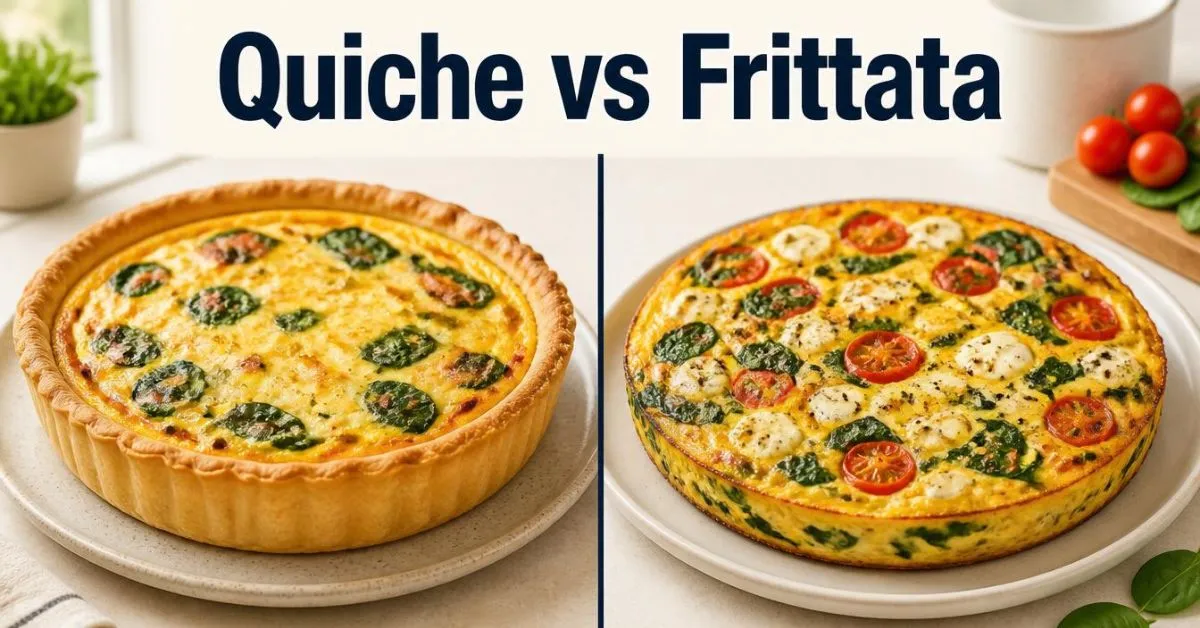
Quiche and frittata are both egg dishes, but they are made in different ways. Quiche usually has a pastry crust and a creamy egg filling. Frittata has no crust and often uses less dairy. Quiche is baked in the oven, while frittata often starts in a skillet.
Choose quiche for a rich, sliceable dish with a crisp crust. Choose frittata for an easy meal that uses eggs, vegetables, cheese, or cooked leftovers.
Key Takeaways
- Quiche: Usually has a pastry crust and a creamy egg filling.
- Frittata: Has no crust and is often cooked in a skillet.
- Texture: Quiche is soft and custard-like. Frittata is firm and egg-based.
- Dairy: Quiche often uses more milk or cream.
- Time: Frittata is usually faster because it skips the pastry.
- Best use: Quiche works well for brunch. Frittata is great for quick meals.
- Food safety: Cook egg dishes to 160°F (71°C) and chill leftovers within two hours.
Quiche vs Frittata: What Is the Difference?
| Feature | Quiche | Frittata |
|---|---|---|
| Origin | French cooking tradition | Italian cooking tradition |
| Crust | Usually has a pastry crust | No crust |
| Main base | Eggs and milk or cream | Eggs |
| Texture | Soft and creamy | Firm and tender |
| Pan | Pie dish or tart pan | Skillet or baking dish |
| Cooking method | Usually baked in the oven | Often starts on the stove |
| Best for | Brunch, guests, and make-ahead meals | Quick breakfasts and easy dinners |
| Dairy | Often uses more | Optional or used in small amounts |
These are common methods, not strict rules. You can make crustless quiche, and some frittatas are baked from start to finish.
What Is Quiche?
Quiche is a savory egg dish made with a soft filling. It is often baked in a pastry shell. The filling usually contains eggs, milk or cream, and other foods such as cheese, meat, or vegetables.
A well-known example is Quiche Lorraine. It often includes eggs, cream, bacon, and cheese. Other popular choices include spinach and feta, mushroom and Swiss cheese, or broccoli and cheddar.
What Makes Quiche Different?
The main feature is its egg custard. Custard is a soft mix of eggs and liquid that sets as it cooks.
Milk or cream gives the filling a smooth texture. The pastry adds a crisp base that contrasts with the soft center.
Quiche can be rich or light, based on the recipe. Heavy cream makes a richer filling. Milk gives it a lighter taste.
Tips for Better Quiche
- Choose your dairy: Milk makes a lighter filling. Cream makes it richer.
- Cook wet vegetables first: Spinach, mushrooms, and zucchini can release water.
- Drain the filling: Too much liquid can make the quiche soft or watery.
- Bake the crust first when needed: This helps the base cook before you add the wet filling.
- Do not overfill the pan: Leave room for the egg mixture to set.
Follow a tested recipe for the egg-to-dairy ratio. The right amount depends on the pan, the size of the eggs, and the other ingredients.
What Is a Frittata?
A frittata is an Italian egg dish made with foods such as vegetables, cheese, meat, and herbs. It has no pastry crust.
You often cook the fillings in an oven-safe skillet first. Then you add beaten eggs and let the edges begin to set. The dish may finish on the stove, in the oven, or under a broiler.
Frittata is a good way to use cooked food left from another meal. You can add cooked potatoes, vegetables, ham, or cheese to make a simple meal.
Tips for Better Frittata
- Cook firm vegetables first: Onions, peppers, and potatoes need time to soften.
- Remove extra water: Cook mushrooms and spinach before adding the eggs.
- Use cooked meat: Cook raw meat fully before adding it to the egg mixture.
- Add cheese to taste: Cheddar, feta, and Parmesan all work well.
- Use the right pan: Make sure your skillet is safe for oven use if your recipe calls for it.
- Watch the center: Cook the frittata until the center is set and reaches a safe temperature.
You can change the fillings to suit what you have. Just avoid adding too much wet food, as it can stop the eggs from setting well.
Quiche vs Frittata: Which One Should You Make?
The best choice depends on your time, ingredients, and the texture you want.
Choose Quiche for a Creamy, Rich Dish
Quiche is a good choice for brunch, holidays, or a meal with guests. Its crust gives each slice a firm base. The soft filling makes it feel rich.
Try these filling ideas:
- Spinach and feta: Cook and drain the spinach, then add feta.
- Bacon and Gruyère: Add cooked bacon and grated cheese.
- Broccoli and cheddar: Cook the broccoli until tender, then drain it well.
- Mushroom and Swiss: Cook the mushrooms until their extra liquid is gone.
For a crisp base, follow your recipe’s steps for baking the crust before adding the filling. This can help prevent a soggy bottom.
Choose Frittata for a Quick, Easy Meal
Frittata is often easier because you do not need to make or bake a crust. It also works well with cooked leftovers.
Try these combinations:
- Potato and cheddar: Use cooked potato cubes and shredded cheese.
- Mushroom and spinach: Cook the mushrooms and spinach to remove extra water.
- Pepper and onion: Cook the vegetables until soft before adding the eggs.
- Ham and cheese: Add cooked ham and a cheese that melts well.
Prepare the fillings before the eggs finish cooking. This helps the vegetables soften and lets extra water cook away.
Can You Make Quiche Without a Crust?
Yes. Crustless quiche is a common version of the dish. You pour the egg mixture into a greased baking dish instead of a pastry shell.
It is a good choice if you want a soft, custard-like filling without making pastry.
Crustless quiche and frittata can look alike, but they are not always the same. Quiche usually has a custard-style filling and is baked. Frittata is often more egg-based and starts in a skillet.
Choose crustless quiche when you want a baked egg custard. Choose frittata when you want a flexible skillet meal.
Quiche vs Frittata vs Omelet
All three dishes use eggs, but they have different shapes and cooking methods.
| Dish | How It Is Made | Best For |
|---|---|---|
| Quiche | Egg filling baked in a crust or, sometimes, without one | Brunch and rich, sliceable meals |
| Frittata | Eggs and fillings cooked together in a skillet or baking dish | Sharing and using leftovers |
| Omelet | Eggs cooked in a pan, then folded around a filling | A quick meal for one |
An omelet is usually made for one person and folded around its filling. A frittata is cooked as one larger dish and cut into slices. Quiche often has a pastry crust and a soft filling.
Common Cooking Problems & How to Fix Them
Why Is My Quiche Watery?
Wet vegetables are a common cause. Spinach, mushrooms, zucchini, and tomatoes can release water as they cook.
How to fix it: Cook wet vegetables first. Drain them well before adding them to the egg mixture. Use the amount of filling called for in your recipe.
Why Is My Quiche Crust Soggy?
The crust may not have baked enough before the filling went in. A wet filling can also make the base soft.
How to fix it: Follow the recipe’s steps for baking the crust first. Drain the vegetables and avoid adding too much liquid.
Why Is My Frittata Rubbery?
Eggs can turn tough when they cook for too long or at too high a heat.
How to fix it: Follow a tested recipe and check the center as it cooks. Take the dish out when it is set and has reached a safe temperature.
Why Is My Frittata Wet in the Middle?
The center may need more time, or the fillings may contain too much water.
How to fix it: Cook wet vegetables first. Use a food thermometer to check the center. Egg dishes should reach 160°F (71°C) for food safety.
Why Does My Frittata Stick to the Pan?
The pan may not be well greased, or it may not be suited to cooking eggs.
How to fix it: Use an oven-safe nonstick or well-seasoned skillet. Lightly grease the pan before adding the food. If your recipe uses a baking dish, follow that method.
How to Store & Reheat Quiche and Frittata Safely
Both dishes contain cooked eggs. They may also contain cheese, meat, or vegetables, so store them with care.
The USDA gives these food-safety guidelines:
- Cook egg dishes to 160°F (71°C). Check the center with a food thermometer.
- Refrigerate leftovers within two hours. If the air is above 90°F (32°C), refrigerate them within one hour.
- Use shallow containers. They help food cool faster.
- Use leftovers within three to four days.
- Reheat leftovers to 165°F (74°C).
If a dish contains meat or poultry, make sure those foods are also cooked to a safe temperature. Do not rely on color alone to judge whether the dish is done.
FAQs:
Is quiche healthier than frittata?
Neither dish is always healthier. It depends on the recipe and serving size. Quiche often has a crust and more dairy. Frittata usually has no crust. Both can include vegetables, cheese, and meat.
Does a frittata need milk or cream?
No. Some recipes use a little milk or cream, while others use only eggs and fillings. Dairy can add a softer texture and richer taste, but it is not required.
Can I use the same fillings for quiche and frittata?
Yes. Spinach, mushrooms, peppers, onions, cheese, ham, and cooked bacon can work in both. Cook wet vegetables first, and make sure meat is fully cooked.
Which is easier to make: quiche or frittata?
Frittata is often easier because it does not need a pastry crust. Quiche may take more time, especially if you make the crust from scratch or bake it before adding the filling.
Can you make quiche or frittata ahead of time?
Yes. You can make either dish ahead and store it in the fridge. Chill it within two hours, keep it in a covered container, and use it within three to four days.
Conclusion:
Choose quiche if you want a rich, soft filling with a pastry crust. It is a great choice for brunch, special meals, and serving guests.
Choose frittata if you want an easy egg dish with vegetables, cheese, or cooked leftovers. It skips the crust and often needs less prep.
Neither dish is always better. The right choice depends on your time, ingredients, and the texture you enjoy.

Aiden Robert, an author at ReplyyGenius.com, where I share smart conversation tips, flirty replies, and practical communication ideas to help people reply with confidence.