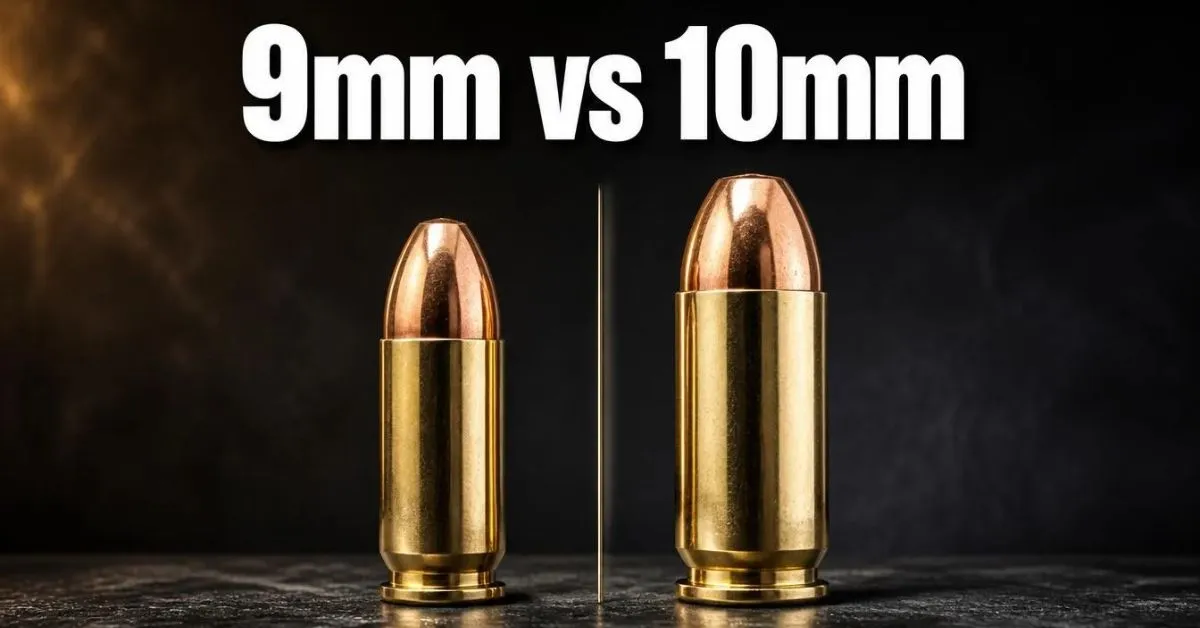
The 9mm Luger and 10mm Auto are handgun cartridges with different strengths. The 9mm usually costs less to shoot and has lighter recoil.
The 10mm uses a wider, heavier bullet and can deliver more energy with many loads. The better choice depends on the firearm, ammo, shooting needs, and comfort with recoil.
Key Takeaways
- 9mm: Usually costs less and is easier to shoot for many people.
- 10mm: Can offer more bullet weight, speed, and muzzle energy.
- Recoil: 10mm often has stronger recoil, but the firearm and ammo also matter.
- Ammo cost: 9mm range ammo often costs less per round.
- Best choice: Compare the exact loads and handguns, not just the cartridge names.
9mm vs 10mm: Quick Comparison
| Feature | 9mm Luger | 10mm Auto |
|---|---|---|
| Common name | 9mm or 9x19mm | 10mm Auto |
| Bullet diameter | About 0.355 inch | About 0.400 inch |
| Standard bullet weights | Often 115–147 grains | Often 155–200 grains |
| Case length | 0.754 inch | 0.992 inch |
| SAAMI maximum average pressure | 35,000 psi | 37,500 psi |
| Recoil | Usually lighter | Usually stronger |
| Range ammo cost | Often lower | Often higher |
| Common uses | Target shooting, personal protection, duty use | Target shooting, personal protection, some hunting and outdoor uses |
Note: Bullet weights and performance vary by load. Pressure limits are industry standards, not a measure of how much energy every bullet delivers.
What Is the Difference Between 9mm & 10mm?
The main difference is size and performance. The 9mm Luger has a smaller bullet and a shorter case. The 10mm Auto has a wider bullet and a longer case.
The 10mm can launch heavier bullets at high speeds. This can give it more muzzle energy than many 9mm loads. That extra performance often comes with more recoil and higher ammo costs.
The 9mm is widely used for range practice and personal protection. Many shooters also find it easier to control during repeated shots.
Neither cartridge is best for every person or task. The right choice depends on your firearm, the exact ammo, and how well you can handle it.
9mm vs 10mm Ballistics
Ballistics describe how a bullet moves and performs. Common measures include bullet weight, muzzle velocity, and muzzle energy.
- Bullet weight is measured in grains.
- Muzzle velocity is the bullet’s speed as it leaves the barrel.
- Muzzle energy is the bullet’s energy as it leaves the barrel.
Here is one example using published factory-ammunition data:
| Factory load | Bullet weight | Muzzle velocity | Muzzle energy |
|---|---|---|---|
| Federal American Eagle 9mm FMJ | 115 grains | 1,180 fps | 356 ft-lb |
| Federal American Eagle 10mm FMJ | 180 grains | 1,030 fps | 424 ft-lb |
In this example, the 10mm load has more muzzle energy, even though its listed speed is lower. Its bullet is much heavier. These figures apply to these two loads, not every 9mm or 10mm cartridge.
The exact result can change with bullet weight, powder load, barrel length, and test conditions. A longer test barrel may produce a different speed than a shorter handgun barrel.
Muzzle energy is useful, but it does not tell the whole story. Bullet design, penetration, expansion, and the conditions of a test also affect performance. Do not judge a cartridge by one number alone.
Is 10mm More Powerful Than 9mm?
The 10mm can deliver more muzzle energy than many common 9mm loads. It also allows the use of heavier bullets. That makes it a higher-performance option in many factory load comparisons.
However, the word powerful can mean different things. It may refer to bullet speed, energy, recoil, or performance on a target. These measures are related, but they are not the same.
A 10mm load may have more energy and also produce more recoil. A 9mm load may be easier for a shooter to control. The best comparison uses exact ammunition data and the same type of test.
9mm vs 10mm Recoil
Recoil is the backward movement and force a shooter feels when firing a gun.
The 9mm usually has lighter recoil than the 10mm. Many people find that this makes the 9mm easier to shoot for long practice sessions.
The 10mm often has stronger recoil because it can fire heavier bullets at higher speeds. The amount you feel depends on the load, handgun weight, grip, and design.
A heavier handgun may feel easier to control than a lighter one using the same cartridge. Some 10mm loads are also less powerful than full-power loads, so not every 10mm round feels the same.
If possible, try a suitable range session with each cartridge under safe, supervised conditions. Comfort and control matter more than a label on a box.
9mm vs 10mm Ammo Cost
The 9mm usually costs less to shoot, which can make regular practice more affordable.
Market data shows why the date and type of ammo matter. On October 26, 2026, one price tracker listed a median observed price of about 59 cents per round for 9mm across all tracked listings. Its range or practice category had a median near 30 cents per round.
A separate tracker reported an average near 46 cents per round for 10mm range and FMJ ammo in data updated October 6, 2026. These figures use different dates and methods, so they are useful market indicators, not a perfect same-day comparison.
Prices change by brand, bullet type, package size, retailer, and stock. Premium or defensive loads may cost much more than basic range ammo. Bulk packs can lower the price per round, but they do not always offer the best deal.
To compare prices fairly, check similar loads at the same store on the same day. Divide the full package price by the number of rounds, then include shipping and fees.
9mm vs 10mm for Target Shooting
The 9mm is a common choice for target practice. It often costs less and has lighter recoil. Those traits can make it easier to practice often and build steady shooting skills.
The 10mm can also be used at the range. However, stronger loads may cause more recoil and cost more per round. Some shooters enjoy that challenge, while others prefer a softer-shooting cartridge.
Your handgun matters, too. A good fit, clear sights, and a comfortable grip can affect your practice more than cartridge size alone.
Always follow the range rules and the firearm maker’s instructions. Use only ammunition that matches the caliber marked on the firearm.
9mm vs 10mm for Personal Protection
Both cartridges are used in handguns for personal protection. But the cartridge alone cannot tell you how well a complete setup will work.
The 9mm offers a wide choice of handguns and factory ammunition. Its lighter recoil may help some shooters maintain control and make accurate follow-up shots.
The 10mm can offer more energy with many loads. It may also produce stronger recoil, which some shooters find harder to manage. A more powerful cartridge is not automatically the better choice for every person.
For this purpose, compare reliable factory ammunition, firearm fit, safe handling, and your ability to shoot accurately. Follow local laws and seek qualified instruction. No cartridge can guarantee a particular result.
9mm vs 10mm for Hunting & Outdoor Use
The 10mm is used by some hunters and outdoor users who want a handgun cartridge with more energy than many common 9mm loads. Its suitability depends on the animal, local rules, bullet design, range, and firearm.
The 9mm is generally less suited to hunting tasks that call for the heavier bullets and higher energy often available from the 10mm. Still, neither cartridge should be judged by caliber alone.
Check hunting laws and local guidance before choosing a cartridge. Use a load that is legal and suitable for the intended game. A handgun cartridge is not a substitute for safe judgment, proper training, or appropriate equipment.
9mm vs 10mm: Which Should You Choose?
The best option depends on what matters most to you.
| If your main priority is… | What to consider |
|---|---|
| Lower practice cost | 9mm often has the advantage |
| Lighter recoil | 9mm is often easier to manage |
| More energy from many factory loads | 10mm often has the advantage |
| A wide choice of handguns and ammo | 9mm is widely available |
| Outdoor use where a stronger handgun cartridge is needed | Consider suitable 10mm loads and check local rules |
Do not choose based on energy figures alone. Think about the firearm, ammunition cost, recoil, fit, and your ability to handle it safely.
FAQs:
Is 10mm stronger than 9mm?
Many 10mm loads deliver more muzzle energy than common 9mm loads. The exact difference depends on bullet weight, velocity, and the ammunition being compared.
Does 10mm have more recoil than 9mm?
Usually, yes. Many 10mm loads produce stronger recoil. The handgun’s weight, design, and the specific load also affect how recoil feels.
Is 9mm cheaper than 10mm?
Usually, yes. 9mm range ammunition often costs less per round. Prices change, so compare similar loads from the same retailer before buying.
Can a 9mm handgun fire 10mm ammunition?
No. These cartridges are different sizes and are not interchangeable. Use only the ammunition specified for your firearm. Never force a cartridge into a gun that is not marked for it.
Is 10mm better for hunting?
The 10mm may suit some handgun hunting tasks better than the 9mm, but the right choice depends on the game, load, firearm, and local law. Check official rules and use suitable equipment.
Which is better for beginners: 9mm or 10mm?
Many beginners find the 9mm easier to manage because it often has lighter recoil and lower practice costs. A qualified instructor can help you choose a suitable firearm and learn safe handling.
Conclusion:
The 9mm Luger is often the practical choice for affordable practice and lighter recoil. The 10mm Auto can deliver more energy with many loads, but it often costs more and has stronger recoil.
Neither cartridge wins in every situation. Compare the exact ammunition, firearm, price, and purpose before you decide. Most of all, choose a setup you can handle safely and use with confidence.

Aiden Robert, an author at ReplyyGenius.com, where I share smart conversation tips, flirty replies, and practical communication ideas to help people reply with confidence.