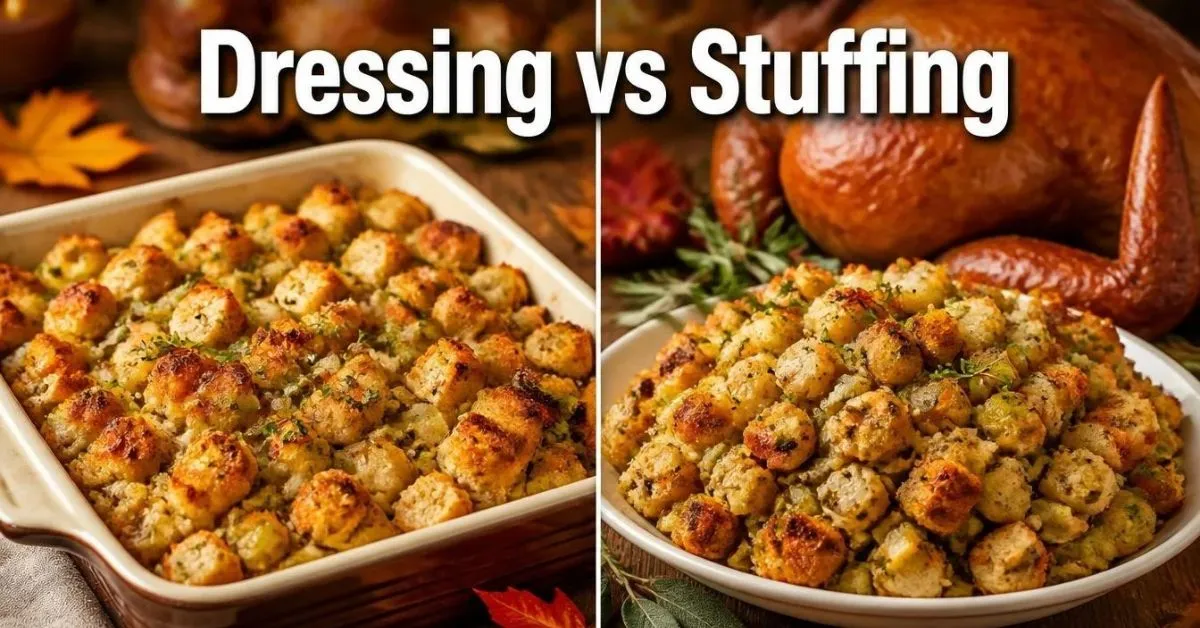
The main difference between dressing and stuffing is how they are traditionally cooked. Stuffing is cooked inside a turkey or other poultry, while dressing is usually baked in a separate dish.
Both can contain bread, vegetables, broth, and herbs. However, Americans often use the names interchangeably because of regional and family traditions.
Key Takeaways
- Stuffing is traditionally cooked inside poultry, while dressing is usually baked in a separate dish.
- Both dishes can use bread, cornbread, vegetables, broth, butter, and herbs.
- Southern dressing often uses cornbread, but recipes vary across regions and families.
- Stuffing can be baked outside a turkey and still be called stuffing.
- Both dishes must reach 165°F (74°C) for safe serving.
- Cooking the dish separately makes it easier to check its temperature and control its texture.
What Is the Difference Between Dressing & Stuffing?
Dressing and stuffing are savory side dishes often served with turkey at Thanksgiving. Both use similar ingredients, and their flavors can be almost the same.
The traditional difference is the cooking method. Stuffing is placed inside a turkey or another bird before roasting. Dressing is usually mixed and baked in a separate dish.
However, Americans do not always follow this rule. Some families call the dish stuffing even when they bake it in a pan. Others use the word dressing for the same dish, no matter how it is cooked.
| Feature | Stuffing | Dressing |
|---|---|---|
| Traditional cooking method | Inside a turkey or other bird | In a separate baking dish |
| Common bread choices | White bread, sourdough, French bread, or cornbread | Cornbread, white bread, or a mix |
| Main ingredients | Bread, broth, vegetables, and herbs | Bread or cornbread, broth, vegetables, and herbs |
| Typical texture | Often moist, depending on the recipe | Can have a soft center and crisp top |
| Regional use | Common across much of the United States | Strongly linked to Southern food traditions |
| Cooking location today | Inside or outside the bird | Usually outside the bird |
These are common patterns, not strict rules. Both dishes can use the same ingredients, cooking methods, and seasonings. The name often depends on where someone lives or how their family prepares it.
How Is Stuffing Made?
Traditional stuffing is placed inside a turkey or another bird before roasting. As the bird cooks, the stuffing can absorb some of its juices. This can give it a rich flavor and a moist texture.
A basic bread stuffing often includes:
- Dried bread cubes
- Chopped celery and onions
- Butter
- Chicken or turkey broth
- Sage, thyme, salt, and pepper
Some recipes also use sausage, mushrooms, apples, nuts, or dried cranberries.
The bread forms the base of the dish. Broth adds moisture, butter adds richness, and herbs give it a savory flavor.
Stuffing can also be baked in a casserole dish. In fact, many cooks choose this method because it is easier to check the center’s temperature. It also gives them more control over the top and edges.
The name does not have to change just because the mixture is cooked outside the bird. Many Americans still call it stuffing.
How Is Dressing Made?
Dressing is usually mixed in a bowl and baked in a separate dish. It often contains bread or cornbread, vegetables, broth, butter, and seasonings.
Many recipes begin by cooking celery and onions in butter. The cook then mixes them with bread, herbs, and enough broth to moisten the mixture.
The dressing is baked until the center is set and the top is golden brown. The exact texture depends on the bread, amount of broth, baking time, and depth of the dish.
A shallow baking dish can create more crisp edges because more of the mixture touches the hot surface. A deeper dish usually keeps more of the center soft and moist.
What Makes Southern Cornbread Dressing Different?
Southern cornbread dressing is a well-known version of this dish. It uses crumbled cornbread as its main base. This gives it a stronger corn flavor than many bread-based recipes.
Common ingredients include:
- Crumbled cornbread
- Chopped celery and onions
- Chicken or turkey broth
- Butter
- Sage and black pepper
- Eggs in some recipes
Some cooks also add white bread or crackers to change the texture. Others use boiled eggs, cooked sausage, chicken, or giblets.
There is no single recipe that every Southern family follows. Some versions are soft and moist, while others have firmer edges. Ingredients also vary by state and local food traditions.
For example, Louisiana dressing recipes may use French bread, rice, seafood, or meat. This shows that Southern dressing is not always made with cornbread.
Why Do Americans Call It Dressing or Stuffing?
The names reflect both cooking methods and regional habits.
In many parts of the United States, stuffing is the common name for this Thanksgiving side dish. In many Southern homes, dressing is more common, especially for recipes made with cornbread.
However, these habits are not universal. Some families use the same name regardless of how they cook the dish. Others follow a family recipe that has kept the same name for generations.
The word stuffing often points to the traditional method of filling a bird. Dressing is commonly used for a mixture cooked in its own dish and served alongside the main meal.
Still, everyday American speech does not always follow this distinction.
This is why neither word is always right or wrong. A family can call its baked cornbread dish stuffing, while another family may call a similar recipe dressing.
What Changes the Taste & Texture?
Both dishes can use similar ingredients. The type of bread, amount of broth, herbs, and added foods have a greater effect on the final result than the name alone.
Bread & Cornbread
White bread has a mild taste and works well with herbs. Sourdough adds a light tang, while French bread gives the mixture a firm base.
Cornbread brings a stronger corn flavor. It is common in Southern dressing, but you can also use it in stuffing.
For a better texture, many cooks dry the bread before mixing it with other ingredients. Dry bread can absorb broth without turning soft too quickly.
Fresh bread often needs less liquid than very dry bread. This is why it is best to add broth slowly rather than follow a fixed amount without checking the mixture.
Vegetables & Herbs
Celery and onions add flavor and texture. Cooking them in butter first helps soften them and brings out their flavor.
Sage and thyme are common choices for a classic Thanksgiving taste. Parsley, rosemary, and garlic can also work well.
You do not need to use every herb. Choose a small blend that suits the other foods on your table.
Broth & Moisture
Broth helps bind the bread and adds flavor. Too little can leave the dish dry, while too much can make it soggy.
Add the broth a little at a time. The bread should feel moist, but the mixture should not have a pool of liquid at the bottom.
The right amount depends on the type of bread, how dry it is, and the other ingredients in the recipe.
Optional Add-Ins
Sausage adds a rich, savory taste. Apples and dried cranberries add sweetness, while mushrooms bring a deeper flavor.
Nuts can add crunch, and cooked giblets are used in some traditional recipes.
These ingredients are optional. Choose them based on your taste and the meal you plan to serve.
Which Is Better for Thanksgiving?
Neither dressing nor stuffing is always better. The right choice depends on your preferred flavor, texture, and cooking method.
Choose Stuffing for a Classic Bread-Based Side
Stuffing is a good choice if you enjoy bread, herbs, and a savory flavor. It pairs well with turkey, gravy, mashed potatoes, and cranberry sauce.
You can use white bread, sourdough, or French bread. Sausage, mushrooms, or apples can add more flavor.
If you prefer easier temperature control, bake the stuffing in a separate dish instead of inside the turkey.
Choose Dressing for a Separate Baked Side
Dressing is a good choice if you want a side dish with a browned top and a soft center. It is also a natural choice if you enjoy Southern-style cornbread dressing.
You can make it with cornbread, white bread, French bread, or a mix. The recipe can be mild and simple or rich with extra herbs and cooked sausage.
A separate baking dish also makes it easier to serve dressing alongside other Thanksgiving sides.
Simple rule: Choose the dish that matches your preferred bread and flavor. If you enjoy cornbread, try Southern-style dressing. If you prefer a classic herb and bread mixture, try stuffing. You can bake either one separately.
Is Dressing or Stuffing Safer to Cook?
Both can be safe when prepared and cooked correctly. The main concern is whether the center reaches a safe temperature.
The CDC recommends cooking stuffing in a casserole dish instead of inside a turkey. This makes it easier to check that the entire dish is cooked. If you cook stuffing inside a turkey, its center must also reach 165°F (74°C).
The turkey must reach 165°F as well. Check the thickest part of the breast, the area where the thigh joins the body, and the area where the wing joins the body. Avoid touching bone when checking the temperature.
Do not assume that the stuffing is safe just because the turkey is fully cooked. The stuffing and turkey can heat at different rates.
Follow these food-safety steps:
- Cook it separately when possible. A baking dish makes the center easier to check and gives you better control over cooking.
- Keep raw ingredients separate. Use separate boards and utensils for raw poultry and foods that will not be cooked.
- Prepare ingredients ahead with care. You can cut and dry the bread and chop the vegetables early. Keep wet ingredients refrigerated and separate from dry ingredients until you are ready to cook.
- Fill the turkey just before roasting. If you cook stuffing inside the bird, mix the wet and dry ingredients just before filling it. Do not leave a raw, stuffed turkey in the refrigerator overnight.
- Check the center with a food thermometer. Stuffing must reach 165°F before serving. The turkey must also reach 165°F in the recommended places.
- Remove the stuffing after cooking. If it was cooked inside the turkey, let the bird rest for 20 minutes before removing the stuffing and carving.
- Refrigerate leftovers promptly. Put them in shallow containers within two hours. If the surrounding temperature is above 90°F, refrigerate them within one hour.
- Use leftovers within three to four days. Reheat them to 165°F before serving.
These steps follow CDC, USDA, and FDA food-safety guidance.
How to Make Better Dressing or Stuffing
Small changes can improve both flavor and texture.
- Dry the bread first. This helps it absorb broth without falling apart too quickly.
- Cook the vegetables. Soften celery and onions in butter before adding them to the bread.
- Add broth slowly. Stop when the bread is moist but not swimming in liquid.
- Season the mixture well. Sage, thyme, salt, and pepper give it a classic savory flavor.
- Choose the right dish. A shallow baking dish can help create more crisp edges.
- Check the center. Use a food thermometer to make sure the dish reaches 165°F.
- Store leftovers safely. Refrigerate them promptly in shallow containers.
If you want to prepare for Thanksgiving early, cut and dry the bread and chop the vegetables ahead of time. Keep ingredients that need refrigeration cold. Store wet and dry ingredients separately until you are ready to cook.
If you plan to cook stuffing inside poultry, mix the wet and dry ingredients just before filling the bird. Place the stuffed bird in the oven right away.
FAQs:
Is dressing the same as stuffing?
They are closely related dishes made with similar ingredients. Traditionally, stuffing is cooked inside poultry, while dressing is baked in a separate dish. However, Americans often use the names interchangeably because of regional and family traditions.
Why do Southerners call it dressing?
Dressing is a common name for this dish in many Southern homes. Southern recipes often use cornbread, broth, vegetables, and herbs. However, not every Southern family uses the same name or recipe.
Is dressing always made with cornbread?
No. Dressing can use white bread, sourdough, French bread, cornbread, or a mix. Cornbread is common in Southern dressing, but it is not required.
Can stuffing be cooked outside the turkey?
Yes. Stuffing can be baked in a separate dish and still be called stuffing. Cooking it separately also makes it easier to check the center’s temperature. It must reach 165°F before serving.
Can I make dressing or stuffing ahead of time?
Yes. You can dry the bread, chop the vegetables, and prepare other ingredients ahead of time. Keep wet ingredients refrigerated and separate from dry ingredients. Mix them just before cooking if you plan to stuff a turkey.
How long can dressing or stuffing leftovers stay in the fridge?
Refrigerate leftovers within two hours of cooking, or within one hour if the surrounding temperature is above 90°F. Store them in shallow containers and use them within three to four days. Reheat leftovers to 165°F before serving.
Conclusion:
The main difference between dressing and stuffing is the traditional cooking method. Stuffing is linked to cooking inside poultry, while dressing is usually baked in a separate dish.
But American usage is flexible. Both dishes can contain bread, cornbread, vegetables, broth, and herbs. Southern dressing often uses cornbread, but other regional recipes use different breads, rice, and even seafood.
The best choice depends on your taste and family tradition. You can enjoy either dish baked separately, and this method makes it easier to control the texture and check its temperature. For safe serving, make sure the center reaches 165°F and refrigerate leftovers on time.

Emily Carter is a dedicated author at ReplyGenius.com, creating helpful, natural, and engaging content focused on replies, messages, and everyday conversations.