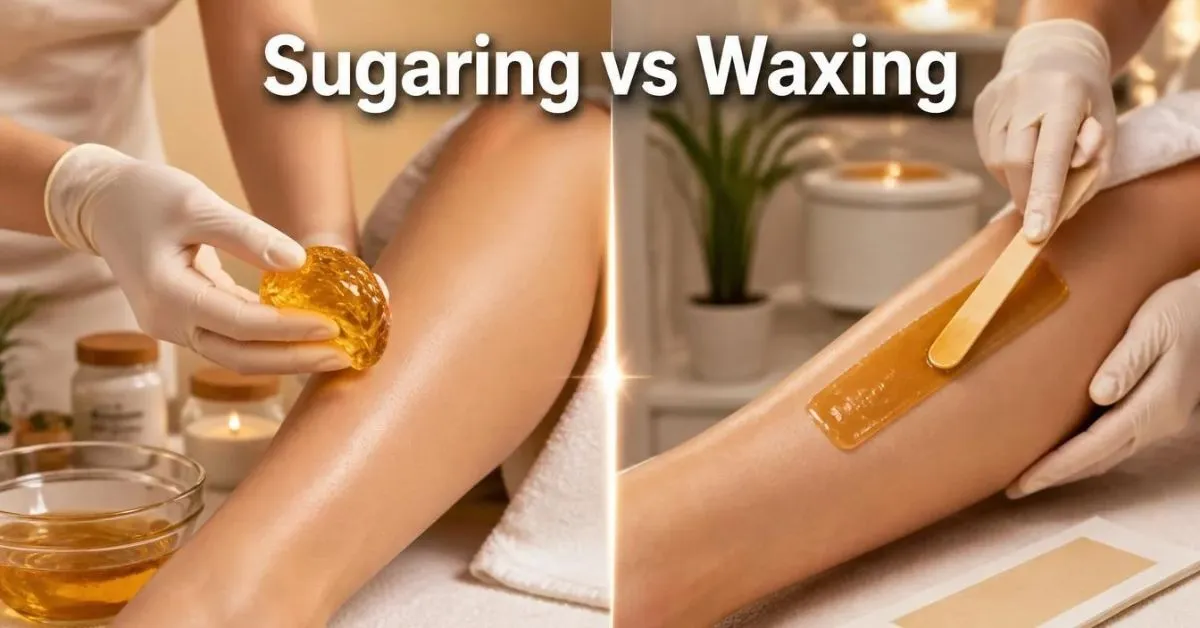
Sugaring vs waxing comes down to how each method removes hair, how your skin reacts, and what you prefer.
Sugaring uses a water-based sugar paste and removes hair in the direction of growth. Waxing uses hard or soft wax and pulls hair against its growth.
Both offer temporary results and can cause pain, irritation, and ingrown hairs.
Key Takeaways
- Sugaring uses a sugar-based paste; waxing uses cosmetic wax.
- Sugaring removes hair with its growth direction, while waxing removes it against growth.
- Both methods can cause pain, redness, bumps, and ingrown hairs.
- Sugaring may irritate some skin less, but it is not risk-free.
- Results often last a few weeks, but regrowth varies.
- Your skin, budget, treatment area, and medicines should guide your choice.
What Is the Difference Between Sugaring & Waxing?
Sugaring and waxing remove hair from the root. Both can keep skin smooth longer than shaving, but neither removes hair forever.
The main differences are the product used and the direction in which hair is pulled.
How Sugaring Works
Sugaring uses a sticky paste made from sugar, water, and often lemon juice. The paste is spread against the direction of hair growth. The practitioner then removes it in the direction the hair grows.
The paste is water-soluble, so leftover product usually washes off with water. It may also stick less to the skin than traditional wax. This may help reduce irritation for some people.
However, sugaring can still hurt. It may also take several passes to remove all the hair. Too many passes can leave skin sore or damaged.
How Waxing Works
Waxing uses a product that sticks to unwanted hair. The wax is spread in the direction of hair growth and pulled off in the opposite direction.
There are two main types:
- Hard wax: It hardens on the skin and is removed without a cloth strip.
- Soft wax: It stays sticky and is removed with a paper or cloth strip.
Waxing can remove hair from large areas in a short time. However, it can cause redness and irritation. Wax that is too hot can burn the skin.
Sugaring vs Waxing: Key Differences
| Feature | Sugaring | Waxing |
|---|---|---|
| Product | Water-based sugar paste | Cosmetic wax |
| Removal direction | With hair growth | Against hair growth |
| Cleanup | Usually rinses off with water | May need a suitable wax remover |
| Pain | Can hurt | Can hurt |
| Results | Often about three weeks | May last two to eight weeks |
| Skin irritation | Possible | Possible |
| Ingrown hairs | Possible | Possible |
| Speed | May need several passes | Often removes hair in one quick pull |
| Availability | Depends on local salons | Common at many salons |
| Cost | Varies by area and provider | Varies by area and provider |
The time ranges above are general estimates from Cleveland Clinic guidance, not promises. Hair growth, the body area, and the method used can change the result.
Neither method is best for everyone. The right choice depends on your skin, hair, budget, and comfort.
Which Hurts More?
Both sugaring and waxing can hurt because they pull hair from the root.
Some people find sugaring easier on their skin because the paste may stick less to it. Others prefer waxing because it can remove hair in quick pulls. There is no guarantee that one method will hurt less for every person.
Your pain level may depend on:
- The area being treated.
- How thick or coarse your hair is.
- Your personal pain tolerance.
- The skill of your practitioner.
- Whether this is your first treatment.
The bikini area and underarms may feel more sensitive than the legs.
If you are worried about pain, ask a trained practitioner about a small test area. Tell them about past reactions or skin problems before treatment.
Which Is Better for Sensitive Skin?
Sugaring may suit some people with sensitive skin because the paste may stick less to the skin than wax. Its simple ingredients may also appeal to people who want to avoid certain wax additives.
But natural does not always mean safe. Lemon juice or other ingredients may irritate some skin. Sugaring can also remove surface skin cells, especially when the technique is poor or the area is treated too often.
Waxing can also irritate the skin. It may cause redness, burns, or skin tears in some cases.
Avoid both methods on skin that is sunburned, broken, inflamed, or infected. If you have eczema, very sensitive skin, or a history of dark marks after irritation, ask a dermatologist before choosing either method.
What About Acne Medicines & Skin Creams?
Some medicines and skin products can make your skin easier to injure during hair removal.
The American Academy of Dermatology advises against waxing while taking isotretinoin and for six months after stopping it. It also warns about waxing while using certain medicines, including some antibiotics and topical tretinoin.
Cleveland Clinic also advises avoiding sugaring during isotretinoin treatment and for at least six months after stopping it.
Do not assume sugaring is a safe replacement for waxing when a medicine affects your skin. Ask your doctor or pharmacist about your specific medicine before treatment. Do not stop a prescribed medicine on your own.
Which Lasts Longer?
Both sugaring and waxing remove hair from the root, so results often last longer than shaving.
Cleveland Clinic reports that sugaring results often last about three weeks. Waxing may last two to eight weeks, depending on hair growth and the area treated.
These ranges overlap and do not show that waxing will always last longer. Some hair may return sooner because different hairs grow at different rates.
Neither method permanently stops hair growth. Some people notice changes in hair texture or growth over time, but this is not guaranteed.
The bottom line: Choose based on your own results, not a promise that one method will keep you hair-free for longer.
Which Is Better for Ingrown Hairs?
Neither method can prevent ingrown hairs.
An ingrown hair occurs when a growing hair curls back into the skin instead of growing out. It may cause a small bump, redness, itching, or pain.
Both sugaring and waxing can lead to ingrown hairs. People with thick or curly hair may have a higher risk.
To lower your risk:
- Avoid picking or squeezing bumps.
- Keep the treated area clean.
- Avoid harsh scrubs and friction on freshly treated skin.
- Let irritated skin heal before your next treatment.
- Ask a dermatologist about repeated or painful ingrown hairs.
Seek medical advice if you notice pus, spreading redness, or worsening pain. These signs may point to an infection or another skin problem.
How Much Do Sugaring & Waxing Cost?
The cost depends on your location, salon, treatment area, and service type.
Removing hair from the upper lip usually costs less than treating both legs or getting a Brazilian treatment. Sugaring may cost more at some salons because fewer local providers offer it.
Before choosing, compare:
- The price for the same treatment area.
- How often you may need another appointment.
- The cost of home kits if you plan to treat yourself.
- Any extra fees for larger areas.
- The cost of products needed for skin care.
Ask salons for current prices. Compare the same service rather than comparing a small area with a full-leg or Brazilian treatment.
If you plan to remove hair often, look at the total cost over several months instead of the price of one appointment.
Pros and Cons of Sugaring & Waxing
Sugaring: Pros & Cons
Pros
- The paste usually washes off with water.
- It may cause less skin irritation for some people.
- Many sugar pastes use a short list of ingredients.
- It removes hair from the root.
Cons
- It can still hurt.
- It may need several passes.
- Poor technique can damage the skin.
- It can cause bumps and ingrown hairs.
- It may be harder to find in some areas.
Waxing: Pros & Cons
Pros
- It can remove hair quickly from large areas.
- Many salons offer waxing.
- Hard and soft wax provide different options.
- Results often last longer than shaving.
Cons
- It can cause pain and redness.
- Hot wax can burn the skin.
- It can cause ingrown hairs and inflamed follicles.
- Some wax ingredients may irritate the skin.
- Certain medicines can make waxing unsafe.
The better choice is the one that suits your skin and needs, not the one with the most advertised benefits.
How to Prepare & Care for Your Skin
Good preparation and aftercare may help lower the risk of skin problems.
Before Your Appointment
- Check your skin. Do not treat sunburned, broken, or inflamed skin.
- Check your medicines. Tell your practitioner about prescription drugs and skin creams.
- Follow hair-length advice. Hair must be long enough for the paste or wax to grip.
- Choose a clean salon. Look for trained staff and safe hygiene practices.
- Avoid harsh skin products. Retinoids and strong exfoliants may make skin more likely to tear or become irritated.
For waxing, the American Academy of Dermatology gives a general hair-length guide of about one-fourth to three-fourths of an inch. Sugaring may work with hair a few millimeters long, depending on the paste and technique. Follow your provider’s instructions.
The AAD also advises against waxing during isotretinoin treatment and for six months after stopping it. Cleveland Clinic gives a similar warning for sugaring. Ask your doctor or pharmacist about other medicines that may affect your skin.
After Your Appointment
- Wear loose clothing if the area feels sore.
- Keep the skin clean and avoid rubbing it.
- Use a gentle, fragrance-free moisturizer if needed.
- Avoid harsh scrubs until the skin has settled.
- Limit heat, heavy sweating, and friction if your skin feels irritated.
Mild redness may fade within hours. If redness or swelling lasts more than two days after waxing, the AAD advises seeing a dermatologist. Seek care sooner for severe pain, blisters, pus, or spreading redness.
Is At-Home Sugaring or Waxing Safe?
Both methods can be done at home, but each takes care and practice.
At-home waxing requires you to control the wax temperature. Wax that is too hot can burn your skin. Follow the product directions and test the temperature before use.
At-home sugaring avoids the need for hot wax when the paste is used at a safe temperature. However, the paste or homemade mixture can still burn you if it is too hot. Preparing sugar mixtures also carries a burn risk.
For either method:
- Read the product instructions.
- Do not use the product on damaged skin.
- Test a small area first.
- Avoid repeated passes over the same spot.
- Do not share tools that may spread germs.
For a Brazilian treatment or a hard-to-reach area, consider a trained professional. The skin in intimate areas is delicate, and poor technique may cause injury.
At a salon, check that the practitioner uses clean tools. For waxing, a fresh applicator should be used for each application. Reusing a stick in the wax pot can spread germs between clients.
Which Method Should You Choose?
Use your main concern to guide your choice.
| Your main concern | What to consider |
|---|---|
| You want a paste that washes off with water | Try sugaring |
| You want quick hair removal over a large area | Consider waxing |
| Your skin reacts easily | Ask a dermatologist about both |
| You often get ingrown hairs | Discuss other hair removal options |
| You want to spend less | Compare local prices for the same area |
| You use prescription acne medicine | Ask your prescriber before treatment |
If you have sensitive skin, sugaring may be worth considering, but it is not risk-free. If you tolerate waxing well and have access to a skilled practitioner, waxing may suit you just as well.
If you want longer-term hair reduction, ask a qualified provider about laser hair removal. Electrolysis is another option and can permanently remove treated hairs. These methods differ from sugaring and waxing, which offer temporary results.
FAQs:
Is sugaring better than waxing?
Sugaring may suit people who prefer a water-soluble paste that may stick less to the skin. Waxing may be easier to find at local salons and can remove hair quickly. Both methods can cause pain, redness, and ingrown hairs. The better choice depends on your skin, budget, and personal needs.
Does sugaring cause less pain than waxing?
It may feel less painful for some people, but there is no guarantee. Pain depends on the treatment area, hair thickness, technique, and personal sensitivity. Both methods pull hair from the root. If you are worried about pain, ask about a small test area before treating a larger area.
Can you use sugaring or waxing for a Brazilian treatment?
Yes, both methods can be used for Brazilian hair removal by a trained practitioner. The skin in this area is delicate, so proper technique and clean tools matter. Avoid treatment on broken or inflamed skin. If you have frequent irritation or use medicines that affect your skin, seek medical advice first.
How long should hair be before sugaring or waxing?
Hair must be long enough for the product to grip it. The exact length depends on the product and technique. The AAD gives a general guide of about one-fourth to three-fourths of an inch for waxing. Sugaring may work with hair a few millimeters long. Follow the instructions from your salon or product maker.
Can you switch from waxing to sugaring?
Yes, but wait until your skin has fully recovered from the last treatment. Tell your practitioner about any past reaction, ingrown hairs, or skin condition. If you use prescription acne medicine or have had skin tears after waxing, ask a dermatologist before switching methods.
Is sugaring safer than waxing?
Not in every case. Sugaring may cause less irritation for some people, but it can still damage the skin or cause ingrown hairs. Waxing can also cause irritation and burns. Safe technique, clean tools, and the right precautions for your skin and medicines matter with both methods.
Conclusion:
Sugaring vs waxing is not a choice with one winner for everyone. Sugaring may appeal to people who prefer a water-soluble paste and want to try a method that may be gentler on their skin. Waxing may suit people who want a familiar service that is widely available.
Both methods offer temporary hair removal and can cause skin problems. Consider your skin, pain tolerance, budget, and treatment area before choosing. If you have a skin condition or use medicine that affects your skin, get professional advice first.
The best hair removal method is the one that fits your needs while keeping your skin healthy.