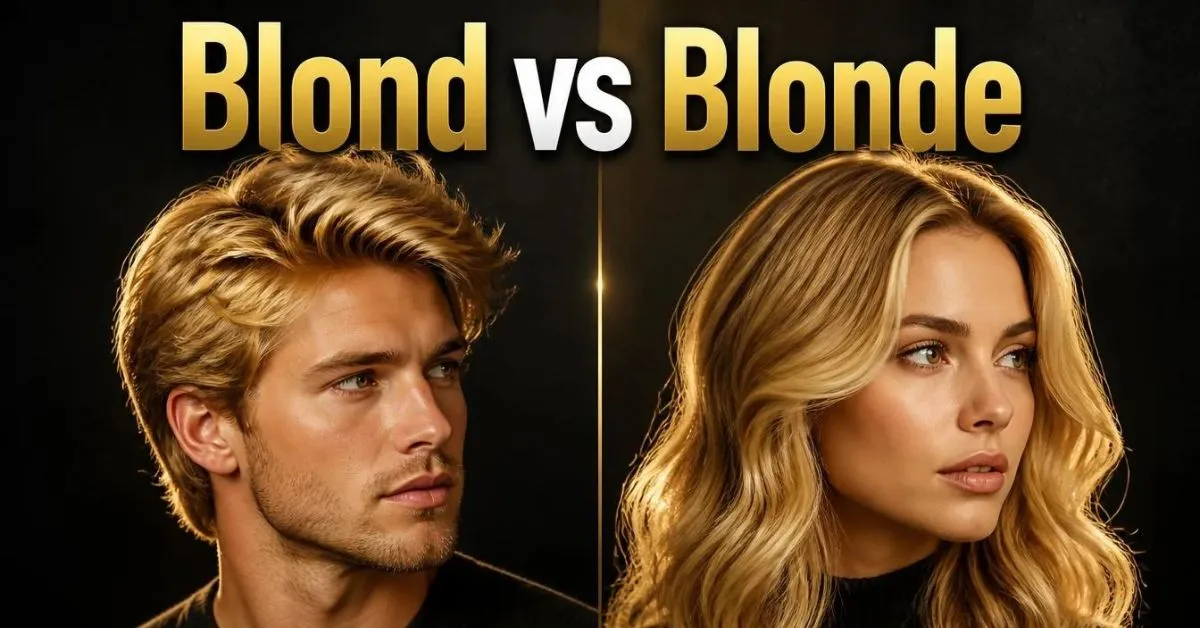
Blond and blonde mean the same thing: a light hair color, from pale gold to light brown. Traditionally, blond is the masculine form and blonde is the feminine form.
In American English, blond is often used for all genders. Both spellings are accepted, but your choice may depend on the sentence and the style guide you follow.
Key Takeaways
- Blond and blonde have the same basic meaning.
- American English often uses blond for all genders.
- Blonde is also common, especially when describing women’s hair.
- Both words have the same pronunciation.
- AP style advises writers to use blond as an adjective for all genders.
- Describing someone’s hair is often better than using blond or blonde as a noun.
What Is the Difference Between Blond & Blonde?
The main difference between blond and blonde is spelling, not color. Both words describe hair that is pale gold, yellowish, or light brown.
The words came into English from French. In French, blond is the masculine form, while blonde is the feminine form. English kept both spellings, but modern writers do not always follow this gender rule.
In American English, blond is often used for people of any gender. Blonde remains common, especially when describing a woman’s hair.
For example:
- He has blond hair.
- She has blond hair.
- She has blonde hair.
All three sentences are used in modern English. The first two follow gender-neutral usage. The third follows the traditional feminine form.
The best choice depends on your audience and the style you follow.
Blond vs Blonde: Quick Comparison
| Feature | Blond | Blonde |
|---|---|---|
| Basic meaning | Light or golden hair color | Light or golden hair color |
| Traditional use | Men and boys | Women and girls |
| American English | Often used for all genders | Common, especially for women’s hair |
| British English | Common for men and boys | Common for women and girls |
| Pronunciation | Same as blonde | Same as blond |
| Professional writing | Preferred by AP as an adjective | Accepted, but not AP’s preferred adjective form |
| As a noun | Used in everyday English | Often used for a woman with light hair |
These are common patterns, not universal rules. A dictionary may accept both forms even when a style guide prefers one.
Is It Blond or Blonde in American English?
For American English, blond is a safe choice when describing hair or a person with light hair.
Examples:
- My brother has blond hair.
- My sister has blond hair.
- The child has soft blond curls.
- She added blond highlights to her hair.
You may also see blonde hair, blonde highlights, and platinum blonde in everyday writing. These forms are widely used and are not automatically spelling errors.
However, professional style guides may set a different rule.
The Associated Press (AP) recommends using blond as an adjective for all genders. It also advises writers to avoid using either blond or blonde as a noun, except in direct quotations. The Chicago Manual of Style favors blond as its default spelling and supports caution with noun use.
Simple rule: If you are writing for a US audience and do not have a specific style guide, use blond as an adjective for any gender. You can still use blonde when it fits your chosen style or a familiar shade name.
When Should You Use Blond or Blonde?
The right choice depends on how you use the word. Here are the main cases.
When Describing Hair
Both spellings can describe light-colored hair. In American professional writing, blond hair is a reliable choice.
Examples:
- He has short blond hair.
- She has long blond hair.
- She has long blonde hair.
- The child has blond curls.
The spelling does not change the color. It reflects a usage choice.
When Describing a Person
Traditional usage links blond with men and boys and blonde with women and girls.
Examples:
- He is a blond man.
- She is a blonde woman.
- The blond boy is my cousin.
- The blonde girl is in my class.
These examples follow the traditional pattern. However, many American writers use blond for people of any gender.
You can also describe the person’s hair directly:
- The man has blond hair.
- The woman has blond hair.
- My cousin has light hair.
These options are clear and avoid making hair color the main label for a person.
When Using Blond or Blonde as a Noun
A noun names a person, place, or thing. In everyday English, people sometimes use a blond or a blonde to describe someone with light hair.
For example:
- He is a blond.
- She is a blonde.
These forms are understood, but they are not always the best choice. Calling someone “a blonde” can reduce the person to their looks or suggest a stereotype.
For professional writing, AP and Chicago favor avoiding both words as nouns.
Instead, write:
- The woman has blond hair.
- The man with blond hair entered the room.
- Sarah has light hair.
This approach keeps the focus on the person rather than one feature of their appearance.
When Describing Objects
Blond can also describe light-colored objects, especially wood and furniture.
Examples:
- The table is made of blond wood.
- They chose blond oak floors.
- The room has blond wood cabinets.
Here, the word describes a pale or golden color. It has nothing to do with a person’s gender.
Some established names use blonde, such as blonde roast. In these cases, follow the accepted name or the spelling used by the brand.
Blond vs Blonde in British English
British English often follows the traditional gender distinction more closely than American English.
Writers commonly use:
- Blond for men and boys.
- Blonde for women and girls.
For example:
- The boy has blond hair.
- The girl has blonde hair.
Oxford Learner’s Dictionaries notes that this distinction is usual in British English, although blonde can also describe men and boys. American English often prefers blond for either sex.
This is a difference in common usage, not an absolute rule. If you write for a British publication, follow its style guide. For a US audience, blond is a reliable default.
How Do You Pronounce Blond & Blonde?
Blond and blonde are usually pronounced the same way in English. Both have one syllable, and the final e in blonde does not add a sound.
These phrases sound alike:
- Blond hair
- Blonde hair
- A blond man
- A blonde woman
You cannot hear which spelling someone uses. The difference appears only in writing.
What Do Blond & Blonde Mean in Hair Color?
Both words describe light hair, often with pale gold or yellow tones. The color can range from very light to a deeper shade near light brown.
Common shade names include:
- Ash blond: A cool shade with gray tones.
- Platinum blonde: A very light, near-white shade.
- Strawberry blonde: A light shade with red or warm gold tones.
- Dark blond: A deeper shade close to light brown.
- Dirty blonde: A mix of darker and lighter blond tones.
These names describe shades, not separate meanings of the two spellings. The final e does not make hair lighter, darker, or warmer.
Some shade names have an established spelling. If you are writing about a specific hair color or salon service, check the name used by the relevant brand or style guide.
Common Mistakes to Avoid
1. Thinking blonde is always required for women.
This is the traditional rule, but American English often uses blond for all genders.
2. Thinking blond and blonde mean different colors.
Both words describe the same general hair color. The spelling does not tell you the shade.
3. Calling blonde incorrect in American English.
Blonde is widely used in the US, especially when describing women’s hair. It is not automatically a spelling mistake.
4. Using either word as a label without a reason.
Phrases such as “the blonde” can sound reductive. Describing the person’s hair or using their name is often clearer.
5. Ignoring your style guide.
A dictionary may accept both forms, while a publication may prefer one. Follow your required style when writing for school, work, or publication.
FAQs:
Is blond or blonde correct?
Both spellings are correct. Blond is often used for all genders in American English, while blonde is common in everyday writing, especially for women. The best choice depends on your sentence and style guide.
Can a woman have blond hair?
Yes. A woman can have blond hair or blonde hair. Both forms are used in American English. Writers who follow AP style use blond as the adjective for everyone.
Is blonde only used for women?
No. Blonde is traditionally linked to women and girls, but actual usage varies. American English often uses blond for all genders, especially in formal writing.
Are blond and blonde pronounced the same?
Yes. Both words have the same usual pronunciation and one syllable. The final e in blonde does not change the sound.
Is blonde British or American English?
Both British and American English use blonde. British English often keeps the traditional distinction between people of all genders, while American English often uses blond for either gender.
Should I write blond hair or blonde hair?
Both phrases are used in English. For US professional writing, blond hair is a safe choice because AP recommends blond as an adjective for all genders. Blonde hair is also common in everyday use.
Can blond describe wood?
Yes. Blond can describe pale or golden wood, as in blond oak or blond wood furniture. Some product names use blonde, so follow the established spelling for a specific product.
Conclusion:
When comparing blond vs blonde, remember that both words have the same basic meaning. The traditional rule uses blond for males and blonde for females, but modern American English often uses blond for everyone.
For US professional writing, use blond as an adjective unless your style guide says otherwise. Use blonde when it fits your chosen style or a familiar shade name.
When describing people, focus on the person rather than using hair color as a label.

Eric Walker, an author at replyygenius.com, where I create clear and helpful content for readers.
I focus on writing useful, engaging, and easy to understand articles that deliver real value.