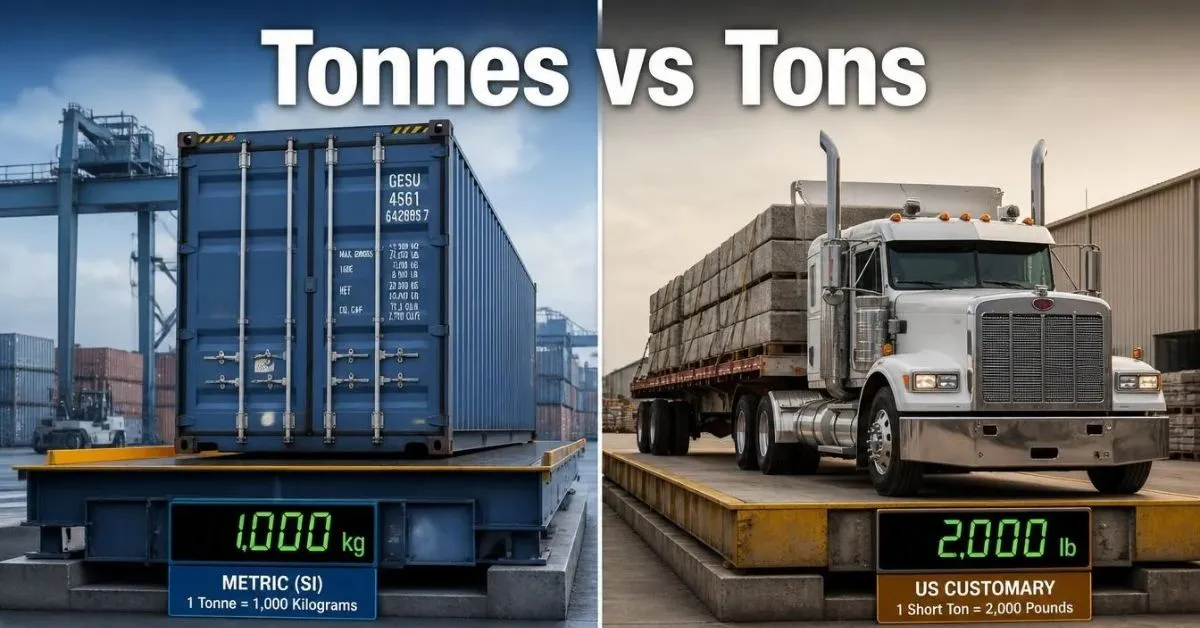
Tonnes vs tons refers to different units of mass. A metric tonne equals exactly 1,000 kilograms, or about 2,204.62 pounds. A US short ton equals 2,000 pounds, or about 907.18 kilograms.
A British long ton equals 2,240 pounds, or about 1,016.05 kilograms. A metric tonne is heavier than a US short ton, but lighter than a long ton.
Key Takeaways
- A metric tonne equals exactly 1,000 kilograms.
- A US short ton equals exactly 2,000 pounds.
- A British long ton equals exactly 2,240 pounds.
- One metric tonne is about 10.23% heavier than one US short ton.
- A long ton and an imperial ton refer to the same unit.
- Americans usually use tons for US short tons.
- Always check the unit before comparing weights or prices.
What Is the Difference Between Tonnes & Tons?
The main difference between tonnes and tons is their weight and measurement system.
A tonne is a metric unit of mass. It equals exactly 1,000 kilograms, or about 2,204.62 pounds. It is also called a metric ton.
A ton can refer to two different units:
- A US short ton equals 2,000 pounds.
- A British long ton equals 2,240 pounds.
The spelling also varies by region. Americans usually write tons, while many countries that use the metric system write tonnes.
However, spelling alone does not always tell you which unit a person means. A technical report, shipping record, or business contract should state the exact unit.
For example, 10 tonnes do not equal 10 US tons. Ten metric tonnes equal about 11.02 US short tons.
How Much Does Each Unit Weigh?
There are three main units to understand when comparing tonnes vs tons.
US Short Ton
2,000 pounds = 907.18474 kilograms
A US short ton equals exactly 2,000 pounds. It is the usual meaning of ton in everyday American use.
You may see it in:
- Construction materials
- Waste collection
- Domestic freight
- Steel and other industrial goods
- Agricultural products
For example, 5 US short tons of gravel equal 10,000 pounds, or about 4,535.92 kilograms.
The short ton is part of the US customary measurement system.
Metric Tonne
1,000 kilograms = 2,204.62262 pounds
A metric tonne equals exactly 1,000 kilograms. It is also called a metric ton.
The word tonne helps distinguish it from the US short ton and British long ton.
You may see metric tonnes in:
- International trade
- Global shipping
- Industrial production
- Environmental reports
- Scientific records
For example, 3 metric tonnes equal 3,000 kilograms, or about 6,613.87 pounds.
The official symbol for a tonne is t. It is a unit accepted for use with the International System of Units (SI).
British Long Ton
2,240 pounds = 1,016.04691 kilograms
A British long ton equals exactly 2,240 pounds. It is also called an imperial ton.
The long ton comes from the British Imperial measurement system. It is based on 20 hundredweight, with each British hundredweight equal to 112 pounds.
You may find it in:
- Older British records
- Historical shipping documents
- Naval records
- Legacy engineering documents
For example, 2 long tons equal 4,480 pounds. By comparison, 2 US short tons equal only 4,000 pounds.
A long ton is heavier than both a metric tonne and a US short ton.
Tonnes vs Tons: Key Differences
Use this table to compare all three units.
| Unit | Pounds | Kilograms |
|---|---|---|
| US short ton | 2,000 | 907.18474 |
| Metric tonne | 2,204.62262 | 1,000 |
| British long ton | 2,240 | 1,016.04691 |
The three units follow this order:
US short ton < Metric tonne < British long ton.
Here is how much they differ:
- A metric tonne is about 10.23% heavier than a US short ton.
- A long ton is about 1.60% heavier than a metric tonne.
- A long ton is exactly 12% heavier than a US short ton.
These percentages use the smaller unit as the starting point.
For example, the 12% difference between a short ton and a long ton comes from the extra 240 pounds in a long ton compared with a 2,000-pound short ton.
How to Convert Tonnes & Tons
The correct formula depends on which unit you are using.
Convert Tonnes to US Tons
To convert metric tonnes to US short tons, multiply by 1.10231131.
Formula:
US short tons = Metric tonnes × 1.10231131
Example: Convert 10 metric tonnes to US short tons.
10 × 1.10231131 = 11.0231131
Answer: 10 metric tonnes equal about 11.02 US short tons.
Convert US Tons to Tonnes
To convert US short tons to metric tonnes, multiply by 0.90718474.
Formula:
Metric tonnes = US short tons × 0.90718474
Example: Convert 10 US short tons to metric tonnes.
10 × 0.90718474 = 9.0718474
Answer: 10 US short tons equal about 9.07 metric tonnes.
Convert Tonnes to Long Tons
To convert metric tonnes to British long tons, multiply by 0.98420653.
Formula:
Long tons = Metric tonnes × 0.98420653
Example: Convert 10 metric tonnes to long tons.
10 × 0.98420653 = 9.8420653
Answer: 10 metric tonnes equal about 9.84 long tons.
Convert Long Tons to Tonnes
To convert British long tons to metric tonnes, multiply by 1.01604691.
Formula:
Metric tonnes = Long tons × 1.01604691
Example: Convert 10 long tons to metric tonnes.
10 × 1.01604691 = 10.1604691
Answer: 10 long tons equal about 10.16 metric tonnes.
Convert Tons to Pounds or Kilograms
First, identify which type of ton you have. Then use the correct conversion factor.
| Conversion | Formula |
|---|---|
| US short tons to pounds | Multiply by 2,000 |
| US short tons to kilograms | Multiply by 907.18474 |
| Metric tonnes to pounds | Multiply by 2,204.62262 |
| Metric tonnes to kilograms | Multiply by 1,000 |
| Long tons to pounds | Multiply by 2,240 |
| Long tons to kilograms | Multiply by 1,016.04691 |
For example, 4 metric tonnes equal 4,000 kilograms, or about 8,818.49 pounds.
Do not use one conversion factor for all three units. Choosing the wrong type of ton can give you an incorrect result.
When Should You Use Tonnes or Tons?
For most American writing, use tons when you mean US short tons.
Examples:
- The truck carried 4 tons of gravel.
- The factory used 20 tons of steel.
- The waste site received 100 tons of material.
Use tonnes or metric tons when the measurement is based on 1,000 kilograms.
Examples:
- The shipment weighed 5 metric tonnes.
- The report lists 12 metric tons of steel.
- The project removed 30 tonnes of waste.
If you write for readers in different countries, name the exact unit. Do not expect everyone to understand ton in the same way.
This is especially important in contracts, supplier quotes, and shipping records. A clear unit helps both sides agree on the same amount.
Why Does the Difference Matter?
The difference between tonnes and tons can affect the amount of material you buy, ship, or report.
Shipping & Freight
International shipments may use metric tonnes, while US records may use short tons.
For example, a shipment of 100 metric tonnes weighs about 110.23 US short tons. Treating both numbers as equal would create a large error in the cargo record.
Construction Materials
Sand, gravel, steel, and other materials may be sold by the ton or tonne.
Suppose two suppliers each quote a price of $50 per unit. One sells by the US short ton, while the other sells by the metric tonne.
The prices are not based on the same amount of material. One metric tonne contains about 10.23% more mass than one US short ton.
Always ask which unit the supplier uses before comparing prices.
Environmental Reports
Carbon emissions and waste totals are often listed in metric tonnes.
For example, a report may show 500 metric tonnes of waste. A US report may use short tons instead.
You must convert the values before making a fair comparison.
Business Contracts
A contract that says only tons may cause confusion when people use different measurement systems.
For example, a US supplier may mean short tons, while an international buyer may expect metric tonnes.
Writing US short tons or metric tonnes makes the amount clear.
Science & Industry
Technical reports need clear units so readers can check calculations and compare results.
A small error in a unit can affect a much larger calculation. Always check the measurement before using a figure in another calculation.
Common Mistakes to Avoid
Here are five mistakes to watch for when using tonnes and tons.
- Treating them as equal: One metric tonne is heavier than one US short ton.
- Mixing short and long tons: A long ton contains 240 more pounds than a short ton.
- Changing the spelling only: Replacing tonnes with tons does not change the measured amount.
- Ignoring the source: A report from another country may use a different unit.
- Rounding too early: Keep enough decimal places during the calculation, then round the final answer.
For example, 50 metric tonnes equal about 55.12 US short tons, not 50 US short tons. That difference is more than 5 short tons.
FAQs:
Is a tonne heavier than a ton?
A metric tonne is heavier than a US short ton. One tonne equals 1,000 kilograms, while one US short ton equals about 907.18 kilograms. However, a British long ton is heavier than a metric tonne.
Is a metric ton the same as a tonne?
Yes. A metric ton and a tonne are two names for the same unit. Both equal exactly 1,000 kilograms, or about 2,204.62 pounds.
How many pounds are in a tonne?
One metric tonne equals about 2,204.62 pounds. For a quick estimate, you can use 2,205 pounds. For example, 4 tonnes equal about 8,818.49 pounds.
How many kilograms are in a US ton?
One US short ton equals exactly 907.18474 kilograms, or about 907.18 kilograms. To convert short tons to kilograms, multiply by 907.18474.
What is the difference between a short ton and a long ton?
A short ton equals 2,000 pounds, while a long ton equals 2,240 pounds. A long ton is 240 pounds heavier. The short ton is common in the United States, while the long ton appears in some older British and specialized records.
Is an imperial ton the same as a long ton?
Yes. An imperial ton and a British long ton both equal 2,240 pounds, or about 1,016.05 kilograms. They are two names for the same unit.
Which spelling should Americans use?
Americans usually write tons when referring to US short tons. Use tonnes or metric tons when you mean 1,000 kilograms. In technical writing, state the exact unit if readers could confuse the two.
Conclusion:
Tonnes and tons are not always the same measurement. A metric tonne equals 1,000 kilograms, a US short ton equals 2,000 pounds, and a British long ton equals 2,240 pounds.
For everyday American use, tons usually means US short tons. For metric measurements, use tonnes or metric tons.
The safest rule is simple: identify the unit first, then compare or convert the amount.

Olivia Smith is a professional author at ReplyGenius.com, where I create clear and engaging content on communication and writing.