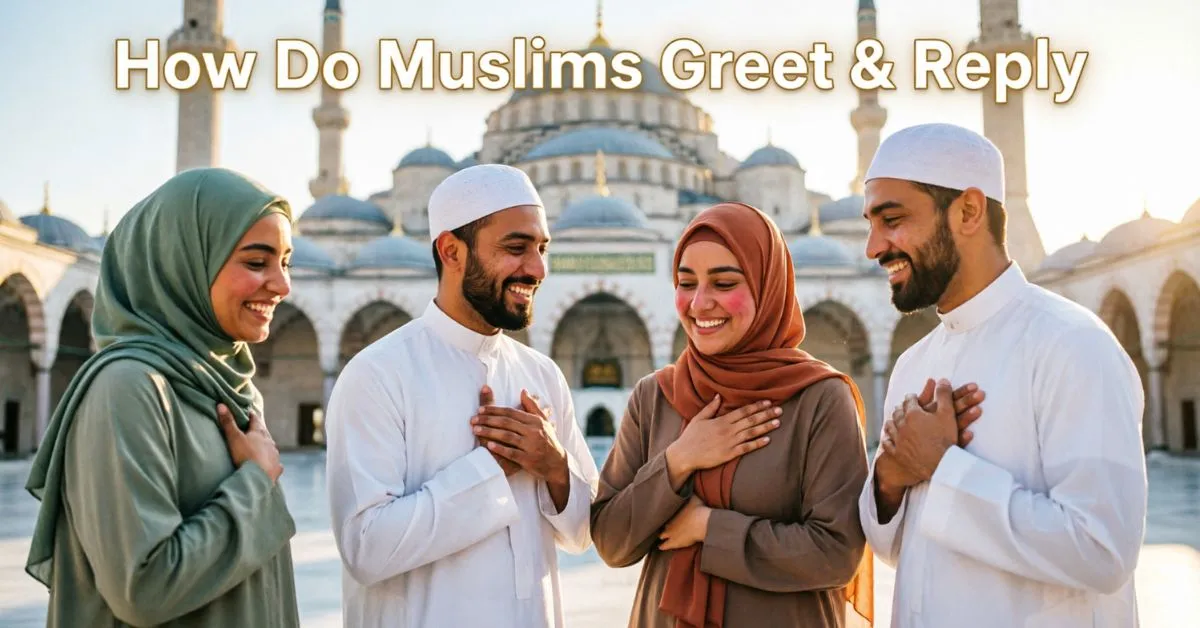
When I first started learning How Do Muslims Greet & Reply, I honestly felt a little confused. I still remember I was sitting with a friend, and he greeted me by saying “Assalamu Alaikum”. At that moment, I paused because I didn’t know the proper reply.
I felt like I might say something wrong, so I quickly smiled and responded in a simple way, but inside I knew I needed to understand it better.
After that moment, I decided I should properly learn how Muslims greet and reply in daily life. I explored it and found that greetings in Islam are not just words they carry peace, respect, and kindness. Now whenever I meet someone, I confidently say the greeting and reply correctly.
It actually made my interactions more respectful and meaningful. I shared this with you because I know many people face the same situation I once did, and it becomes easier once you understand it clearly.
What Does “How Do Muslims Greet & Reply” Mean?
When people ask how do Muslims greet and reply, they are usually curious about Islamic social etiquette.
In simple words, Muslims use greetings that express peace, respect, and kindness.
The most common greeting is:
“Assalamu Alaikum” – meaning Peace be upon you
The reply is:
“Wa Alaikum Assalam” – meaning And peace be upon you too
These phrases are used in daily life among Muslims in homes, schools, workplaces, and public places.
Key Idea
Islamic greetings are based on peace, not just formality.
The Meaning Behind Islamic Greetings
Islamic greetings are deeply connected to values taught in Islam. According to Islam, peace is one of the most important principles in human interaction.
Assalamu Alaikum Meaning
- “As-Salaam” means peace
- “Alaikum” means upon you
So together, it means:
May peace be upon you
Wa Alaikum Assalam Meaning
- “Wa” means and
- “Alaikum Assalam” repeats the blessing of peace
So it means:
And peace be upon you as well
Why It Matters
- It spreads kindness
- It builds respect
- It removes negativity from conversations
- It strengthens community bonds
How Muslims Greet Each Other In Daily Life
Muslims use greetings in many daily situations.
Let’s look at real life examples:
1. Meeting Someone
- Greeting: Assalamu Alaikum
- Reply: Wa Alaikum Assalam
2. Entering A Home
- Greeting: Assalamu Alaikum
- Reply from family: Wa Alaikum Assalam
3. Phone Call
- Greeting: Assalamu Alaikum
- Reply: Wa Alaikum Assalam
4. Classroom or Workplace
- Greeting: Assalamu Alaikum everyone
- Reply: Wa Alaikum Assalam
5. Meeting A Stranger
Even if they do not know each other, Muslims still greet with peace.
Why Islamic Greetings Are Important
Islamic greetings are not just cultural habits. They are part of faith and identity.
Main Reasons:
1. Spreading Peace
The greeting itself contains the word “peace.”
2. Building Respect
It creates respect between people instantly.
3. Strengthening Relationships
Friends, families, and communities feel closer.
4. Encouraged in Teachings
In Islamic teachings, spreading greetings is highly encouraged.
Proper Way To Reply To Muslim Greetings
Many people in the USA ask how to reply correctly.
Correct Reply:
- “Wa Alaikum Assalam”
Even Better Reply:
- “Wa Alaikum Assalam wa Rahmatullah”
(And peace and mercy of God be upon you)
Simple Rule
Always return the greeting with equal or better kindness.
Common Variations of Islamic Greetings
Muslims may use different versions depending on the situation.
1. Full Greeting
- Assalamu Alaikum wa Rahmatullah wa Barakatuh
Meaning: Peace, mercy, and blessings of God
2. Short Greeting
- Assalamu Alaikum
3. Casual Response
- Wa Alaikum Assalam
Cultural Importance In The USA
In the United States, Muslims come from many backgrounds Arab, South Asian, African, and American converts. Despite differences, greetings remain the same.
Why It Matters In USA Society
- Promotes diversity
- Encourages mutual respect
- Builds interfaith understanding
- Helps reduce cultural misunderstandings
Many non-Muslims in the USA also learn this greeting to show respect to Muslim friends and coworkers.
How Muslims Greet Non-Muslims
A common question is whether Muslims use the same greeting for non-Muslims.
Simple Answer:
Yes, many Muslims still say “Assalamu Alaikum” as a sign of peace and respect.
However, in mixed settings, they may also say:
- Hello
- Good morning
- Hi
Key Point
The greeting is about spreading peace, not exclusivity.
Situations Where Greetings Are Very Important
1. Family Life
Strengthens love and unity
2. Business Meetings
Builds trust and professionalism
3. Social Gatherings
Creates friendly atmosphere
4. Online Communication
Used in messages, emails, and social media
Do’s and Don’ts of Islamic Greetings
Do’s
- Always reply to greetings
- Say it clearly and respectfully
- Use it when entering a room
Don’ts
- Do not ignore greetings
- Do not use it jokingly in disrespectful way
- Do not change its meaning
Linguistic & Semantic Importance
From a language point of view, Islamic greetings are part of NLP (Natural Language Patterns) used in human communication.
Related Keywords & Concepts
- Islamic greetings meaning
- Muslim hello and reply
- Assalamu Alaikum response
- cultural greeting etiquette
- peace greeting in Islam
- religious greetings worldwide
These related terms help improve understanding of the topic.
How Do Muslims Greet & Reply In Digital Age
In modern times, greetings are also used online.
Examples:
- WhatsApp messages
- Facebook comments
- Email signatures
- Instagram DMs
Example Chat:
- Person A: Assalamu Alaikum
- Person B: Wa Alaikum Assalam
Even in digital form, the meaning stays the same—peace and respect.
Fun Facts About Islamic Greetings
- It is one of the most widely used greetings in the world
- It is used by over 1.9 billion Muslims globally
- It has been used for over 1400 years
- It is considered a prayer, not just a greeting
Expert Insight
Experts in cultural studies and religion explain that greetings shape human behavior. Islamic greetings are a strong example of how language builds emotional and social connection.
Trust Factor
- Used globally
- Consistent meaning
- Backed by religious teachings
- Promotes peace and harmony
This makes it a trustworthy and meaningful communication system.
FAQs:
Q1: How do Muslims greet each other in daily life?
Muslims usually greet each other by saying “Assalamu Alaikum”, which means peace be upon you. It is used at home, work, school, and in public.
Q2: What is the correct reply to “Assalamu Alaikum”?
The correct reply is “Wa Alaikum Assalam”, which means and peace be upon you too. It shows respect and kindness.
Q3: Is “Assalamu Alaikum” only used by Muslims?
It is mainly used by Muslims, but many non-Muslims also learn and use it to show respect and cultural understanding.
Q4: What does “Assalamu Alaikum wa Rahmatullah” mean?
It means peace and mercy of Allah be upon you. It is a longer and more respectful form of the greeting.
Q5: Can Muslims say hello instead of Islamic greetings?
Yes, Muslims can also say hello, hi, or good morning, especially in mixed or formal settings, but Islamic greetings are preferred among Muslims.
Q6: Why is greeting important in Islam?
Greeting is important because it spreads peace, builds respect, and strengthens relationships between people.
Conclusion:
Understanding How Do Muslims Greet & Reply helps build respect and cultural awareness in today’s diverse world. Islamic greetings are simple but powerful. They carry a message of peace, kindness, and unity.
If in the USA or anywhere else, these greetings help connect people beyond language and culture. They remind us that a small phrase can create big positive change in human relationships.
By learning and respecting these greetings, we make our communities more welcoming and peaceful.
Discover More Posts:
- How To Reply Happy New Year: Trending & Attractive Response Ideas (2026) 🎉
- How Reply Merry Christmas: 75+ Wishes & Greetings Responses (2026)
- How Do Muslims Reply To Eid Mubarak: Polite & Traditional Replies (2026) 🌙💫
- How Do We Reply To Inshallah: Polite & Meaningful Responses (2026) 🌙

Olivia Smith is a professional author at ReplyGenius.com, where I create clear and engaging content on communication and writing.











1 thought on “How Do Muslims Greet & Reply: Unique & Powerful Responses (2026) 📨”