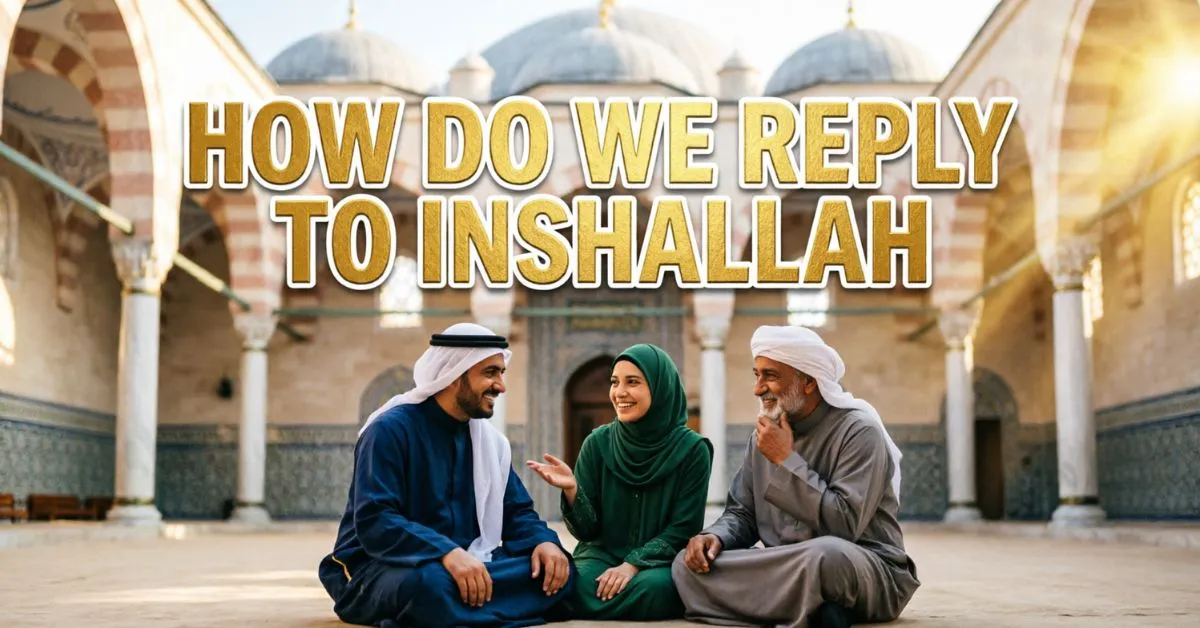
Have you ever been talking with someone and heard them say “Inshallah”, then wondered what you should say next? I remember the first time it happened to me. A friend told me, “I’ll see you tomorrow, Inshallah.”
I smiled, but inside I was unsure about the right response. Should I simply say “okay,” or is there a better reply?
If you’ve had the same question, you’re not alone. Many people hear this phrase in conversations with Muslim friends, coworkers, neighbors, or family members and want to respond respectfully.
The good news is that replying to Inshallah is simple. Your response depends on the situation, the relationship, and the tone of the conversation. In most cases, a positive and respectful reply works perfectly.
What Does Inshallah Mean?
The phrase Inshallah comes from Arabic and means:
“If Allah wills” or “God willing.”
People use it when talking about future plans, hopes, or intentions while recognizing that the future is ultimately in God’s hands.
Examples:
- “I’ll call you tomorrow, Inshallah.”
- “We will finish the project next week, Inshallah.”
- “I hope you recover soon, Inshallah.”
The phrase is commonly used by Muslims around the world, but many non-Muslims in multicultural communities also understand and use it.
How Do We Reply To Inshallah?
The best reply depends on the context.
However, these responses are widely accepted and respectful:
Common Replies
- Inshallah
- Ameen
- Hopefully
- I hope so
- Sounds good
- God willing
- Thank you
- Yes, Inshallah
These replies show agreement, encouragement, or hope for a positive outcome.
Best Responses To Inshallah In Different Situations
When Someone Talks About Future Plans
If someone says:
“We’ll meet next week, Inshallah.”
You can reply:
- “Inshallah.”
- “Looking forward to it.”
- “I hope so.”
- “See you then, Inshallah.”
These responses show enthusiasm while respecting the meaning of the phrase.
When Someone Makes A Promise
Example:
“I’ll send you the report tomorrow, Inshallah.”
Good replies include:
- “Thank you.”
- “That sounds great.”
- “Inshallah.”
- “I appreciate it.”
This keeps the conversation polite and positive.
When Someone Expresses Hope
Example:
“You’ll pass the exam, Inshallah.”
Appropriate responses:
- “Ameen.”
- “Thank you.”
- “I hope so.”
- “Inshallah.”
Many Muslims commonly respond with Ameen, which means “May it be so.”
Why Do Muslims Say Inshallah?
Understanding the reason behind the phrase helps you respond more naturally.
Muslims use Inshallah because they believe:
- The future is not fully under human control.
- Success comes with God’s permission.
- Humility is important when discussing plans.
- Life can change unexpectedly.
Using Inshallah reflects faith, gratitude, and hope.
Is It Okay For Non-Muslims To Say Inshallah?
Yes.
Many non-Muslims use Inshallah when speaking with Muslim friends, colleagues, or community members. It is generally viewed as respectful when used sincerely.
For example:
- “We’ll finish the project by Friday, Inshallah.”
- “See you next week, Inshallah.”
However, you don’t have to use it if you’re uncomfortable. Simple responses like “hopefully” or “I hope so” are also acceptable.
Replying To Inshallah In Professional Settings
Workplace Conversations
Modern workplaces are increasingly diverse. You may hear Inshallah in meetings or business discussions.
Example:
“The client should approve it tomorrow, Inshallah.”
Professional replies:
- “Hopefully.”
- “That would be great.”
- “Let’s hope so.”
- “Sounds good.”
These responses remain respectful while maintaining professionalism.
Customer Service Situations
Example:
“Your order should arrive tomorrow, Inshallah.”
Possible responses:
- “Thank you.”
- “I appreciate that.”
- “Hopefully.”
- “Great, thanks.”
Replying To Inshallah In Text Messages
Texting often requires shorter responses.
Short Text Replies
- Inshallah 🤲
- Ameen 🤲
- Hopefully!
- Sounds good!
- Thank you!
- I hope so.
- Looking forward to it.
These responses feel natural and friendly.
Can We Reply With Ameen?
Yes, in Many Situations
When Inshallah is connected to a wish, prayer, or positive hope, Ameen is often one of the best responses.
Example:
Person:
“May your interview go well, Inshallah.”
Reply:
“Ameen, thank you.”
This is both respectful and common.
Difference Between Inshallah & Ameen
Many people confuse these two Islamic expressions.
| Phrase | Meaning | When Used |
| Inshallah | If God wills | Future plans and intentions |
| Ameen | May it be so | After prayers, wishes, or blessings |
Example:
Person:
“You’ll get the job, Inshallah.”
Reply:
“Ameen.”
This combination is very common.
Common Mistakes When Replying To Inshallah
1. Assuming It Means Uncertainty
Some people think Inshallah means someone is avoiding commitment.
In reality, it often reflects faith and humility rather than doubt.
2. Making Fun of The Phrase
Religious expressions deserve respect. Avoid joking about them in professional or unfamiliar settings.
3. Overthinking The Reply
You don’t need a complicated response.
Simple replies like:
- Inshallah
- Hopefully
- Thank you
- Ameen
are usually enough.
Cultural Importance of Inshallah
- Saudi Arabia
- United Arab Emirates
- Pakistan
- Egypt
- Jordan
- Morocco
- Turkey
In many countries, including:
Inshallah is a normal part of everyday speech.
People may use it dozens of times a day while discussing:
- Travel plans
- Work goals
- Family events
- Education
- Health
- Future opportunities
Understanding the phrase helps build stronger relationships and cultural awareness.
Examples of How To Reply To Inshallah
Example 1
Person:
“We’ll see each other soon, Inshallah.”
Reply:
“Inshallah, I’m looking forward to it.”
Example 2
Person:
“You’ll recover quickly, Inshallah.”
Reply:
“Ameen, thank you.”
Example 3
Person:
“The project will be completed this month, Inshallah.”
Reply:
“Hopefully, that would be great.”
Example 4
Person:
“I’ll call you tomorrow, Inshallah.”
Reply:
“Sounds good, thank you.”
Quick Featured Snippet Answer
How Do We Reply To Inshallah?
The most common replies to Inshallah are:
- Inshallah
- Ameen
- Hopefully
- I hope so
- God willing
- Thank you
- Sounds good
The best response depends on the context, but all of these are respectful and widely accepted.
FAQs:
Q1. What is the best reply to Inshallah?
The best reply is usually “Inshallah”, “Ameen,” or “Hopefully,” depending on the situation.
Q2. Can I say Ameen after Inshallah?
Yes. When Inshallah is connected to a wish, blessing, or prayer, saying Ameen is very common.
Q3. Is it rude not to reply to Inshallah?
No. However, responding politely helps maintain a friendly conversation and shows respect.
Q4. Can non-Muslims say Inshallah?
Yes. Many non-Muslims use the phrase respectfully in conversations with Muslim friends, coworkers, and neighbors.
Q5. What does Inshallah mean in English?
In English, Inshallah means “If God wills” or “God willing.”
Q6. What is the difference between Inshallah and Mashallah?
Inshallah refers to future events, while Mashallah is used to express admiration or appreciation for something that already exists.
Conclusion:
Understanding How Do We Reply To Inshallah is easier than many people think. In most situations, simple responses such as “Inshallah,” “Ameen,” “Hopefully,” or “Thank you” are perfectly appropriate. The key is to match your response to the context and speak with sincerity.
If you’re talking with friends, family, coworkers, or members of a diverse community, knowing the meaning behind Inshallah can help you communicate with confidence and respect. Small cultural understandings often create stronger relationships and better conversations.
Discover More Posts:
- How Reply Merry Christmas: 75+ Wishes & Greetings Responses (2026) 🎄
- How To Reply Happy New Year: Trending & Attractive Response Ideas (2026) 🎉
- How Do Muslims Greet & Reply: Unique & Powerful Responses (2026) 📨
- How Do Muslims Reply To Eid Mubarak: Polite & Traditional Replies (2026) 🌙💫

Eric Walker, an author at replyygenius.com, where I create clear and helpful content for readers.
I focus on writing useful, engaging, and easy to understand articles that deliver real value.










2 thoughts on “How Do We Reply To Inshallah: Polite & Meaningful Responses (2026) 🌙”