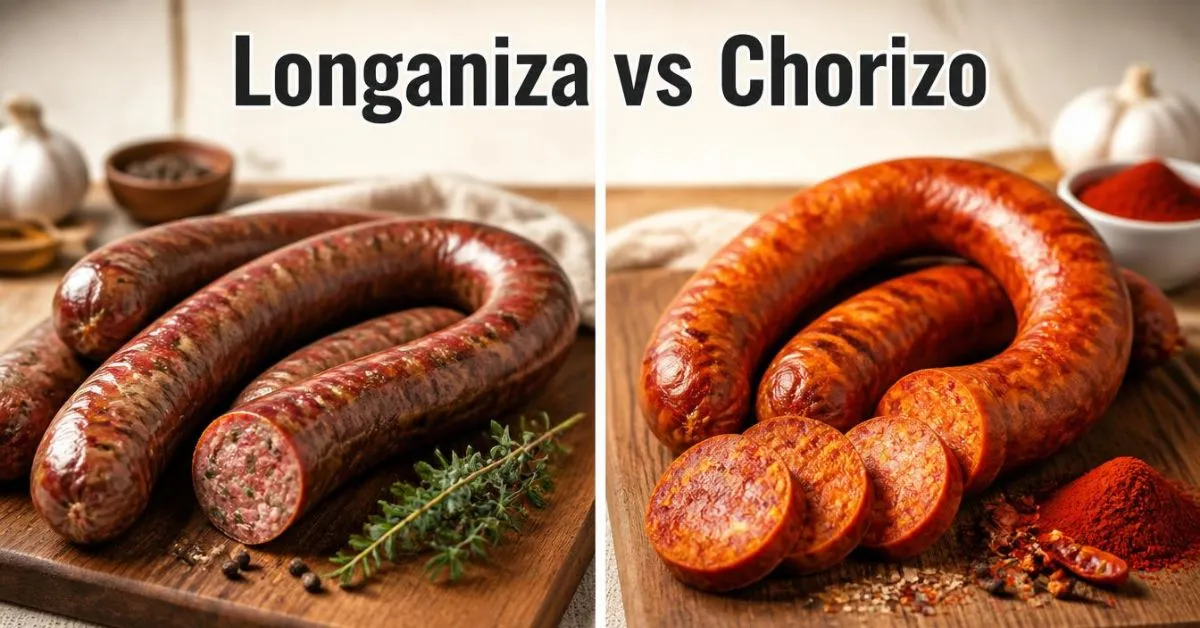
Longaniza vs chorizo: Both are seasoned sausages, but their shape, flavor, texture, and preparation can differ by country.
Longaniza is often made in a long casing, while chorizo may come in short links or loose meat.
Mexican longaniza, Dominican longaniza, and Spanish chorizo have different food traditions, so the country of origin matters more than shape alone.
Key Takeaways
- Longaniza and chorizo are related sausages with many regional recipes.
- Mexican longaniza often comes in a long casing, while Mexican chorizo may be tied into shorter sections.
- Spanish chorizo often uses paprika and is commonly sold cured, while Mexican chorizo is usually fresh.
- Dominican longaniza often features garlic, oregano, and sour citrus.
- Some varieties can replace each other in cooked dishes, but fresh and cured sausages do not always work the same way.
- Always check the label to find out whether a sausage needs cooking.
What Is the Difference Between Longaniza & Chorizo?
Longaniza and chorizo are seasoned sausages found in Spain, Latin America, and other regions. Pork is common in both, but some recipes use other meats or blends.
The main differences depend on the local recipe, meat texture, spices, shape, and preparation method. Some varieties are fresh and need cooking. Others are dried, cured, or cooked before sale.
| Feature | Longaniza | Chorizo |
|---|---|---|
| Shape | Often long and thin | May come in short links, a longer casing, or loose meat |
| Meat | Often pork; other meats may be used | Often pork; other meats may be used |
| Texture | Can be coarse, soft, firm, or dried | Can be soft and crumbly or firm and sliceable |
| Seasoning | Varies by region; may include garlic, herbs, chiles, or annatto | Varies by region; may include paprika, garlic, or dried chiles |
| Flavor | Depends on the local recipe | Depends on the local recipe |
| Preparation | May be fried, grilled, cooked in dishes, or dried | May be fried, grilled, added to dishes, or served sliced |
| Common uses | Tacos, eggs, rice, and local dishes | Tacos, eggs, stews, sandwiches, and tapas |
These are common patterns, not strict rules. Some longaniza and chorizo varieties are very similar.
For the clearest comparison, identify the country and type of sausage first.
What Is Longaniza?
Longaniza is a seasoned sausage with roots in Spanish food traditions. It spread to other countries, where cooks developed their own versions.
Pork is common, but recipes can use beef or other meats. Seasonings, texture, shape, and curing methods also vary.
Longaniza often comes in a long casing. Some varieties are fresh, while others are smoked, dried, or cured. The name alone does not tell you whether it is ready to eat.
Mexican Longaniza
Mexican longaniza often uses pork and a mix of local seasonings. Depending on the region, the mixture may include dried chiles, garlic, vinegar, pepper, cumin, oregano, or annatto.
Some versions have a deep red color, while others look different. Their flavor and texture also vary by local recipe.
Mexican longaniza is often sold in a long casing rather than short sections. This is a common pattern, not a rule for every producer.
It is often fried or grilled and served with tacos, eggs, beans, or other Mexican dishes. Some versions use coarsely chopped meat, while others have a finer texture.
Dominican Longaniza
Dominican longaniza has its own place in Dominican cooking. Pork, garlic, oregano, and sour citrus, such as bitter orange, are common features of traditional-style preparations.
It is often fried until the outside is well browned. Depending on the product, it may have a savory, garlicky flavor with herbal and citrus notes.
Common pairings include tostones, yuca, mangú, and rice dishes.
Dominican longaniza is not the same as every Mexican or Spanish sausage that shares its name. Its seasoning and serving traditions can be quite different.
Spanish Longaniza
Spanish longaniza varies by region. Some types are thin and dried, while others are fresh or made for cooking.
The spices, curing process, and final texture depend on the local recipe. Some varieties may resemble other Spanish sausages, but longaniza should not automatically be treated as the same product as Spanish chorizo.
Check the product description and preparation instructions when buying it.
What Is Chorizo?
Chorizo is a family of seasoned sausages with several regional styles. Mexican chorizo and Spanish chorizo are two common types found in the United States.
They share a name, but they can look, taste, and cook very differently.
Mexican Chorizo
Mexican chorizo is usually a fresh sausage made with ground meat, often pork, and a bold blend of seasonings.
The recipe may include dried chiles, garlic, vinegar, and other spices. Its color can range from red to deep reddish brown.
It may be sold in a casing or as loose sausage meat. Fresh Mexican chorizo must be cooked before eating.
During cooking, it often breaks apart easily. This makes it useful for tacos, scrambled eggs, potatoes, and queso fundido.
Mexican chorizo can taste similar to Mexican longaniza. The difference depends on the recipe, meat texture, and seasoning used in each product.
Spanish Chorizo
Spanish chorizo is known for its use of paprika, which gives many varieties their red color and familiar flavor. Garlic and pork are also common.
Some types have a mild flavor, while others are smoky or spicy. Their texture depends on how they are made and stored.
Many Spanish chorizos are cured and firm enough to slice and serve without further cooking. Other versions need cooking, so check the label.
Spanish chorizo is often served in tapas, sliced into sandwiches, or added to stews and rice dishes.
The key difference: Mexican chorizo is usually a fresh cooking sausage, while many Spanish chorizos are cured and sliceable. Do not assume that every product sold under either name is ready to eat.
Longaniza vs Chorizo: Five Key Differences
1. Shape & Meat Texture
Shape is one of the easiest differences to notice, especially when comparing Mexican longaniza and Mexican chorizo.
Mexican longaniza often comes in a long casing. Mexican chorizo may be tied into shorter sections. However, producers can use different shapes and methods.
The meat texture can also vary. Some longaniza recipes use coarsely chopped meat, while some chorizo recipes use finely ground meat.
Neither feature is guaranteed. Check the actual product rather than relying on shape alone.
2. Ingredients & Seasoning
Longaniza does not have one standard seasoning blend.
Mexican versions may use chiles, garlic, vinegar, or annatto. Dominican versions often feature garlic, oregano, and sour citrus.
Spanish chorizo is strongly linked to paprika and garlic. Mexican chorizo often uses dried chiles and other spices.
These ingredients affect color, smell, and flavor. They also change how the sausage tastes after cooking.
3. Taste & Spice Level
Neither sausage is always spicier than the other.
Mexican longaniza can be mild or hot. Mexican chorizo can also range from mild to very spicy, depending on its chile mixture.
Dominican longaniza often has savory, garlicky, and herbal notes. Spanish chorizo often has a paprika-rich flavor.
If you want less heat, check the label or ask the butcher. Do not judge the spice level by color alone.
4. Freshness & Curing
This is one of the most important differences for home cooks.
Fresh longaniza and fresh Mexican chorizo need cooking. Other varieties may be dried, cured, or cooked before sale.
These terms do not all mean the same thing. Fresh describes a product that needs cooking. Curing and drying are methods used to preserve or change a sausage. Ready-to-eat means the product can be eaten as sold, according to its label.
A sausage that looks firm or dried is not always safe to eat without cooking. Always follow the package instructions.
5. Fat Content & Cooking Results
Fat content varies by recipe and producer. Some longaniza products may release more fat than some chorizo products, but there is no rule that applies to every variety.
More fat can make a dish richer and leave more grease in the pan. A leaner sausage may produce a different texture.
If you replace one sausage with another, cook it as directed and watch how much fat it releases. You may need to drain some excess fat before adding other ingredients.
Can You Substitute Longaniza for Chorizo?
Yes, in many cooked dishes. The result depends on the type of sausage and the recipe.
| Dish | Suggested choice | What to consider |
|---|---|---|
| Tacos | Mexican longaniza or fresh Mexican chorizo | Both can work as seasoned meat fillings |
| Breakfast eggs | Either fresh variety | Taste before adding more salt or spices |
| Rice dishes | A variety that fits the recipe | Seasoning can change the flavor of the whole dish |
| Soups and stews | A sausage with a similar texture | Fresh and cured sausages behave differently |
| Spanish tapas | Cured Spanish chorizo when the recipe calls for it | Fresh longaniza will not give the same texture |
| Dominican meals | Dominican longaniza | It better matches the traditional flavor profile |
How to Choose a Good Substitute
- Check the type. Find out whether the recipe calls for fresh, cooked, or cured sausage.
- Compare the seasoning. Look for differences in chile, paprika, garlic, herbs, and salt.
- Match the texture. Fresh sausage may need to be broken apart in a pan, while firm cured sausage may be sliced.
- Adjust the cooking method. Follow the product instructions and the recipe.
- Taste before adding more seasoning. The replacement may already contain enough salt or spice.
If a recipe calls for fresh Mexican chorizo, Mexican longaniza may be a reasonable substitute. If it calls for firm, cured Spanish chorizo, fresh longaniza is less likely to give the same result.
Which Is Better for Tacos, Eggs & Other Dishes?
Neither sausage is always better. Choose based on the dish and the flavor you want.
- Tacos: Mexican longaniza and fresh Mexican chorizo can both work well.
- Scrambled eggs: Either fresh variety can add a rich, savory flavor.
- Beans and potatoes: Both can work, depending on the seasoning and regional style.
- Dominican meals: Dominican longaniza is a natural choice for traditional pairings such as tostones and mangú.
- Spanish tapas: Cured Spanish chorizo works well when the recipe calls for a firm, sliceable sausage.
- Rice dishes: Either may work, but the seasoning can change the finished dish.
If you want the flavor of a traditional regional dish, choose the sausage linked to that cuisine rather than treating all varieties as interchangeable.
How Do You Cook Longaniza & Chorizo Safely?
The right method depends on whether the product is raw or ready to eat.
Cooking Fresh Sausage
Fresh pork longaniza and fresh Mexican chorizo should be cooked before eating.
- Follow the package’s cooking instructions.
- Cook uncooked pork sausage to an internal temperature of 160°F (71°C).
- Use a food thermometer instead of judging safety by color alone.
- Keep raw sausage and its juices away from ready-to-eat foods.
- Wash hands and clean tools and surfaces after handling raw meat.
Handling Cured Sausage
Some properly made Spanish chorizos are ready to eat, while others need cooking. Longaniza also comes in products with different preparation needs.
Read the label for cooking directions, refrigeration needs, and storage instructions. A sausage’s name, color, or texture alone cannot confirm that it is safe to eat without cooking.
FAQs:
Is longaniza the same as chorizo?
No. They are related sausages, but their shape, ingredients, texture, and preparation can differ. Some regional versions are similar, while others have distinct flavors and uses. The country and specific product matter most.
Is longaniza spicier than chorizo?
Not always. Both can be mild or spicy. Mexican varieties may use different types and amounts of dried chiles, while Spanish chorizo often gets its flavor from paprika. Check the ingredients if you want to avoid too much heat.
Which is better, longaniza or chorizo?
Neither is best for every dish. Longaniza may be the better choice for a regional recipe that calls for it. Chorizo may be more suitable for tacos, eggs, stews, or Spanish tapas. Choose according to the recipe and the product’s flavor and texture.
Can you use longaniza instead of Mexican chorizo?
Often, yes. Mexican longaniza can replace fresh Mexican chorizo in many cooked dishes. However, the texture, fat content, and spice level may change. Taste the dish before adding extra seasoning.
Is Spanish chorizo the same as Mexican chorizo?
No. Spanish chorizo is often seasoned with paprika and commonly comes in cured forms. Mexican chorizo is usually a fresh sausage with a chile-based seasoning mixture. They have different textures and uses, but always check the product label.
Is longaniza ready to eat?
It depends on the product. Some varieties are fresh and must be cooked, while others are cured or otherwise prepared for eating without further cooking. Check the label and follow its instructions.
What is the main difference between longaniza and chorizo in Mexico?
Mexican longaniza is often sold in a longer casing, while Mexican chorizo may be tied into shorter sections. Meat texture, fat content, and seasoning can also differ. These are common patterns, not rules for every regional recipe.
Conclusion:
The main difference between longaniza and chorizo is not one fixed ingredient or cooking method. It depends on regional tradition, seasoning, meat texture, shape, and preparation.
Mexican longaniza and Mexican chorizo can be close substitutes in many cooked dishes. Dominican longaniza has its own garlic, herb, and citrus flavor profile, while Spanish chorizo is known for paprika and often comes in a cured form.
For the best choice, check three things: the country of origin, whether the sausage needs cooking, and how you plan to use it. These clues will help you choose the right sausage far better than color or shape alone.