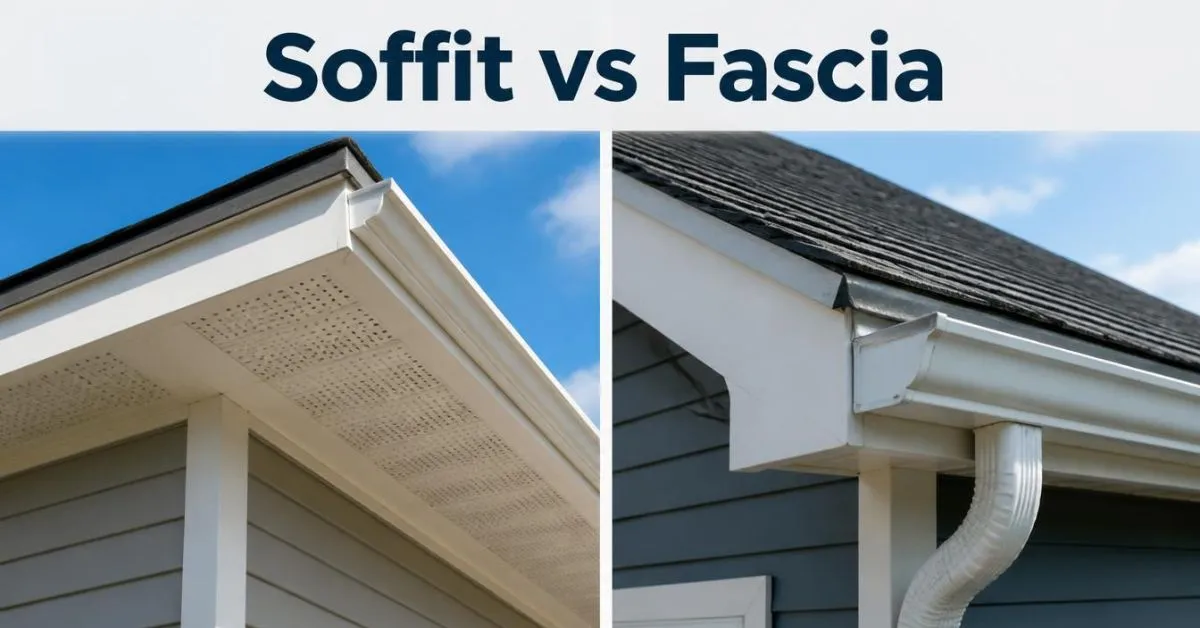
Soffit vs fascia: A soffit covers the underside of a roof overhang, while fascia covers the outer edge of the roof.
A soffit may help bring fresh air into a vented attic. Fascia covers the ends of the roof framing and often provides a base for gutters. Both help protect and finish the roofline, but they serve different roles.
Key Takeaways
- Soffit sits under the roof overhang.
- Fascia runs along the outer edge of the roof.
- Vented soffits can bring air into a properly designed attic ventilation system.
- Fascia often holds gutters, but the backing and fasteners must be strong.
- Water stains, loose panels, peeling paint, and soft wood may signal damage.
- Repair costs depend on the material, damage, roof height, and work needed.
What Is a Soffit?
A soffit is the panel that covers the underside of a roof overhang. The overhang extends past the outside wall of a house.
To find it, stand beside your house and look up. The finished panel between the wall and the outer roof edge is usually the soffit.
Soffits hide exposed framing and give the roofline a clean look. When fitted well, they can also help keep birds, insects, and debris out of the roof space.
What Does a Soffit Do?
A soffit has three main jobs:
- Covers the underside: It hides the roof framing and gives the overhang a finished look.
- Helps keep pests out: Secure panels close gaps that pests may use to enter.
- May provide attic ventilation: Vented soffits let outdoor air enter a vented attic.
Not all soffits have vents. Solid soffits cover the underside but do not provide the same intake airflow as vented panels.
Vented vs. Non-Vented Soffit
A vented soffit has holes, slots, or small openings that let outside air enter the attic.
In a common vented attic design, air enters near the eaves and leaves through higher vents, such as a ridge vent. This airflow can help manage heat and moisture when the full system is designed and installed well.
A non-vented soffit has no openings for attic intake air. It may work with another suitable roof design, including an approved unvented attic system.
Do not add or block soffit vents without checking the roof design. The right setup depends on the attic, roof, insulation, and local building rules.
Insulation can also block the airflow behind soffit vents. In a vented attic, baffles help keep an open path between the vents and the roof space. The U.S. Department of Energy explains how baffles help guide air and keep insulation in place.
What Is Fascia on a Roof?
Fascia is the finished board or trim along the outer edge of a roof. It covers the ends of rafters or trusses and creates a clean line around the roof.
You can often see fascia from the ground because it faces outward. On many homes, gutters attach to it.
What Does Fascia Do?
Fascia has four main jobs:
- Covers the roof framing: It hides the exposed ends of rafters or trusses.
- Helps protect the roof edge: It shields the edge from some direct exposure to rain and wind.
- Provides a gutter mounting surface: Gutters often attach to fascia or suitable supporting framing.
- Improves the home’s appearance: Its color and finish help define the roofline.
Fascia does not replace roof flashing or a working drainage system. Water can still get behind it if the roof edge leaks or the gutters overflow.
Fascia vs. Subfascia
Fascia and subfascia are not the same thing.
The fascia is the visible outer finish. The subfascia is the board behind it that helps support the fascia and may provide a base for gutter fasteners.
The outer finish may be wood, metal, vinyl, or another suitable product. The backing is often wood, but roof designs vary.
This difference matters during repairs. A new fascia cover cannot fix rotten wood behind it. If the backing is weak, it may need repair or replacement before the new finish or gutters are fitted.
Soffit vs Fascia: Main Differences
| Feature | Soffit | Fascia |
|---|---|---|
| Location | Under a roof overhang | Along the outer roof edge |
| Direction it faces | Downward | Outward |
| Main purpose | Covers the underside; may allow attic intake air | Covers the roof edge and often supports gutters |
| Vent openings | Present in vented designs | Usually solid |
| Common materials | Vinyl, aluminum, wood, and other approved panels | Wood, aluminum, vinyl, and other suitable trim |
| Common damage | Loose panels, holes, blocked vents, or rot | Rot, peeling paint, loose covers, or gutter movement |
| Main concern | Airflow, pests, and moisture | Water entry, backing strength, and gutter attachment |
The easiest way to remember the difference is this: soffit is underneath; fascia is at the outer edge.
How Soffit, Fascia, Gutters & Drip Edge Work Together
These parts work together, but each has a different job.
- Roof covering: Shingles or other roof materials shed rain toward the roof edge.
- Drip edge: This metal flashing helps guide water away from vulnerable roof edges and into the drainage path.
- Gutters: These collect runoff and direct it toward downspouts.
- Fascia: This covers the outer roof edge and often provides a gutter mounting surface.
- Soffit: This covers the underside of the overhang and may bring air into the attic.
The exact arrangement depends on the roof design.
If gutters clog or overflow, water may stain or damage fascia and soffit. A roof leak can also wet the wood behind the visible trim.
That is why replacing a damaged panel without fixing the source of the water can lead to more repairs later.
Do You Need Both Soffit & Fascia?
Many homes use both, but they are not interchangeable.
A home with finished eaves often has soffit underneath and fascia at the outer edge. Some homes have open eaves, where the roof framing remains visible and no enclosed soffit is used.
Other buildings use different roof-edge and attic ventilation designs.
The key is not to add both parts to every home. The roof must have suitable weather protection, drainage, pest control, and ventilation where the design requires it.
If you are renovating an older home, have the roof edge checked before changing the panels or vents. A design that works on one house may not work on another.
Best Materials for Soffit & Fascia
The best material depends on your budget, local weather, desired look, and maintenance needs. The product must also suit its location and the roof design.
| Material | Benefits | Limitations |
|---|---|---|
| Wood | Natural look; easy to cut and paint | Needs upkeep and can rot when it stays wet |
| Vinyl | Low routine maintenance; resists moisture | Can crack, warp, or become brittle in some conditions |
| Aluminum | Light and resistant to rust | Can dent and may bend if poorly installed |
| Fiber cement | Offers a firm, painted finish in suitable applications | Heavy; cutting and fitting need care |
| Composite | Some products offer durable, low-maintenance finishes | Cost and performance vary by product |
Which Material Should You Choose?
Choose wood if you want a traditional look and can keep the finish in good shape. Check for peeling paint, cracks, and signs of rot.
Consider vinyl if you want low routine maintenance. Check that the product suits your climate and roof design.
Consider aluminum if you want a light metal finish that does not rust like steel. Keep in mind that it can dent.
Compare fiber cement or composite products if you want a firm finish or a certain look. Check the maker’s instructions to confirm that the product is suitable for the exact roof-edge use.
Do not judge a material by its outer surface alone. Ask how it will be attached, how water will drain, and what lies behind the finish.
Signs Your Soffit or Fascia Needs Repair
Check your roofline from the ground during routine home care and after severe weather. Look for changes, but do not climb onto the roof or reach unstable panels to inspect them.
Common Signs of Soffit Damage
- Panels that sag, hang loose, or fall out
- Holes or gaps that may let pests enter
- Dark stains, peeling paint, or soft wood
- Blocked or damaged vent openings
- Signs of ongoing moisture or mold-like growth
Common Signs of Fascia Damage
- Peeling, bubbling, or cracked paint
- Split, swollen, or rotten boards
- Gutters that sag or pull away
- Loose metal or vinyl covers
- Water stains near the roof edge
These signs can point to a problem, but they do not always show its cause.
For example, a water stain may come from a roof leak, an overflowing gutter, or condensation. A contractor may need to inspect the area behind the trim to find the real source.
Why Do Soffit and Fascia Rot?
Moisture is a common cause of wood damage.
Water may reach the roof edge through:
- Gutters that leak or overflow
- Roof leaks or poor flashing details
- Water that gets behind loose trim
- Condensation or poor moisture control
- Wind-driven rain entering open gaps
Pests may also damage panels or enter through gaps.
The repair should fix the source of the damage, not just the visible mark. Otherwise, new trim may fail for the same reason.
Soffit & Fascia Repair vs. Replacement
A small damaged area may need only a local repair. Widespread damage, failed panels, or rotten backing may call for partial or full replacement.
| Situation | Possible next step |
|---|---|
| One loose panel with sound material around it | Refasten or replace the affected panel |
| Peeling paint on sound wood | Prepare and repaint the surface as needed |
| Rotten fascia with weak gutter support | Repair the backing and replace damaged fascia |
| Blocked soffit vents | Find and remove the blockage without harming the ventilation design |
| Rot across several roof-edge sections | Inspect the wider roofline and plan the needed repairs |
| Repeated water damage | Find and fix the water source before fitting new trim |
The right choice depends on what lies behind the visible damage. Surface repairs may work when the material is still sound. Rotten backing or damaged framing needs more work.
Can You Replace Soffit Without Replacing Fascia?
Yes. You can replace the soffit alone if the fascia and its backing remain sound. You can also replace fascia alone if the soffit is still secure and undamaged.
However, the parts meet at the roof edge. Check both during the repair.
If the contractor finds hidden rot, damaged rafter ends, or poor drainage, the job may need more work than the visible panel suggests.
Should You Repair It Yourself?
A capable homeowner may be able to check for visible damage or do simple maintenance from a safe position.
Roof-edge replacement is more complex. It may involve ladders, sharp metal, gutter removal, hidden rot, flashing, and attic ventilation.
Hire a qualified roofer or contractor when the job needs roof access, structural repairs, or changes to the ventilation system. Do not work from an unstable ladder or attempt repairs near damaged roof framing.
How Much Does Soffit and Fascia Repair Cost?
There is no single price for every home. The cost depends on the roofline’s length, material, height, access, damage, and local labor rates.
For a rough US budgeting guide, HomeGuide lists these estimates:
| Repair type | Estimated cost per linear foot |
|---|---|
| Soffit repair | $4–$22 |
| Fascia-board repair | $5–$12 |
| Roof-eave repair | $9–$34 |
These figures are published estimates, not a guaranteed quote. The roof-eave range may cover work on both soffit and fascia, depending on the job. Costs can change with location, project size, and the work required.
A linear foot measures length along the roofline. It does not measure the full surface area of the soffit.
A small repair may cost much less than replacing an entire roofline. A larger job may cost more if the contractor finds rotten subfascia, damaged rafter ends, gutter problems, or difficult access.
What Should a Contractor’s Quote Include?
Ask for a written estimate that explains:
- Which sections need repair or replacement
- What materials will be used
- Whether removal and disposal are included
- Whether rotten backing or framing is included
- Whether gutters must be removed and refitted
- How existing ventilation openings will be handled
- What caused the damage and how the repair will fix it
- The expected schedule, warranty, and payment terms
Compare quotes that cover the same work. A low quote may leave out hidden wood repairs or the work needed to stop water entry.
FAQs:
Is soffit the same as fascia?
No. Soffit covers the underside of a roof overhang, while fascia runs along the outer roof edge. They work together but serve different purposes.
Does fascia hold the gutters?
Fascia often provides the gutter mounting surface. The strength of the setup depends on the backing, fasteners, and gutter design. Rotten or weak backing may need repair before the gutters can be safely refitted.
Does soffit help prevent mold?
Vented soffit can bring air into a properly designed attic ventilation system. This may help manage moisture, but it cannot prevent all mold problems. Roof leaks, indoor air leaks, insulation, and other moisture sources also matter.
Can you have fascia without soffit?
Yes. Some homes have open eaves or roof designs without enclosed soffits. The roof must still provide suitable weather protection and meet the rules that apply to the building.
Should soffit vents be open or covered?
Keep soffit vents clear when they form part of a designed ventilation system. Do not block them with paint, debris, or insulation. However, not every roof uses a vented attic, so check the existing design before changing anything.
Does new fascia fix a leaking roof?
Not by itself. New fascia may improve the roof edge, but it will not fix a roof leak, failed flashing, or overflowing gutter on its own. Find and fix the water source before finishing the repair.
How often should you inspect soffit and fascia?
Check them during routine exterior maintenance and after severe weather. Look for loose panels, water stains, peeling paint, blocked vents, and gutter movement. Ask a professional to investigate signs of hidden rot or ongoing leaks.
Conclusion:
The main difference between soffit vs fascia is their location. Soffit covers the underside of a roof overhang, while fascia covers the outer roof edge.
Soffit may provide intake air for a vented attic. Fascia covers the roof edge and often supports gutters. Both depend on sound materials, proper drainage, and a roof design that manages water and moisture well.
If you notice damage, check the connected roof-edge parts rather than replacing only what you can see. Fix the source of moisture and inspect the hidden backing to help prevent repeat repairs.

Olivia Smith is a professional author at ReplyGenius.com, where I create clear and engaging content on communication and writing.