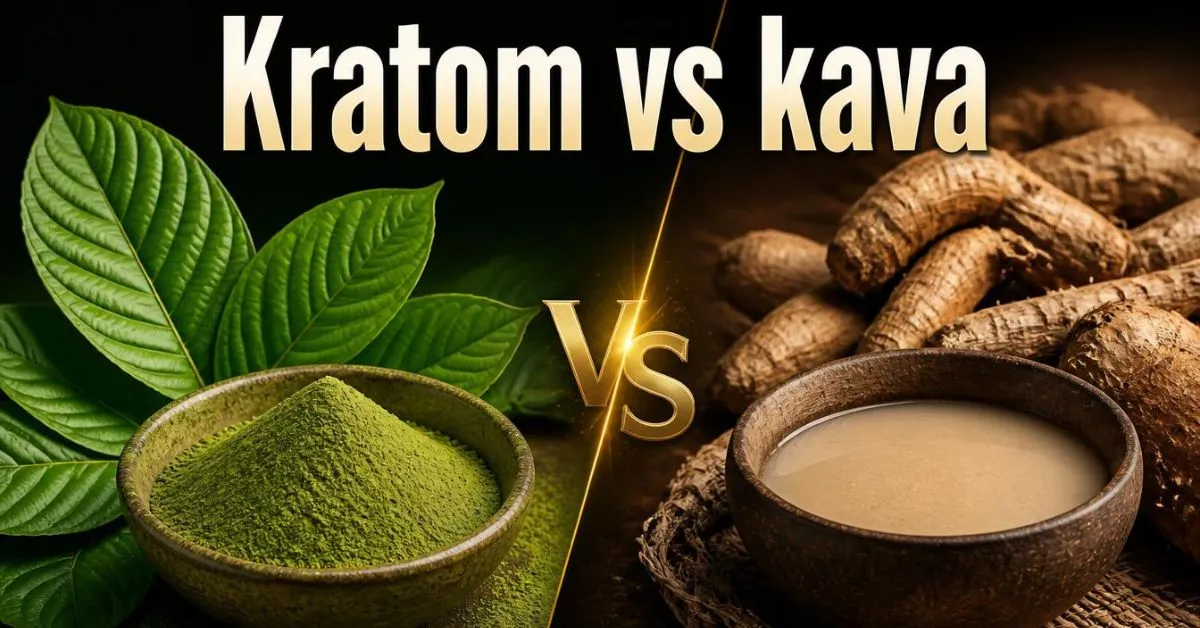
Kratom and kava are different plants with different compounds, traditional uses, effects, and safety concerns. Kratom (Mitragyna speciosa) is a Southeast Asian tree whose leaves contain alkaloids such as mitragynine.
Kava (Piper methysticum) is a Pacific Island plant whose roots contain kavalactones. They are not interchangeable products.
Key Takeaways
- Kratom comes from a tree native to Southeast Asia and is usually made from its leaves.
- Kava comes from a Pacific plant and is traditionally prepared from its roots.
- Kratom’s main compounds include mitragynine and 7-hydroxymitragynine.
- Kava contains compounds called kavalactones.
- Kratom has important concerns involving dependence, withdrawal, interactions, and other adverse effects.
- Kava has a documented concern involving rare but potentially serious liver injury.
- Neither should be assumed to be safe simply because it is plant-based.
Kratom vs Kava at a Glance
| Feature | Kratom | Kava |
| Scientific name | Mitragyna speciosa | Piper methysticum |
| Origin | Southeast Asia | Pacific Islands |
| Common plant part | Leaves | Roots |
| Key compounds | Mitragynine, 7-hydroxymitragynine | Kavalactones |
| Commonly reported effects | Stimulation, relaxation, sedation | Relaxation, calming, sedation |
| Research focus | Effects, dependence, withdrawal, possible therapeutic uses | Anxiety and relaxation |
| Major safety concern | Dependence, withdrawal, interactions, adverse effects | Rare but serious liver injury |
| FDA-approved treatment | No | No |
The two products may appear together in stores or online, but their similarities largely end there. They come from unrelated plants and have different chemistry and safety considerations.
What Is Kratom?
Kratom is the common name for Mitragyna speciosa, a tropical tree native to Southeast Asia.
People have traditionally used its leaves by chewing them or preparing them as a beverage. Traditional uses included helping with fatigue and supporting physical work.
Modern kratom products can appear as powders, capsules, extracts, tablets, and beverages.
The plant contains several alkaloids, with mitragynine being one of the main compounds. 7-hydroxymitragynine, often called 7-OH, is another important compound.
These compounds interact with opioid receptors. Because of this activity, kratom can produce effects that range from increased alertness to relaxation and sedation. Individual experiences can vary based on the product and amount used.
Importantly, kratom has not been approved by the FDA as a safe and effective drug for any medical use.
Kratom’s Main Compounds
The two compounds most often discussed are:
- Mitragynine
- 7-hydroxymitragynine
Researchers continue to study how kratom’s alkaloids affect the body and why users report different effects.
The concentration and composition of commercial products can also vary, making simple comparisons between products difficult.
What Is Kava?
Kava comes from Piper methysticum, a plant native to the Pacific Islands.
Pacific Island communities have a long history of preparing kava beverages for cultural, ceremonial, and social purposes.
Unlike kratom, which generally comes from leaves, traditional kava preparations use the roots of the plant.
Kava’s characteristic compounds are called kavalactones. These compounds are associated with the plant’s calming and relaxing effects.
In the United States, kava is commonly sold as a dietary supplement or in beverage products. Research has focused especially on its potential effects on anxiety.
Kava’s Main Compounds
Kavalactones are a group of compounds responsible for much of kava’s pharmacological activity.
Researchers have investigated how these compounds influence nervous-system pathways associated with relaxation and anxiety.
However, “natural” does not automatically mean risk-free. Kava products have been associated with rare cases of serious liver injury.
Kratom vs Kava: Key Differences
The easiest way to understand kratom vs kava is to compare their plant source, chemistry, effects, and safety profile.
Kratom is a leaf-based botanical from Southeast Asia. Its major alkaloids interact with opioid receptors and can produce both stimulating and sedating effects.
Kava is a root-based botanical from the Pacific Islands. Its kavalactones are associated more strongly with relaxation and calming effects.
This distinction matters because two products can both be marketed for “relaxation” while working very differently in the body.
Neither product should be treated as a substitute for an approved medical treatment.
How Kratom & Kava Feel Different
Kratom can have a relatively broad reported effect range.
Some people report increased energy and alertness, while others report relaxation, drowsiness, or pain-relieving effects. The effects can vary depending on the product and amount used.
Kava is more closely associated with relaxation and calming effects.
That does not mean every kava product produces the same experience. Product preparation, composition, and individual response can affect the result.
A simple way to remember the distinction is:
Kratom is generally associated with a wider range of effects, while kava is more commonly associated with relaxation.
That is a description of reported effects, not a recommendation to use either product.
Kratom vs Kava For Anxiety
Anxiety is one of the most common reasons people compare these two botanicals.
Current evidence is stronger for kava’s potential short-term effects on anxiety than for kratom as an anxiety treatment.
NCCIH reports that kava supplements may have a small effect on reducing anxiety, while also noting important safety concerns. It also states that kava does not appear to help with symptoms of generalized anxiety disorder specifically.
A systematic review of randomized clinical trials found evidence suggesting a short-term benefit for anxiety symptoms, although the researchers emphasized limitations and the need for more research.
Kratom is also used by some people who are seeking relief from anxiety, pain, or other symptoms. However, NCCIH states that research on kratom is still early and that important questions about its short- and long-term effects remain unanswered.
Therefore, the evidence should not be reduced to “one works and the other does not.” The research questions, amount of evidence, and safety concerns are different.
Kratom vs Kava: Safety & Side Effects
Safety is one of the most important parts of this comparison.
Neither product should be considered automatically safe because it is derived from a plant.
Kratom Safety Concerns
Reported kratom side effects include:
- Nausea
- Constipation
- Dizziness
- Drowsiness
- Increased blood pressure
Rare but serious effects have also been reported, including seizures and liver problems. Regular use can lead to dependence, and people who stop using kratom may experience withdrawal symptoms.
NCCIH also notes that some kratom products have contained harmful contaminants such as heavy metals and disease-causing bacteria.
Another concern is combining kratom with other drugs or substances. Severe adverse effects and deaths have been associated with kratom-containing combinations, although the exact role of kratom can vary between cases.
Kava Safety Concerns
Kava has a different major safety issue: liver injury.
NCCIH reports rare cases of liver injury associated with different kava products. Some cases have been serious or fatal. Researchers have proposed several possible factors, including the type of kava, plant parts used, contamination, adulteration, alcohol use, individual susceptibility, and heavy or prolonged consumption.
Kava can also cause side effects such as digestive problems, headache, dizziness, and fatigue.
NCCIH advises against combining kava with alcohol or other substances that have sedative effects, including benzodiazepines.
The Safety Difference
It is more useful to think about their different risk profiles than to ask which plant is universally safer.
- Kratom raises particular concerns about dependence, withdrawal, interactions, contamination, and serious adverse effects.
- Kava raises particular concerns about rare but potentially severe liver injury and interactions with sedating substances.
The risks can also depend on the specific product and the person using it.
Can You Take Kratom & Kava Together?
This is an important question because products containing both ingredients have appeared on the U.S. market.
There is limited evidence about the long-term safety of combining kratom and kava.
A 2024 randomized clinical trial examined a liquid product containing both ingredients for six days in healthy adults. The researchers reported no clinically significant changes in liver or kidney function during the short study, although some participants experienced adverse effects such as nausea, headache, and fatigue. The study was short and does not establish long-term safety.
More recent CDC surveillance has also highlighted growing concern around kava-related exposures involving kratom-containing products in the United States. The CDC reported that serious outcomes among kava-related exposures increased over the period studied and that recent exposures increasingly involved kratom co-use.
So a short-term study should not be interpreted as proof that combining kratom and kava is generally safe.
If you take prescription medicines, use alcohol or sedating drugs, have liver problems, are pregnant or breastfeeding, or plan to use either product regularly, discuss it with a healthcare professional before use.
What Does the Research Say?
The evidence is different for each plant.
Kava has a more established clinical research history for anxiety. Reviews of randomized trials have found evidence of potential short-term improvement in anxiety symptoms, although the evidence has limitations and does not remove the safety concerns surrounding kava.
Kratom research is still developing. Researchers are studying its pharmacology, reported uses, dependence, withdrawal, and possible therapeutic applications. NCCIH emphasizes that more research is needed to understand both short- and long-term effects.
There is also an important 2026 distinction involving concentrated 7-OH products. The FDA reported that the DEA began a temporary scheduling process in July 2026 involving 7-OH above a proposed threshold and certain synthetic 7-OH derivatives. This regulatory action is specifically relevant to concentrated 7-OH products and should not be treated as a statement that every naturally occurring kratom product is identical to those products.
FAQs:
Is kava the same as kratom?
No. They are unrelated plants. Kratom is Mitragyna speciosa, a Southeast Asian tree, while kava is Piper methysticum, a Pacific Island plant. Kratom commonly uses the leaves, while traditional kava preparations use the roots. They also contain different active compounds and have different safety concerns.
Is kratom safer than kava?
There is no simple evidence-based answer that applies to everyone. Kratom has concerns involving dependence, withdrawal, interactions, contamination, and other adverse effects. Kava has a documented risk of rare but potentially serious liver injury. The product, amount used, other substances, medications, and individual health factors all matter.
Which is more calming?
Kava is more commonly associated with calming and relaxing effects. Kratom can also cause relaxation, but its reported effects have a wider range, including stimulation, alertness, drowsiness, and sedation. Individual experiences vary, so these descriptions should not be treated as guaranteed effects.
Can kratom cause dependence?
Yes. Regular kratom use can lead to dependence, and some people experience withdrawal symptoms after stopping. NCCIH specifically identifies dependence and withdrawal as safety concerns associated with regular kratom use.
Can kava cause liver problems?
Yes. Rare cases of liver injury have been linked to kava products, and some reported cases have been serious or fatal. The reasons for these reactions are not completely understood, which is why kava’s liver-safety issue remains important.
Can you take kratom and kava together?
The long-term safety of combining them has not been established. A small short-term clinical study of a combined product did not find clinically significant liver or kidney changes over six days, but that does not establish long-term safety. Current U.S. surveillance also raises concerns about co-use.
Conclusion:
The main lesson from kratom vs kava is simple: they are not the same type of botanical and should not be treated as interchangeable.
Kratom comes from a Southeast Asian tree and contains alkaloids such as mitragynine that interact with opioid receptors. Its reported effects range from stimulation to relaxation and sedation, while dependence, withdrawal, interactions, contamination, and other adverse effects are important concerns.
Kava comes from a Pacific Island plant and contains kavalactones associated with relaxation. It has more direct research for anxiety, but rare cases of serious liver injury make its safety profile important to understand.
Rather than assuming that one plant is universally “better,” compare the specific purpose, evidence, potential interactions, product quality, and safety risks involved. If you are considering either product for a health concern, a healthcare professional or pharmacist can help you assess those factors in the context of your own medications and health history.

Olivia Smith is a professional author at ReplyGenius.com, where I create clear and engaging content on communication and writing.