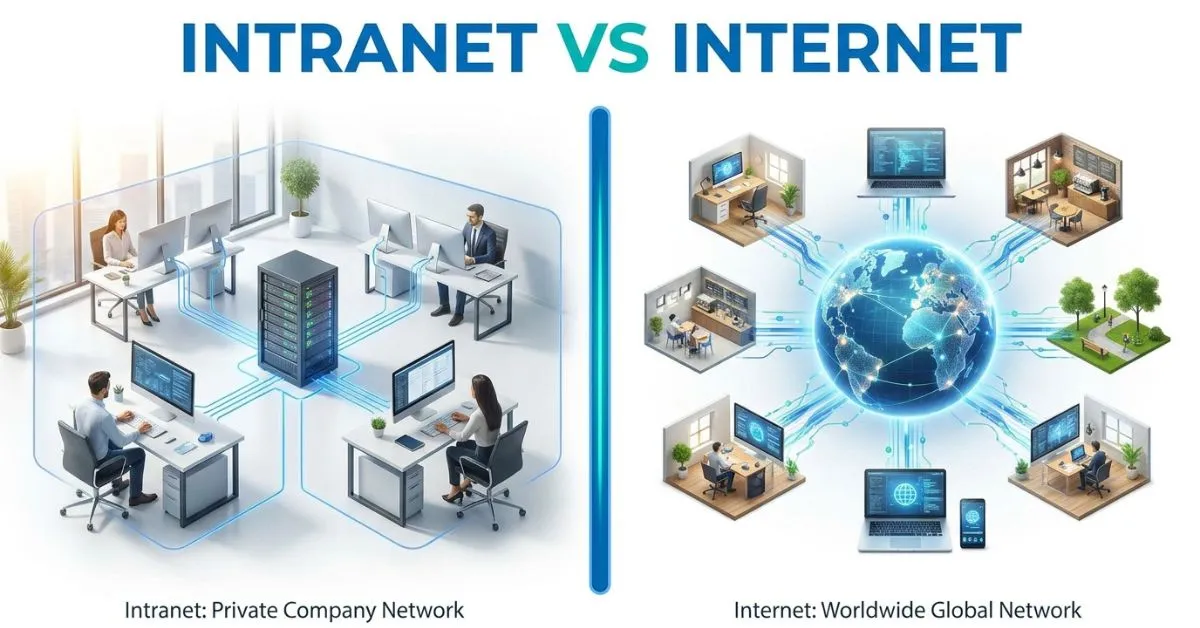
The main difference between an intranet and the internet is their purpose and access. An intranet is a private network for an organization and its approved users. The internet connects networks and devices around the world.
Businesses use intranets for staff work. They use the internet for public websites, online services, and communication.
Key Takeaways
- An intranet gives approved users access to internal company resources.
- The internet connects people, devices, and networks worldwide.
- An intranet can use the same web technologies as public websites.
- Remote intranet access may require secure sign-in or a VPN.
- An extranet gives approved outside users access to selected resources.
What Is the Difference Between an Intranet & the Internet?
An intranet helps an organization manage internal information. The internet connects people and networks around the world.
For example, a company may use its public website to sell products. Employees may use its intranet to read staff policies, find training guides, and access work tools.
The company may also provide suppliers with a separate portal to check orders. This is an example of an extranet.
These systems can look similar because all three may use websites and web apps. The main differences are their intended users, access rules, and purpose.
What Is an Intranet?
An intranet is a private network designed for an organization. It helps approved users share information, communicate, and complete work tasks.
Many modern intranets work like internal websites. Employees can open them in a browser and sign in with a company account. The organization can control which users can view or change specific information.
Common intranet features include:
- Company news and staff announcements
- Employee handbooks and workplace policies
- HR forms and benefit information
- Team documents and project updates
- Training materials and work guides
- Links to internal apps and services
How Does an Intranet Work?
An intranet uses network technology to connect users with internal resources. Depending on its design, those resources may run on local servers, private infrastructure, or cloud platforms.
For example, an employee may sign in to a company portal to download a form. The system checks the employee’s access rights before allowing access to the file.
Some intranets are available only through an organization’s internal network. Others allow remote access through secure web services, identity checks, or a virtual private network (VPN).
An intranet does not have to be a separate physical network. It can also be a set of private services protected by access controls.
Real-World Intranet Examples
A hospital: Staff can use an intranet to find work rules, training guides, and news. Patient records must stay safe and follow privacy rules.
A school: Teachers and staff can use it to share schedules, lesson plans, and work news.
A business: Staff can use it to read company rules, fill out HR forms, and use approved work tools.
The goal is to make internal information easier to find while limiting access to people who need it.
What Is the Internet?
The internet is a global system of connected computer networks. It allows devices and networks to exchange information using shared communication standards.
People use it for work, learning, shopping, entertainment, and communication.
Common internet uses include:
- Searching for information on Google
- Visiting public websites
- Sending email and messages
- Watching videos and listening to music
- Shopping online
- Joining online classes and meetings
- Using cloud apps and digital services
For example, when you visit an online store, your device sends a request through the internet. The store’s server sends information back so your browser can display the page.
The internet is not owned by one company. Many networks, service providers, and organizations operate the systems that make it work.
One important distinction is that the internet and the World Wide Web are not the same thing. The internet is the underlying network. The Web is a service that uses the internet to provide websites and web pages. Email and other services can also use the internet.
Intranet vs Internet: Key Differences
| Feature | Intranet | Internet |
| Main purpose | Internal communication and work | Global communication and online services |
| Intended users | Approved members of an organization | Users and organizations worldwide |
| Access | Restricted by organizational rules | Public access to many services, with some restricted content |
| Content | Internal documents, news, and work tools | Websites, online apps, and shared information |
| Management | Managed by an organization or its providers | Operates across many independent networks |
| Security | Uses controls to protect internal resources | Needs protection against a wide range of online threats |
| Example | Employee portal | Public shopping website |
1. Access & Users
An intranet is made for a company or group. Access rules may let all staff read company news but limit pay records to the HR team.
The internet connects many networks. But not all online services are open to everyone. Bank sites, paid apps, and private accounts may need a login or other checks.
The internet is not all public. It connects many networks, while an intranet helps a group manage its own work.
2. Security & Privacy
An intranet can help an organization control access to private information. Common safeguards include account permissions, multi-factor authentication, encryption, and regular software updates.
But an intranet is not automatically safe. A stolen password, unsafe device, or incorrect permission setting can expose internal resources.
Internet services also use security measures. For example, HTTPS helps protect data sent between a browser and a website. It does not, by itself, prove that the website is honest or free from harmful content.
Both need security measures that fit their risks. Organizations should limit access to private data and remove access when people no longer need it.
3. Ownership & Management
An organization can manage its intranet, set access rules, and choose who may view its resources. It may run the system itself or use a cloud provider.
The internet has no single owner or central operator. Different organizations manage separate networks, services, and parts of its infrastructure.
This difference affects management, but neither ownership nor network type alone guarantees security.
Intranet vs Internet vs Extranet
An extranet lets approved people outside a company use certain tools and files. These people may be suppliers, contractors, or business partners.
Consider a company that sells office furniture:
- Internet: Customers visit the public website to browse products and place orders.
- Intranet: Employees read internal policies and access work documents.
- Extranet: Approved suppliers sign in to check purchase orders or share delivery details.
| Feature | Internet | Intranet | Extranet |
| Main audience | Broad range of users | Internal users | Approved outside users |
| Main goal | Public information and services | Internal work | Collaboration with outside partners |
| Access | Public access to many services | Limited by organization rules | Limited to selected users and resources |
| Example | Public company website | Staff portal | Supplier portal |
An extranet does not need to give partners access to the full intranet. Good access rules let them use only the resources they need.
Can an Intranet Work Without the Internet?
Yes, an intranet can work without the internet if its servers and services run on a local network.
For example, staff may still open files on a local server during an internet outage. This works only if the local network and server are still running.
A cloud-based intranet may need the internet because its apps and files are stored online. Remote staff also need an internet connection to reach these tools.
A VPN can protect data when you use company tools. But you still need an internet connection to reach your company network from far away.
An intranet’s ability to work during an outage depends on how it is set up and where its services are hosted.
How Do Businesses Choose Between an Intranet & the Internet?
Businesses usually do not choose one instead of the other. They use each for different needs.
Use an intranet for information meant for staff or approved users. Examples include work rules, training guides, project files, and company news.
Use the internet when people outside the company need to find information or use public services. Examples include product pages, customer help, public guides, and online sales.
Use an extranet when trusted outside partners need access to business tools, such as order details or shared files.
Before setting up a system, a business should ask three questions:
- Who needs access to the information?
- Does the information need to remain private?
- Which security controls are needed to protect it?
These questions help you choose the right setup. Not every group needs a separate physical network.
FAQs:
Is Google an intranet or the internet?
Google Search is a service on the internet. People use it to find websites and online information. A company may also use an internal search tool to help staff find files on its intranet.
Can you access an intranet from home?
Yes. Many companies let approved staff use an intranet from home. They may need a work account, extra login checks, or a VPN. The exact setup depends on the company’s systems and security rules.
Is an intranet safer than the internet?
Not always. An intranet can limit access to approved users, but weak passwords, old software, and poor settings can still cause risks. Both need strong security measures.
What is the main purpose of an intranet?
An intranet helps a company share information with its staff and support daily work. It may include company news, work files, training guides, forms, and links to work tools.
What is the difference between an intranet and an extranet?
An intranet serves an organization’s internal users. An extranet gives approved outside users access to selected resources. The key difference is who can use the system and which information they can access.
Conclusion:
The main difference between an intranet vs internet is who uses them and what they do. An intranet helps staff share private information and do their work. The internet connects people, devices, and networks around the world.
Businesses use an intranet for staff tools, the internet for public services, and an extranet to work with trusted partners. These systems may use the same tech, but they have different goals and access rules.
The right setup depends on who needs the information, where it is stored, and how the company keeps it safe. Clear access rules and strong security help protect data and keep each system working well.

Aiden Robert, an author at ReplyyGenius.com, where I share smart conversation tips, flirty replies, and practical communication ideas to help people reply with confidence.