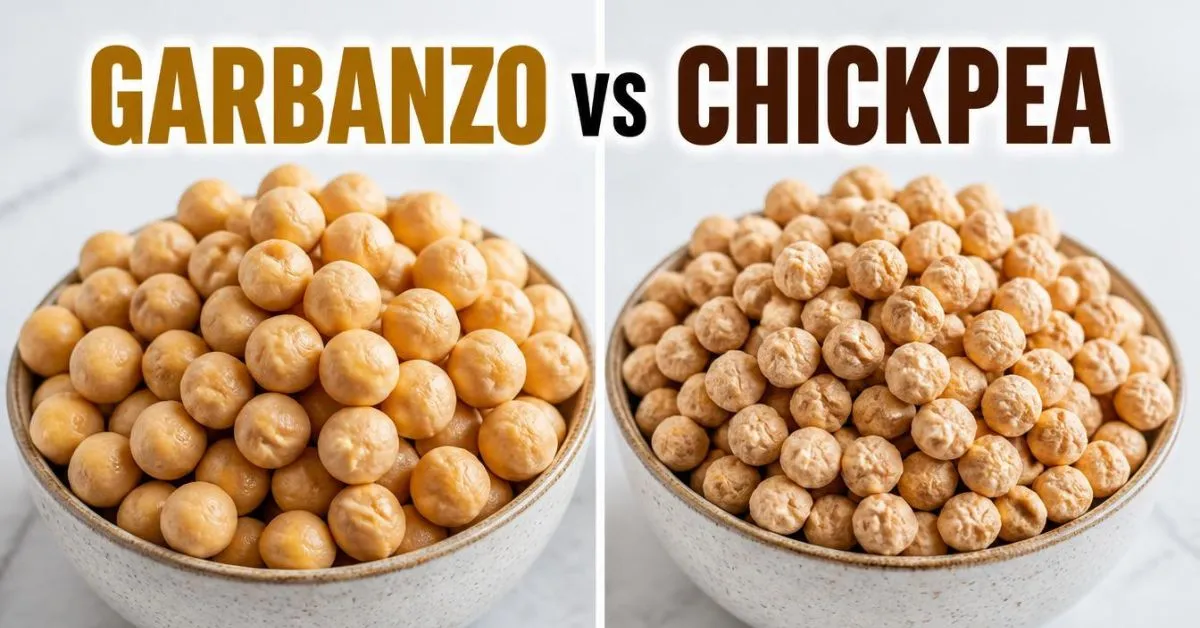
Garbanzo beans and chickpeas are the same legume. Both names refer to Cicer arietinum, so there is no basic food difference between them. “Chickpea” is the common English name, while “garbanzo” comes through Spanish.
The real differences are between chickpea varieties, such as Kabuli and Desi, not between the two names.
Key Takeaways
- Garbanzo beans and chickpeas are the same food.
- Both come from the legume species Cicer arietinum.
- “Chickpea” and “garbanzo” are simply different names for the same legume.
- Kabuli and Desi are actual chickpea types with differences in size, color, and appearance.
- You can usually substitute garbanzo beans for chickpeas in recipes.
- Nutrition depends more on the variety and preparation than on the name on the package.
Are Garbanzo Beans & Chickpeas the Same Thing?
Yes. Garbanzo beans and chickpeas are two names for the same legume.
If you buy a can labeled “garbanzo beans,” you are buying chickpeas. If another can says “chickpeas,” it contains the same basic type of legume.
The scientific name is Cicer arietinum. Chickpeas are legumes that are widely used in Mediterranean, Middle Eastern, South Asian, and other cuisines.
This means there is no special “garbanzo bean” that is completely separate from a “chickpea.”
The difference is mainly what people call them.
For example, an American recipe might say “chickpeas,” while a food package or recipe influenced by Spanish terminology might use “garbanzo beans.”
Either way, you can generally use one in place of the other.
Why Are Chickpeas Called Garbanzo Beans?
The two names come from different language traditions.
Chickpea is the standard English name. Garbanzo entered English through Spanish, where garbanzo is the common word for chickpea.
That is why both terms appear in the United States.
You may see products labeled:
- Chickpeas
- Garbanzo beans
- Garbanzos
- Chickpea beans
For everyday cooking, these names generally point to the same food.
The label does not mean that one product is automatically healthier, tastier, or a different species.
If you want to know whether two chickpea products are actually different, look at the variety, size, preparation, and ingredients rather than the name.
Garbanzo vs Chickpea: What’s the Difference?
| Feature | Garbanzo Beans | Chickpeas |
| Basic food | Same | Same |
| Scientific name | Cicer arietinum | Cicer arietinum |
| Name origin | Spanish | English |
| Different species? | No | No |
| Can you substitute them? | Yes | Yes |
| Common uses | Hummus, salads, curries, soups | Hummus, salads, curries, soups |
| Varieties available | Yes | Yes |
So, if you are asking “garbanzo vs chickpea, which one is different?”, the answer is neither.
The two words describe the same legume.
What Is the Real Difference Between Chickpea Types?
Although the names “garbanzo” and “chickpea” are interchangeable, different chickpea varieties do exist.
The two broad types you are most likely to hear about are Kabuli and Desi.
Kabuli Chickpeas
Kabuli chickpeas are generally:
- Larger
- Rounder
- Cream-colored or light-colored
- Relatively smooth
- Common in many U.S. grocery stores
They are the chickpeas many Americans picture when they think of canned chickpeas.
Kabuli chickpeas are commonly used in hummus, salads, soups, roasted snacks, and many other dishes.
Desi Chickpeas
Desi chickpeas are generally:
- Smaller
- Darker or more varied in color
- More angular or irregular in appearance
- Common in South Asian cuisine
Desi chickpeas are widely used in dishes such as curries and other traditional foods. They can also be split and processed into ingredients such as gram flour.
So if you are looking for a real chickpea comparison, Kabuli vs. Desi is more meaningful than garbanzo vs. chickpea.
Do Garbanzo Beans & Chickpeas Taste Different?
Not because of their names.
A chickpea does not taste different simply because a package calls it a garbanzo bean.
However, different chickpea varieties can have somewhat different textures and eating qualities.
Kabuli chickpeas are often valued for their creamy interior and mild, nutty flavor when cooked. Desi chickpeas are smaller and can have a firmer texture.
Preparation also makes a major difference.
For example, these may not taste or feel exactly the same:
- Canned chickpeas
- Home-cooked dried chickpeas
- Pressure-cooked chickpeas
- Roasted chickpeas
- Mashed chickpeas
So if two products seem different, check the variety and preparation, not simply whether the package says “garbanzo” or “chickpea.”
Can You Substitute Garbanzo Beans for Chickpeas?
Yes. In most recipes, garbanzo beans and chickpeas can be used interchangeably.
If your recipe asks for one can of chickpeas and you have a can labeled garbanzo beans, you can use it.
This works well for:
- Hummus
- Salads
- Grain bowls
- Soups
- Stews
- Curries
- Wraps
- Pasta dishes
- Roasted chickpea snacks
- Falafel recipes, depending on the recipe
The important thing is to match the form of the ingredient.
For example, canned chickpeas can usually replace canned garbanzo beans directly. But dried chickpeas need to be soaked and cooked before using them in a recipe that calls for cooked chickpeas.
Also check whether the recipe calls for drained and rinsed canned chickpeas or includes the cooking liquid.
Are Garbanzo Beans & Chickpeas Equally Nutritious?
Yes, the name itself does not change the nutritional value.
Garbanzo beans and chickpeas provide nutrients such as plant protein, dietary fiber, carbohydrates, and several vitamins and minerals.
But two chickpea products can have different nutrition depending on their variety and preparation.
For example, canned chickpeas may contain added sodium, while dried chickpeas cooked at home can give you more control over salt.
The amount you eat also matters when comparing nutrition.
For this reason, it is better to check the Nutrition Facts label and ingredient list when comparing packaged products.
A product is not healthier simply because it says “chickpea” instead of “garbanzo bean.”
Are Chickpeas Beans or Legumes?
Chickpeas are legumes.
The word “bean” is often used broadly for foods in this group, so calling them garbanzo beans is common and perfectly understandable in everyday language.
Botanically, however, chickpeas are a specific legume species: Cicer arietinum.
They are related to other legumes but are not the same species as common beans such as kidney beans, black beans, or pinto beans.
This is one reason the terms legume and bean should not always be treated as exact botanical equivalents.
What Are Chickpeas Used For?
Chickpeas are popular because they work in many types of dishes.
Hummus
Hummus is one of the best-known chickpea foods. Cooked chickpeas are blended with ingredients such as tahini, lemon juice, garlic, and seasonings.
Salads
Whole chickpeas add texture and substance to green salads, grain salads, and meal-prep bowls.
Curries
Chickpeas are widely used in South Asian cooking, where they can be simmered with spices, tomatoes, vegetables, and sauces.
Falafel
Falafel is traditionally made using chickpeas or other legumes, depending on the regional recipe.
Roasted Snacks
Cooked chickpeas can be seasoned and roasted until crisp, creating a snack with a very different texture from boiled or canned chickpeas.
Which Name Should You Use: Chickpea or Garbanzo?
For most U.S. readers, chickpea is the simplest general term.
However, there is nothing wrong with saying garbanzo bean. Both are established names for the same food.
If you are writing a recipe or article for an American audience, using “chickpea” may make the topic immediately clear. If you are shopping, use either label without worrying that one is a completely different ingredient.
When comparing products, pay more attention to:
- Kabuli or Desi variety
- Canned or dried form
- Added salt
- Size and appearance
- Ingredients
- Preparation method
Those details can actually affect the product you are buying.
FAQs:
Are garbanzo beans and chickpeas exactly the same?
Yes. Garbanzo beans and chickpeas are common names for the same legume, Cicer arietinum. The difference is primarily linguistic. However, chickpeas come in different varieties, so two products can look or taste different even though both are chickpeas.
Why are chickpeas called garbanzo beans?
“Garbanzo” comes through Spanish, while “chickpea” is the common English name. Both terms became established ways to refer to the same legume. This is why American grocery stores and recipes may use either name.
Are garbanzo beans healthier than chickpeas?
No. They are the same basic food, so the name does not make one healthier. Nutritional differences depend more on the chickpea variety, serving size, and preparation. Canned products can also differ in sodium and other added ingredients.
Can I substitute chickpeas for garbanzo beans?
Yes. In most recipes, you can substitute chickpeas and garbanzo beans directly because they are the same legume. Just make sure you are replacing the same form, such as canned with canned or cooked with cooked.
What is the difference between Kabuli and Desi chickpeas?
Kabuli chickpeas are generally larger, rounder, and lighter in color. Desi chickpeas are generally smaller and darker. They are genuine chickpea types and can differ in appearance, texture, and culinary uses.
Are canned garbanzo beans the same as canned chickpeas?
Generally, yes. If both labels refer to chickpeas and contain similar ingredients, they are the same basic food. Check the ingredient list and Nutrition Facts panel for differences in added salt, liquid, or other ingredients.
Conclusion:
When it comes to garbanzo vs chickpea, there is no real food-versus-food battle. Garbanzo beans and chickpeas are the same legume, and the different names mainly reflect language and naming traditions.
The more useful comparison is between actual chickpea varieties, especially Kabuli and Desi. These can differ in size, color, texture, and culinary use.
So if your grocery list says “chickpeas” or your can says “garbanzo beans,” you can generally use them the same way. Just check the variety, preparation, and ingredients when those details matter.

Eric Walker, an author at replyygenius.com, where I create clear and helpful content for readers.
I focus on writing useful, engaging, and easy to understand articles that deliver real value.