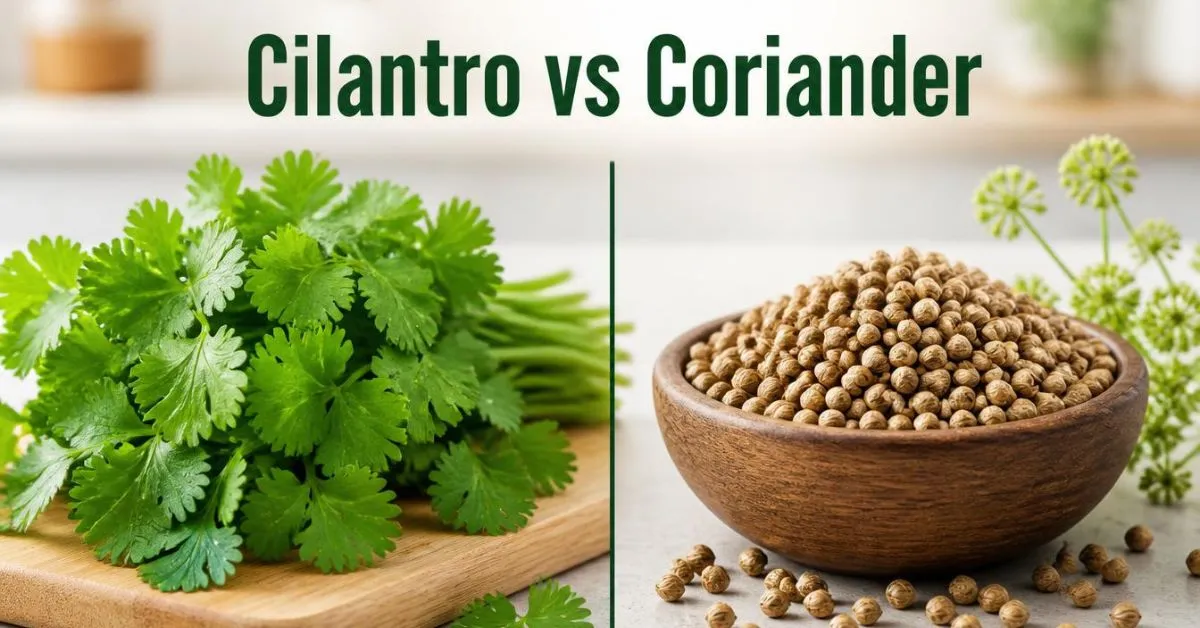
Cilantro and coriander come from the same plant, Coriandrum sativum. In the United States, cilantro usually means the fresh green leaves and stems, while coriander means the dried seeds.
Cilantro has a fresh, grassy taste. Coriander seeds have a warm, mild, and slightly citrus-like flavor. Both are useful in cooking, but they serve different purposes.
Key Takeaways
- Cilantro and coriander come from the same plant.
- In US recipes, cilantro usually means fresh leaves and stems.
- Coriander usually means dried seeds, sold whole or ground.
- Cilantro adds fresh flavor, while coriander adds warm spice.
- Fresh cilantro, whole coriander seeds, and ground coriander are not direct substitutes.
- In the UK and many other countries, coriander can also mean the fresh leaves.
What Is the Difference Between Cilantro & Coriander?
The main difference between cilantro and coriander is the part of the plant used and the way it is named.
Cilantro is the fresh green part of the plant. It has soft leaves and tender stems. Cooks use it in salsa, salads, tacos, soups, sauces, and many other dishes.
Coriander usually means the dried seeds in American recipes. You can buy them whole or ground into a powder. They add a warm, mild spice flavor to curries, sauces, marinades, and roasted vegetables.
Here is a quick comparison.
| Feature | Cilantro | Coriander |
|---|---|---|
| Plant part | Fresh leaves and stems | Dried seeds |
| Appearance | Green leaves and stems | Small, round, tan-brown seeds |
| Flavor | Fresh, grassy, citrusy | Warm, mild, slightly sweet and citrus-like |
| Form | Fresh herb | Whole seeds or ground powder |
| Main use | Salsa, salads, garnishes | Curries, spice blends, marinades |
| Best time to add | Near the end of cooking | During cooking or spice preparation |
| Grocery location | Produce section | Spice aisle |
The simple rule: Use cilantro for a fresh herbal taste and coriander for a warm spice flavor.
Do Cilantro & Coriander Come From the Same Plant?
Yes. Both come from Coriandrum sativum, a plant in the parsley family.
The plant grows green leaves and later produces flowers and seeds. People harvest the fresh leaves to use as cilantro. The mature seeds are dried and sold as coriander.
One plant can provide both ingredients, but they do not taste the same. The leaves have a fresh smell and flavor. The dried seeds have a warmer taste that works well with other spices.
In cooking, people commonly call the dried parts coriander seeds. Botanically, they are the plant’s dried fruits, but the term coriander seeds is standard in recipes and grocery stores.
The US Department of Agriculture also distinguishes the fresh leaves from the whole or ground dried spice.
How Do Cilantro & Coriander Taste?
Cilantro and coriander have different flavors and smells. Knowing the difference helps you choose the right ingredient for a recipe.
What Does Cilantro Taste Like?
Cilantro has a fresh, green flavor. Many people describe it as grassy, citrusy, or slightly peppery.
It can make rich foods taste brighter. It also adds a fresh finish to spicy dishes.
Cilantro works well in:
- Fresh salsa and guacamole
- Tacos and burrito bowls
- Salads and fresh sauces
- Soups and noodle dishes
- Curries and chutneys
Heat can weaken its fresh smell and taste. For this reason, many cooks add chopped cilantro near the end of cooking or just before serving.
What Does Coriander Taste Like?
Coriander seeds have a warm, mild flavor. They can taste earthy, nutty, slightly sweet, and citrus-like.
Whole seeds give small bursts of flavor when you bite into them. Ground coriander spreads its flavor more evenly through a dish.
Coriander works well in:
- Indian curries and spice mixes
- Roasted vegetables
- Meat and vegetable marinades
- Pickling liquids
- Soups, stews, and sauces
You can toast whole coriander seeds in a dry pan for a short time to bring out their aroma. Stir them often and watch closely so they do not burn. Let them cool before grinding them.
How Are Cilantro & Coriander Used in Cooking?
The best choice depends on the recipe and the flavor you want.
When Should You Use Cilantro?
Use cilantro when a dish needs a fresh, herbal finish.
For example, add chopped cilantro to salsa for a bright flavor. Sprinkle it over tacos just before serving. Mix it into a fresh salad or blend it into a green chutney.
You can also use the tender stems. Chop them finely and add them to sauces, marinades, or cooked dishes. They have plenty of flavor and can help reduce food waste.
Wash fresh cilantro under clean running water before use. Dry it well before chopping if you want to avoid adding extra water to a fresh sauce.
When Should You Use Coriander?
Use coriander when you want a warm spice flavor that blends into a dish.
Add ground coriander to a curry base with other spices. Mix it into a marinade for chicken or vegetables. You can also add whole seeds to pickling liquid.
Whole seeds and ground coriander have the same source, but they work differently.
- Whole coriander seeds: Good for pickling, spice blends, and dishes where you want a stronger bite of spice.
- Ground coriander: Good for curries, sauces, marinades, and spice rubs that need an even flavor.
Whole seeds often keep their aroma longer than ground coriander because less of their surface is exposed to air. For the best flavor, grind whole seeds shortly before use.
Can You Substitute Cilantro for Coriander?
Usually, no. Cilantro leaves and coriander seeds have different flavors, so replacing one with the other can change a dish.
The right substitute depends on which ingredient you need.
| Ingredient needed | Possible substitute | What to expect |
|---|---|---|
| Fresh cilantro | Flat-leaf parsley with a little lime juice | A fresh, green taste, but not the same flavor |
| Ground coriander | Ground cumin in a suitable dish | A stronger, earthier taste |
| Whole coriander seeds | Whole cumin seeds, if the recipe suits them | A different spice flavor and aroma |
These options are not exact matches. Start with a small amount and taste the food before adding more.
Example: Making Fresh Salsa
If a salsa recipe calls for chopped cilantro, ground coriander will not give the same fresh taste. Parsley with a little lime juice may work if you dislike cilantro or do not have it.
The result will taste different, but it can still be fresh and enjoyable.
Example: Making Curry
If a curry recipe calls for ground coriander, fresh cilantro leaves will not replace the spice. You may use a little ground cumin if it suits the recipe, but the final taste will change.
If you have whole coriander seeds, grind them to make ground coriander. This is a much closer replacement than using fresh leaves.
What If a Recipe Says Coriander?
Check the recipe’s country and ingredient details.
In a typical US recipe, coriander usually means dried seeds or ground coriander. In a British recipe, “fresh coriander” often means the leaves sold as cilantro in American stores.
Look for words such as “fresh,” “chopped,” “leaves,” “seeds,” or “ground.” These clues help you choose the right ingredient.
Why Does Cilantro Taste Like Soap to Some People?
Some people enjoy cilantro’s fresh taste. Others say it tastes or smells like soap.
One reason may be differences in the genes that help people detect smells. Cilantro contains natural aroma compounds called aldehydes. Some of these compounds may smell soapy to people who are more sensitive to them.
A study published in Flavour found a link between the way some people perceive cilantro and a genetic variation near the OR6A2 smell-receptor gene.
This gene is involved in detecting certain smells. However, the study did not prove that this gene alone causes cilantro aversion. Genes, food habits, and past experiences may all play a role.
If cilantro tastes like soap to you, try flat-leaf parsley in recipes that need a fresh green herb. You can also leave cilantro out when its flavor is not essential.
You may still enjoy coriander seeds. They have a different flavor and do not usually create the same response as fresh cilantro.
What Is Cilantro Called in Other Countries?
The names can change from one country to another. This is one of the main reasons people confuse cilantro and coriander.
In the United States:
- Cilantro usually means the fresh leaves and stems.
- Coriander usually means the dried seeds.
- Ground coriander means dried coriander seeds ground into powder.
In the UK and many other countries, coriander can mean the fresh leaves as well as the seeds. A recipe may say “fresh coriander” when it needs the green herb.
For example, if a British recipe asks for chopped fresh coriander to top a curry, an American cook should usually buy cilantro. If the recipe asks for coriander seeds, it needs the spice.
When using an international recipe, read the full ingredient name before shopping. Do not assume that the word “coriander” always means seeds.
How Do You Choose & Store Cilantro and Coriander?
The right storage method helps keep both ingredients fresh and flavorful.
Choosing & Storing Fresh Cilantro
Choose bunches with bright green leaves and firm stems. Avoid leaves that look slimy, badly bruised, or yellow.
Keep fresh cilantro in the refrigerator. You can wrap it loosely in a clean paper towel and place it in a suitable container or bag. Check it often and remove leaves that begin to spoil.
Another option is to stand the stems in a small amount of water in a clean container and cover the leaves loosely before refrigerating. Change the water when needed and check for signs of spoilage.
You can also freeze chopped cilantro for cooked dishes. Frozen leaves may lose their firm texture, so they are less suitable for fresh garnishes.
Choosing & Storing Coriander Seeds
Look for coriander seeds with a clean, pleasant smell. Avoid spice that smells stale or shows signs of moisture or mold.
Store whole seeds and ground coriander in sealed containers in a cool, dark, dry place. Keep them away from heat, light, and moisture.
Whole seeds often keep their aroma longer than ground spice. If your ground coriander has little smell, it may have lost much of its flavor.
Dry spices can lose flavor over time even when they are still safe to use. Follow package guidance and discard spices if you see mold, moisture damage, or other signs of spoilage.
FAQs:
Are cilantro and coriander the same thing?
They come from the same plant, Coriandrum sativum. In the United States, cilantro usually means fresh leaves and stems, while coriander usually means dried seeds. In many other countries, coriander can refer to the fresh leaves, too.
Is coriander the same as coriander seeds?
In US cooking, coriander usually refers to the dried seeds. They may be sold whole or ground into powder. The words “coriander seeds” make it clear that a recipe needs the spice, not fresh leaves.
Can I use ground coriander instead of fresh cilantro?
No, not as a direct replacement. Ground coriander adds warm spice, while fresh cilantro adds a bright, green flavor. If you need a fresh herb substitute, try flat-leaf parsley with a little lime juice.
What is cilantro called in the UK?
Cilantro is usually called coriander in the UK. Recipes often use “fresh coriander” for the leaves and “coriander seeds” for the spice.
Do cilantro leaves and coriander seeds taste the same?
No. Cilantro leaves taste fresh, grassy, and citrusy. Coriander seeds taste warm, mild, and slightly sweet or nutty. They come from the same plant but play different roles in cooking.
Is ground coriander the same as coriander powder?
Yes. In most recipes, ground coriander and coriander powder mean the same thing: dried coriander seeds that have been ground into a powder.
Can I use cilantro stems?
Yes. Tender cilantro stems are edible and have a fresh herbal flavor. Chop them finely and add them to sauces, chutneys, marinades, or cooked dishes. Save the leaves for a garnish if you want a fresh finish.
Conclusion:
The difference between cilantro and coriander comes down to the plant part used and the name common in each country. In the United States, cilantro means fresh leaves and stems, while coriander usually means dried seeds.
Use cilantro for fresh flavor in salsa, salads, tacos, and sauces. Use whole or ground coriander when you want warm spice in curries, marinades, and roasted vegetables.
If a recipe comes from another country, check whether it means fresh leaves or dried seeds before you start cooking. This simple step can help you choose the right ingredient and get the flavor you expect.

Olivia Smith is a professional author at ReplyGenius.com, where I create clear and engaging content on communication and writing.