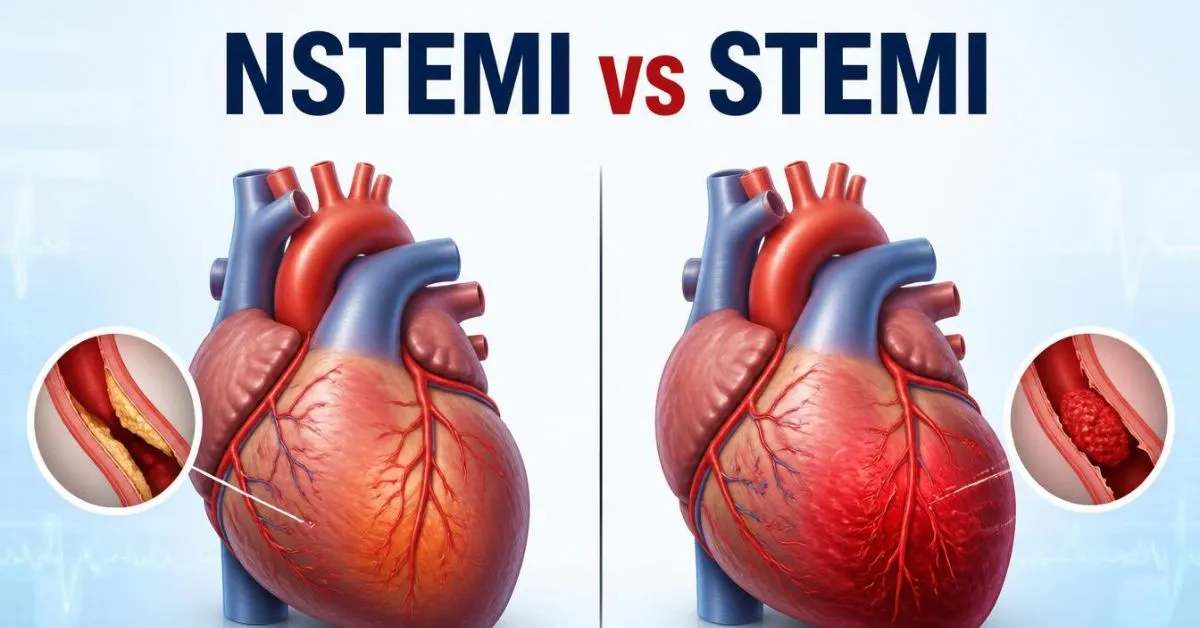
NSTEMI vs STEMI: Both are types of heart attacks, but they differ in their ECG findings and treatment approach. STEMI shows a specific pattern of ST-segment elevation on an ECG and usually needs rapid treatment to restore blood flow.
NSTEMI does not show this pattern, but it can still cause severe heart damage. Doctors use symptoms, ECG results, troponin blood tests, and other findings to guide treatment.
Key Takeaways
- NSTEMI and STEMI are both medical emergencies.
- STEMI shows a specific ST-segment elevation pattern on an ECG.
- NSTEMI does not show this pattern, but other ECG changes may appear.
- Both types usually raise troponin levels because heart muscle cells are injured.
- NSTEMI can occur even when a coronary artery is fully blocked.
- STEMI often needs immediate treatment to restore blood flow.
- NSTEMI treatment depends on the patient’s risk, symptoms, test results, and overall condition.
What Is the Difference Between NSTEMI & STEMI?
NSTEMI and STEMI are two types of myocardial infarction. This is the medical term for a heart attack.
Both happen when the heart muscle does not get enough oxygen-rich blood. If blood flow stays low, heart muscle cells can become injured and die. The main difference is the pattern seen on an electrocardiogram (ECG or EKG).
NSTEMI stands for non-ST-elevation myocardial infarction. It means a heart attack without the usual diagnostic ST-segment elevation pattern. The ECG may show other changes, or it may look normal at first.
STEMI stands for ST-elevation myocardial infarction. It shows a specific ST-segment elevation pattern that can signal a serious loss of blood flow to the heart.
A STEMI often involves a sudden, complete blockage of a coronary artery. An NSTEMI may involve a partial blockage, reduced blood flow, or even a complete blockage. The ECG pattern alone cannot tell doctors the full state of the artery.
Doctors also need to confirm that heart muscle injury has occurred and look for signs of poor blood flow. They use symptoms, blood tests, ECG results, and other tests to make the diagnosis.
NSTEMI vs STEMI: Key Differences
| Feature | NSTEMI | STEMI |
|---|---|---|
| Full name | Non-ST-elevation myocardial infarction | ST-elevation myocardial infarction |
| ECG | No diagnostic ST elevation; other changes may appear | Diagnostic ST elevation or a recognized equivalent pattern |
| Troponin | Usually rises or falls in a pattern that supports acute injury | Usually rises or falls in a pattern that supports acute injury |
| Artery blood flow | May be reduced or fully blocked | Often severely reduced or fully blocked |
| Heart damage | Can be mild or severe | Can be mild or severe |
| Urgency | Emergency care; timing depends on risk and condition | Usually requires immediate assessment and rapid blood flow restoration |
| Common procedure | Angiography, PCI, or bypass surgery when needed | Urgent angiography and usually PCI |
| Clot-busting drugs | Not routinely used | May be used for eligible patients if timely PCI is not available |
These are common patterns, not rules for every patient. The amount of heart damage depends on several factors, including the artery involved, how long blood flow is reduced, and how quickly treatment begins.
What Causes NSTEMI & STEMI?
The heart needs a steady supply of oxygen-rich blood. Coronary arteries carry this blood to the heart muscle.
A fatty substance called plaque can build up inside the arteries. If plaque breaks open or becomes damaged, a blood clot may form. The clot can reduce or stop blood flow.
This can cause acute coronary syndrome (ACS). ACS is a group of conditions that includes STEMI, NSTEMI, and unstable angina.
- STEMI: The ECG shows a pattern that signals an acute heart attack and the need for rapid assessment and treatment.
- NSTEMI: Heart muscle injury occurs, but the ECG does not meet the usual criteria for STEMI.
- Unstable angina: The heart may not get enough blood, but tests do not show the heart muscle injury needed to diagnose a heart attack.
Unstable angina is still serious and needs urgent medical care.
Most heart attacks result from problems in the coronary arteries. However, heart muscle injury can also occur for other reasons, such as severe illness or a major mismatch between the heart’s need for oxygen and its supply. Doctors must decide whether the problem is a heart attack or another cause of injury.
Symptoms of NSTEMI vs STEMI
NSTEMI and STEMI can cause the same symptoms. You cannot tell which type you have by how the pain feels.
Common symptoms include:
- Chest pain, pressure, or tightness
- Pain in one or both arms
- Pain in the back, neck, jaw, or shoulder
- Shortness of breath
- Cold sweats
- Nausea or vomiting
- Dizziness or fainting
- Sudden weakness or unusual tiredness
Some people have severe chest pain. Others may have mild symptoms or no clear chest pain at all. Symptoms can also differ from person to person.
For example, one person may feel strong chest pressure, while another may mainly feel short of breath, weak, or sick to the stomach.
Call 911 in the United States if you think you or someone else is having a heart attack. Do not wait for symptoms to become severe or drive yourself to the hospital.
Even if symptoms improve, urgent assessment is still important. The cause may remain dangerous.
How Are NSTEMI & STEMI Diagnosed?
Doctors use symptoms, an ECG, blood tests, and sometimes imaging or coronary angiography. Each test provides a different piece of the picture.
1. ECG or EKG
An ECG records the heart’s electrical activity. It can show signs of a heart attack and help doctors decide how quickly treatment is needed.
In STEMI: The ECG shows a specific ST-segment elevation pattern in the correct leads. Some other patterns can also signal a serious blockage and need urgent specialist assessment.
In NSTEMI: The ECG does not show the usual diagnostic ST elevation. It may show ST depression, T-wave changes, or no clear changes at first.
A normal first ECG does not rule out a heart attack. Doctors may repeat it if symptoms continue or the patient’s condition changes.
When doctors identify a clear STEMI pattern, they should not delay urgent treatment while waiting for a troponin result.
2. Troponin Blood Test
Troponin is a protein found in heart muscle cells. When these cells are injured, troponin can enter the blood.
Troponin levels often rise in both NSTEMI and STEMI. Doctors usually use a high-sensitivity troponin test and may take more than one blood sample to check whether the level rises or falls.
However, a high troponin result does not always mean a heart attack. Other conditions, such as severe illness, heart failure, or abnormal heart rhythms, can also raise troponin.
To diagnose a heart attack, doctors look for a rise or fall in troponin along with evidence that the heart muscle is not getting enough blood. That evidence may come from symptoms, ECG changes, imaging, or other findings.
3. Coronary Angiography
Coronary angiography helps doctors find narrowed or blocked heart arteries.
A doctor guides a thin tube through a blood vessel and uses contrast dye to show the arteries on X-ray images.
If the doctor finds a blockage that needs treatment, they may open the artery with a procedure called percutaneous coronary intervention (PCI). A stent may be placed to help keep the artery open.
Some patients need angiography at once. Others may need it early during their hospital stay, while lower-risk patients may follow a different plan.
The timing depends on symptoms, blood pressure, ECG findings, blood tests, heart function, and other risk factors.
4. Echocardiogram & Other Tests
An echocardiogram, often called an echo, uses sound waves to make pictures of the heart.
It can show how well the heart pumps blood and whether some areas move less than they should. It may also help doctors look for complications.
Other tests may be needed to assess the heart or rule out other causes of symptoms. The care team chooses tests based on the patient’s condition.
NSTEMI vs STEMI: Which Is More Serious?
STEMI is often more immediately dangerous because it can involve a sudden loss of blood flow to a large area of the heart. Without fast treatment, more heart muscle may die.
However, NSTEMI is not a mild heart attack. It can cause severe heart damage, heart failure, dangerous heart rhythms, or death.
Some NSTEMI cases involve a fully blocked artery. Some patients also have ongoing chest pain, low blood pressure, heart failure, or other signs that call for urgent treatment.
The risk depends on several factors:
- How much heart muscle is affected
- Which artery is involved
- How long blood flow stays low
- How well the heart pumps
- Whether dangerous heart rhythms occur
- The person’s age and other health problems
- How quickly treatment begins
So, which is worse? STEMI often needs faster artery-opening treatment. But the name alone cannot tell you which patient will have the worse outcome. Both types need urgent medical care.
How Are NSTEMI & STEMI Treated?
Treatment aims to improve blood flow, stop more clots from forming, protect the heart, and lower the risk of another heart attack.
The care team chooses treatment based on test results, symptoms, bleeding risk, and other health needs. The plan may include medicines, a procedure to open an artery, or surgery.
STEMI Treatment
STEMI usually needs rapid reperfusion. This means restoring blood flow to the heart muscle.
The preferred treatment is often primary percutaneous coronary intervention (PCI). During PCI, a doctor opens the blocked artery with a small balloon. A stent may be placed to help keep the artery open.
If timely PCI is not available, doctors may consider clot-busting medicine, also called fibrinolysis, for eligible patients. These drugs can break down a clot, but they can also cause serious bleeding.
The care team must check whether this treatment is safe and suitable. Clot-busting drugs are not right for every patient.
NSTEMI Treatment
NSTEMI treatment may include:
- Antiplatelet medicines to reduce clot formation
- Anticoagulants to limit further clot growth
- Medicines to ease symptoms and reduce strain on the heart
- Cholesterol-lowering medicine
- Coronary angiography
- PCI with a stent, or bypass surgery when needed
Some patients need immediate angiography. For example, ongoing chest pain that does not improve, unstable blood pressure, or dangerous heart rhythms may signal a need for urgent action.
Other patients may have angiography early during their hospital stay. Doctors use risk scores, test results, and the patient’s condition to guide this decision.
Lower-risk patients may need more testing before the team decides whether angiography is needed. The plan should match the patient’s risk and overall health.
Clot-busting drugs are not routinely used for NSTEMI. They do not have the same role as they do in eligible STEMI cases and may cause harm when used in the wrong setting.
Medicines After a Heart Attack
Many patients need medicines after either type of heart attack.
These may include:
- Antiplatelet medicines: Help prevent platelets from forming new clots.
- Statins: Lower LDL cholesterol and help reduce future heart risk.
- Beta blockers: May help certain patients by reducing the heart’s workload.
- ACE inhibitors or related medicines: May help some patients control blood pressure or protect heart function.
- Other medicines: Depend on symptoms, heart function, and other health problems.
Some patients receive two antiplatelet medicines. This is called dual antiplatelet therapy. The best choice and length of treatment depend on factors such as stent use, bleeding risk, and other medical needs.
The 2025 ACC/AHA guideline recommends dual antiplatelet therapy for many patients after acute coronary syndrome, often for at least 12 months when bleeding risk is not high. However, treatment plans can differ. Patients should never stop or change prescribed medicines without speaking to their care team.
Complications of NSTEMI & STEMI
Both types of heart attack can lead to short-term or long-term problems.
Possible complications include:
- Heart failure: The heart becomes too weak to pump blood well.
- Abnormal heart rhythms: The heart may beat too fast, too slowly, or unevenly.
- Cardiogenic shock: The heart cannot pump enough blood to meet the body’s needs.
- Further heart damage: More heart muscle may be injured if blood flow stays low.
- Another heart attack: New or ongoing problems in the coronary arteries can cause another event.
The risk is not the same for every person. Fast treatment can help limit damage, but it cannot remove every risk.
Doctors may monitor patients in the hospital to check their heart rhythm, blood pressure, symptoms, and heart function.
Recovery After NSTEMI vs STEMI
Recovery depends on how much heart muscle was damaged and whether complications occurred.
Some people return to many usual activities within weeks. Others need more time. There is no single recovery time that fits every patient.
Recovery may include:
- Taking all prescribed medicines
- Attending follow-up visits
- Joining cardiac rehabilitation
- Managing blood pressure and cholesterol
- Controlling diabetes, if present
- Stopping smoking
- Eating a heart-healthy diet
- Returning to exercise with medical guidance
Cardiac rehabilitation is a supervised program that helps people build strength and lower their risk of future heart problems. It may include exercise, education, and help with daily habits.
Follow-up care also matters. Doctors may check cholesterol levels, review medicines, and assess heart function. They can help set safe goals for work, driving, exercise, and other daily activities.
A STEMI does not always lead to a worse outcome than an NSTEMI. The amount of damage, the speed of treatment, and the person’s overall health all matter.
If chest pain or other possible heart attack symptoms return, call 911 in the United States. Do not wait for a follow-up visit.
How Can You Lower the Risk of Another Heart Attack?
After either type of heart attack, prevention becomes an important part of care.
You can work with your healthcare team to:
- Take medicine as directed.
- Keep blood pressure and cholesterol under control.
- Stop smoking and avoid secondhand smoke.
- Choose foods with less salt and less saturated fat.
- Stay active as your care team advises.
- Keep follow-up visits.
- Ask about cardiac rehabilitation.
- Follow the plan for diabetes or other health problems, if present.
These steps cannot remove every risk, but they can help protect heart health and lower the chance of future problems.
FAQs:
Is NSTEMI a real heart attack?
Yes. NSTEMI is a real heart attack. It means heart muscle injury has occurred, usually due to reduced blood flow, but the ECG does not show the usual ST-segment elevation pattern used to classify STEMI. NSTEMI can cause serious damage and needs urgent hospital care.
Can NSTEMI have a complete artery blockage?
Yes. A complete blockage can occur in NSTEMI. The name refers to the ECG pattern, not a guarantee that the artery is only partly blocked. Doctors may use coronary angiography to find the location and severity of the blockage.
Do NSTEMI and STEMI both raise troponin?
Usually, yes. Both types of heart attack cause heart muscle injury, so troponin levels generally rise or fall in a pattern that supports acute injury. A high result can also occur for other reasons, so doctors must check it with symptoms, ECG findings, and other evidence.
Can an ECG miss a heart attack?
Yes. A first ECG may not show clear signs of a heart attack. Changes can develop over time, so doctors may repeat the ECG and use troponin tests to help make the diagnosis. A normal ECG alone does not rule out a heart attack.
Does NSTEMI need a stent?
Not every NSTEMI patient needs a stent. Doctors may recommend angiography to examine the heart arteries. If they find a blockage that needs treatment, they may use a stent or recommend bypass surgery. Some patients may be treated with medicines based on their risk and test results.
How long does recovery take after NSTEMI or STEMI?
Recovery can take weeks or longer. It depends on the amount of heart damage, heart function, complications, and other health problems. Follow your care team’s advice about work, exercise, driving, and daily tasks. Cardiac rehabilitation may help you recover safely.
Can NSTEMI turn into STEMI?
A heart attack can develop new ECG changes over time, and a patient first diagnosed with NSTEMI may later show ST elevation. However, NSTEMI does not always progress to STEMI. New or worsening chest pain, shortness of breath, or fainting needs immediate medical attention.
Conclusion:
The main difference in NSTEMI vs STEMI is the ECG pattern. STEMI shows a specific ST-segment elevation pattern and often needs immediate treatment to restore blood flow. NSTEMI does not show this pattern, but it can still cause severe heart damage and may involve a fully blocked artery.
Doctors use symptoms, ECG results, troponin tests, and sometimes angiography to guide treatment. The timing and type of care depend on the patient’s condition and risk.
Both NSTEMI and STEMI are medical emergencies. If you think someone is having a heart attack, call 911 in the United States.

Aiden Robert, an author at ReplyyGenius.com, where I share smart conversation tips, flirty replies, and practical communication ideas to help people reply with confidence.