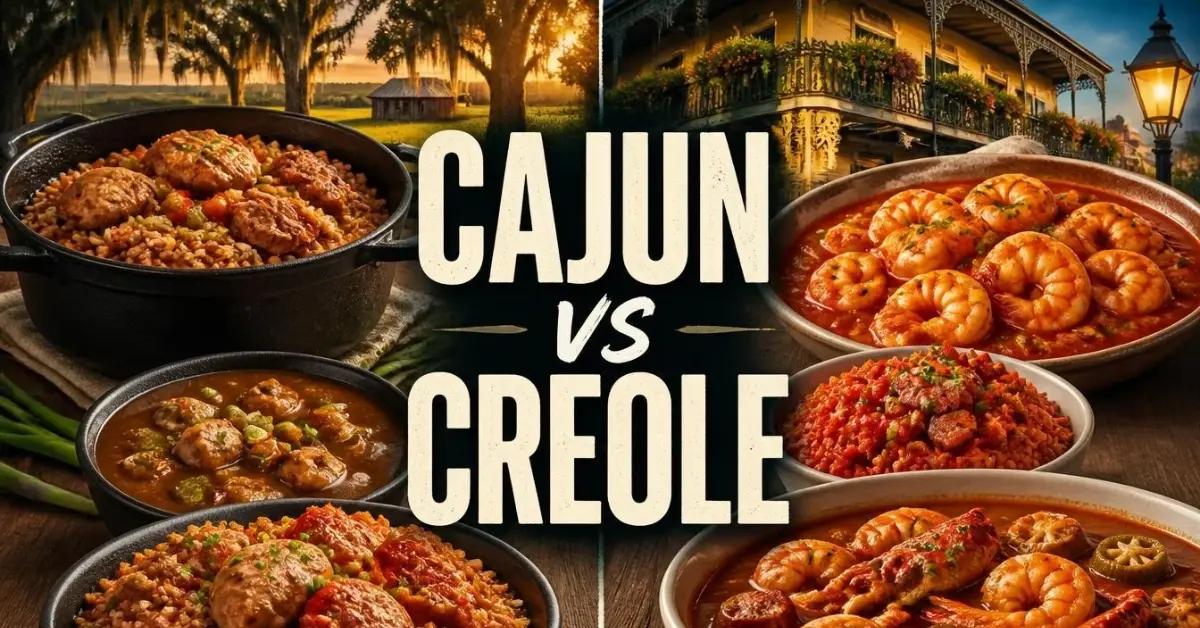
Cajun vs Creole describes two distinct but closely connected cultures and food traditions from Louisiana.
Cajun culture traces its roots to French-speaking Acadian settlers, while Creole culture developed among Louisiana’s diverse colonial communities, including French, Spanish, African, and Indigenous influences.
Their cuisines share ingredients but often differ in cooking styles, recipes, and traditional dishes.
Key Takeaways
- Cajun culture has strong roots in the Acadian people who settled in southern Louisiana.
- Creole culture developed from several communities and cultural influences in colonial Louisiana.
- Cajun cooking is often associated with rustic, hearty meals, while Creole cooking has a strong connection to New Orleans’ diverse food traditions.
- Cajun and Creole cuisines both feature gumbo, jambalaya, seafood, rice, and local vegetables.
- Neither cuisine is always hotter than the other. Spice levels depend on the recipe and cook.
What Is The Difference Between Cajun & Creole?
The main difference between Cajun and Creole is their cultural history and the communities that shaped their traditions.
Cajun refers mainly to descendants of Acadian settlers who arrived in Louisiana after being forced from their homes in present-day Canada. Their culture developed around rural communities, farming, fishing, and close family traditions.
Creole has a broader meaning. In Louisiana, it describes a cultural identity that developed among people born in the colony and their descendants. It includes different communities with French, Spanish, African, and Indigenous roots.
These histories also influenced their food. Cajun cooking is often linked to country-style meals made with local ingredients. Creole cooking reflects the many cultural influences found in New Orleans and other Louisiana communities.
However, these differences are not strict rules. Cajun and Creole traditions have influenced each other for generations.
Where Did Cajun & Creole Cultures Come From?
Understanding their history makes the differences much easier to understand.
The Origins of Cajun Culture
Cajun culture began with the Acadians, French-speaking settlers who lived in a region of Canada called Acadia, mainly present-day Nova Scotia and surrounding areas.
In 1755, British authorities began forcibly removing Acadians from their homeland. This event became known as the Great Expulsion, or Le Grand Dérangement.
Many displaced Acadians eventually traveled to Louisiana. They settled in rural areas, especially in the southwestern part of the state.
Over time, they adapted their French traditions to Louisiana’s environment. They also exchanged customs, food, and skills with Indigenous people, Africans, and other local communities.
Today, Cajun heritage is strongly connected to southwestern Louisiana, French traditions, music, family gatherings, and regional cooking.
The Origins of Creole Culture
Creole culture developed during Louisiana’s colonial period, when the region was influenced by French and Spanish rule.
Originally, the term Creole referred to people or things born or developed in the Americas rather than brought from Europe. In Louisiana, its meaning expanded over time.
Creole communities included people of European, African, and mixed ancestry. Indigenous influences also helped shape Louisiana’s wider cultural identity.
New Orleans became an important center of Creole culture. Its history of trade, migration, and cultural exchange helped create distinctive traditions in food, music, language, and architecture.
It is important to understand that Creole identity is not limited to one race or social group. It has different meanings depending on family history and community traditions.
Cajun vs Creole: Key Differences at a Glance
The following table highlights some common differences between the two traditions.
| Feature | Cajun | Creole |
| Historical roots | Acadian settlers | Diverse colonial Louisiana communities |
| Main cultural region | Southwestern Louisiana | Strong historical connection to New Orleans |
| Cultural influences | French Acadian and local traditions | French, Spanish, African, Indigenous, and other influences |
| Cooking style | Often rustic and hearty | Often associated with diverse urban cooking |
| Common ingredients | Rice, seafood, sausage, peppers | Tomatoes, seafood, rice, herbs |
| Popular dishes | Brown jambalaya, Cajun gumbo | Red jambalaya, Creole gumbo |
| Seasoning | Often bold and pepper-forward | Often uses a varied blend of herbs and spices |
These are general patterns, not fixed definitions. Both cultures are diverse, and their food traditions overlap.
Cajun vs Creole Food: How Are They Different?
Food is one of the easiest ways to explore Cajun and Creole traditions.
Both cuisines use ingredients that grow or are caught in Louisiana. These include rice, shrimp, crawfish, fish, onions, celery, bell peppers, and local spices.
The main differences often come from cooking methods, historical influences, and regional preferences.
Cajun Cooking
Cajun cooking is often described as country cooking. It developed among communities that relied on farming, hunting, fishing, and locally available ingredients.
Many traditional recipes are filling and practical. One-pot meals are especially popular because they can feed large families and groups.
Common Cajun ingredients include:
- Andouille sausage
- Crawfish and shrimp
- Rice
- Onions and celery
- Bell peppers
- Garlic
- Black and cayenne pepper
A classic example is Cajun brown jambalaya. The meat and vegetables are cooked together, allowing their flavors to develop and giving the rice its darker color.
Cajun dishes are often rich in flavor, but they do not always need to be extremely spicy.
Creole Cooking
Creole cooking reflects the cultural diversity of Louisiana, especially New Orleans. Its history includes French, Spanish, African, Caribbean, and other influences.
These traditions helped create a wide range of recipes and cooking techniques.
Creole cooking often features:
- Tomatoes
- Seafood
- Rice
- Garlic
- Onions and celery
- Bell peppers
- Fresh herbs
- Butter and other cooking fats
Shrimp Creole is a well-known example. It combines shrimp with a seasoned tomato-based sauce and is commonly served over rice.
Creole cooking is sometimes called city cooking because of its historical connection to New Orleans. However, it is not limited to wealthy households or elaborate recipes. Creole food includes everyday meals as well as more formal dishes.
Cajun vs Creole Seasoning: What’s the Difference?
Creole and Cajun seasoning blends share several ingredients, but their flavor profiles can differ.
Cajun seasoning often focuses on bold pepper flavors. Common ingredients include paprika, cayenne, black pepper, garlic powder, and onion powder.
Creole seasoning often includes a wider selection of herbs, such as oregano, thyme, and basil, along with paprika, garlic, and black pepper.
| Feature | Cajun Seasoning | Creole Seasoning |
| Main flavor | Bold and peppery | Herbal and balanced |
| Common spices | Cayenne, paprika, black pepper | Paprika, black pepper, cayenne |
| Herbs | Sometimes included | Often includes thyme and oregano |
| Common uses | Meat, seafood, vegetables | Seafood, sauces, rice, vegetables |
These are general differences rather than universal recipes. Commercial blends vary, and many home cooks create their own combinations.
Popular Dishes: Cajun vs Creole
Some Louisiana dishes belong to both traditions. Their preparation can change depending on the community, family recipe, and available ingredients.
Gumbo
Gumbo is one of the best examples of the connection between Cajun and Creole cooking. Both traditions prepare gumbo, but recipes can differ.
Cajun gumbo often uses a dark roux made by cooking flour with oil or another fat. It may include sausage, chicken, seafood, or game. Creole gumbo may feature tomatoes, seafood, okra, and a wider mix of ingredients.
However, there is no single rule that determines whether a gumbo is Cajun or Creole. Recipes vary widely, and both traditions have multiple versions.
Jambalaya
Jambalaya is another popular dish shared by both cuisines.
The most familiar distinction is color and the use of tomatoes.
- Cajun jambalaya: Usually brown, with meat and vegetables browned before rice and liquid are added. Traditional versions generally do not use tomatoes.
- Creole jambalaya: Often called red jambalaya because tomatoes are commonly included.
Both versions can contain sausage, chicken, seafood, rice, and vegetables. The differences reflect regional cooking traditions rather than completely separate dishes.
Étouffée is a Louisiana dish made by cooking seafood, often crawfish or shrimp, in a rich sauce. The French word étouffée means smothered.
The seafood is gently cooked in a flavorful mixture that often includes onions, celery, bell peppers, and seasonings.
Both Cajun and Creole cooks prepare étouffée. Creole versions may include tomatoes, while many Cajun versions use a darker, richer sauce without them.
Is Cajun or Creole Food Spicier?
Cajun food is often associated with stronger pepper flavors, but that does not mean every Cajun dish is hot.
Creole food can also be spicy. Both traditions use cayenne pepper, black pepper, paprika, garlic, and other seasonings. The heat depends on the recipe and the cook.
For example, a mild Cajun rice dish may have less heat than a spicy Creole seafood sauce. If you prefer milder flavors, you can enjoy either cuisine by choosing recipes with less cayenne and hot pepper.
Are Cajun & Creole People The Same?
No. Cajun and Creole are different cultural identities with distinct historical backgrounds.
Cajuns mainly trace their ancestry to the Acadian people who settled in Louisiana after their expulsion from Canada. Creole identity developed among diverse communities in colonial Louisiana, including people of European, African, and mixed ancestry.
However, the identities are not mutually exclusive in every family or community. People can have connections to both traditions through ancestry, marriage, language, and shared cultural experiences.
FAQs:
1. What is the main difference between Cajun and Creole?
Cajun culture primarily traces its roots to French-speaking Acadian settlers who moved to Louisiana. Creole culture developed from the diverse populations of colonial Louisiana, including French, Spanish, African, and Indigenous communities. Their food traditions also differ, although many ingredients and dishes are shared.
2. Is New Orleans Cajun or Creole?
New Orleans is historically one of the most important centers of Creole culture. However, Cajun traditions are also part of the city’s food scene. Both cuisines contribute to the city’s restaurants, festivals, and culinary identity.
3. Is gumbo Cajun or Creole?
Gumbo can be either Cajun or Creole. Cajun versions often feature a dark roux and may include chicken or sausage. Creole versions commonly use seafood and may include tomatoes. Recipes vary, so the ingredients alone do not always determine a dish’s cultural identity.
4. What is the difference between Cajun and Creole jambalaya?
Cajun jambalaya is usually brown because the meat and vegetables are browned during cooking, and tomatoes are generally left out. Creole jambalaya is often red because it includes tomatoes. Both versions combine rice, vegetables, seasonings, and sometimes meat or seafood.
5. Is Cajun food always spicy?
No. Cajun food can be bold and peppery, but it is not always hot. Some recipes use very little cayenne pepper, while others have a stronger kick. The amount of heat depends on the cook and the ingredients.
6. Which came first, Cajun or Creole culture?
Creole culture in colonial Louisiana developed before the major arrival of Acadian settlers in the 1760s. Cajun culture developed later as Acadian communities established themselves in Louisiana. Both traditions continued to evolve through cultural exchange.
Conclusion:
Understanding Cajun vs Creole means looking beyond food and exploring Louisiana’s history, people, and traditions.
Cajun culture grew from the experiences of Acadian settlers who built new communities in southern Louisiana. Creole culture developed through the meeting of different peoples and traditions during the colonial period.
Their cuisines reflect these unique backgrounds. Cajun cooking is often associated with hearty country meals, while Creole cooking reflects the diverse culinary history of New Orleans.
Still, both traditions share a love of local ingredients, flavorful dishes, and community gatherings. If you prefer Cajun gumbo, Creole jambalaya, or a classic seafood étouffée, both cuisines offer a delicious taste of Louisiana’s rich cultural heritage.

Emily Carter is a dedicated author at ReplyGenius.com, creating helpful, natural, and engaging content focused on replies, messages, and everyday conversations.