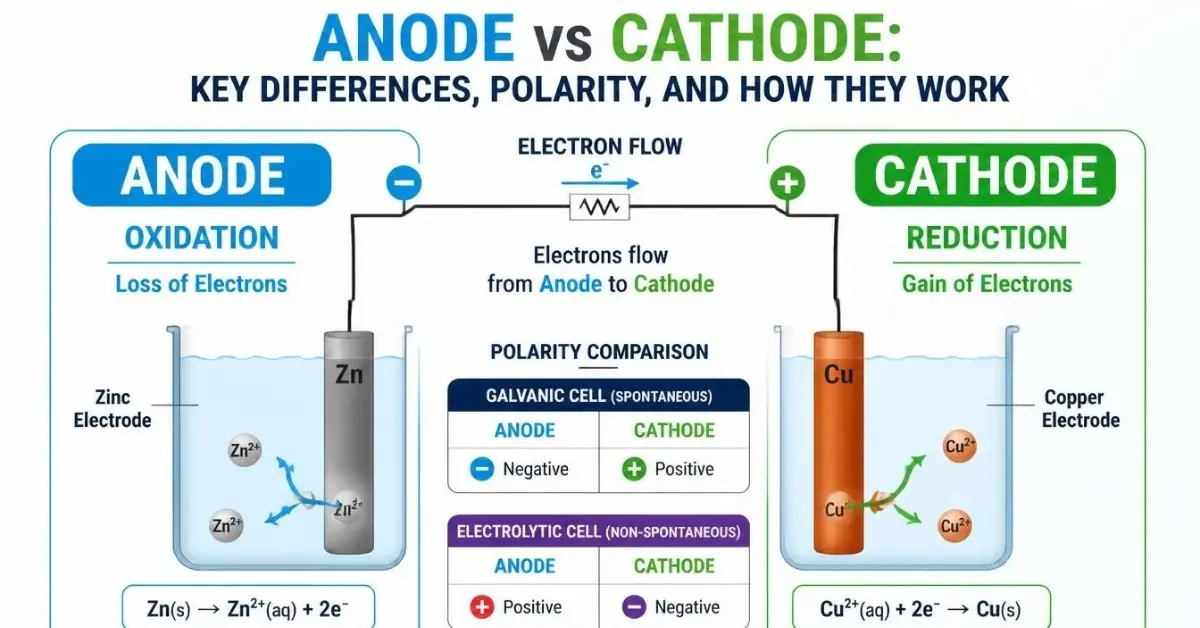
The Anode and Cathode are two parts of an electric cell or device. The anode is where oxidation happens, and the cathode is where reduction happens.
In simple words, oxidation releases electrons, while reduction takes in electrons.
The anode is negative in a battery that is giving power, but positive in a cell that uses outside power to cause a reaction.
Key Takeaways
- Anode: The place where oxidation happens.
- Cathode: The place where reduction happens.
- Oxidation releases electrons.
- Reduction takes in electrons.
- In a battery giving power, the anode is negative.
- In a cell using outside power, the anode is positive.
- In a battery, the anode and cathode change roles when the battery charges.
What Is an Anode?
An anode is an electrode where oxidation takes place. An electrode is a part that carries electric current. It is often made of metal or another material that can carry electricity.
During oxidation, atoms or ions lose electrons. These electrons can then move through an outside wire. For example, in a simple zinc-copper cell, zinc gives up electrons. This makes zinc the anode.
Easy way to remember: Oxidation happens at the anode.
What Is a Cathode?
A cathode is an electrode where reduction takes place. During reduction, atoms or ions gain electrons. They take in electrons that come through the outside wire.
In a zinc-copper cell, copper ions take in electrons and become copper metal. This happens at the cathode.
Easy way to remember: Reduction happens at the cathode.
Anode vs Cathode: Main Differences
The anode and cathode have different jobs. The table below shows the main differences.
| Feature | Anode | Cathode |
|---|---|---|
| Main job | Oxidation | Reduction |
| What happens to electrons? | Electrons are released | Electrons are gained |
| In a battery giving power | Negative | Positive |
| In a cell using outside power | Positive | Negative |
| Easy memory tip | An Ox | Red Cat |
Remember that the anode and cathode are named by the reactions that happen there. Their positive or negative charge can change from one type of cell to another.
How Do Anode and Cathode Work?
An anode and cathode work together to make an electric reaction happen. In a simple battery, one side releases electrons.
The other side takes them in. The electrons move through a wire. This flow of electrons can power a small device.
Here is how the two electrodes work:
- Oxidation happens at the anode.
- Electrons are released at the anode.
- Electrons move through the outside wire.
- Reduction happens at the cathode.
- The cathode takes in electrons.
The liquid or other material inside the cell also helps ions move between the two sides.
Anode and Cathode In a Simple Battery
A simple zinc-copper cell is a good way to learn about anode and cathode.
It has two metal parts:
- A zinc electrode
- A copper electrode
It also has a liquid that helps ions move. When the cell makes power, zinc loses electrons. This makes zinc the anode. Copper ions gain those electrons. This makes the copper side the cathode.
The reactions are:
At the anode:
Zn → Zn²⁺ + 2e⁻
At the cathode:
Cu²⁺ + 2e⁻ → Cu
In simple words:
- Zinc gives up electrons.
- Copper ions take in electrons.
- Electrons move through the wire from zinc to copper.
This is how the cell makes an electric current.
Why Does The Anode Change From Negative To Positive?
This is one of the most common questions about anodes and cathodes. The answer depends on the type of cell.
There are two main types:
1. Galvanic Cell
A galvanic cell makes electricity from a chemical reaction. A normal battery giving power works this way.
In this type of cell:
- Anode is negative.
- Cathode is positive.
- Electrons move from anode to cathode through the wire.
2. Electrolytic Cell
An electrolytic cell uses electricity to make a chemical reaction happen. A power source pushes the reaction forward.
In this type of cell:
- Anode is positive.
- Cathode is negative.
- Oxidation still happens at the anode.
- Reduction still happens at the cathode.
Important: The anode is always where oxidation happens. The cathode is always where reduction happens. Their positive or negative signs depend on the type of cell.
Anode vs Cathode In Rechargeable Batteries
Rechargeable batteries are found in phones, laptops, and electric cars. They can store and release energy.
They work in two ways:
- Discharge: The battery gives power.
- Charge: The battery stores power.
During discharge:
- The anode is the negative electrode.
- The cathode is the positive electrode.
- Electrons move through the outside circuit from anode to cathode.
During charging, the reactions go in the opposite direction. The roles of the electrodes also change.
| Battery State | Anode | Cathode |
|---|---|---|
| Giving power | Negative electrode | Positive electrode |
| Being charged | Positive electrode | Negative electrode |
This table uses the terms anode and cathode based on the reactions taking place at each electrode.
What Are The Anode & Cathode Made Of?
Different batteries use different materials.
In many lithium-ion batteries:
- The anode is made from graphite.
- The cathode is made from a lithium-based material.
- The electrolyte helps lithium ions move.
- The separator keeps the two electrodes apart.
Some common cathode materials are:
- LFP, which means lithium iron phosphate.
- NMC, which means lithium nickel manganese cobalt oxide.
When the battery gives power, lithium ions move from the anode side to the cathode side inside the battery.
When the battery charges, the ions move back. The separator helps stop the electrodes from touching. But it still lets lithium ions pass through.
Anode vs Cathode In a Diode
An anode and cathode are also found in diodes. A diode is a small electronic part. It lets electric current flow mainly in one direction.
A diode has two ends:
- Anode
- Cathode
When a normal diode is connected the right way, current flows from the anode to the cathode.
A dark band on many diodes marks the cathode side. An LED is a special type of diode. It gives off light when current flows through it in the correct direction.
The names anode and cathode are the same, but the way they work in a diode is not the same as in a battery.
Easy Trick To Remember Anode & Cathode
Here is a simple trick:
An Ox, Red Cat
- An Ox means oxidation happens at the anode.
- Red Cat means reduction happens at the cathode.
This short trick can help you remember the main rule.
You can also remember:
- Anode = oxidation
- Cathode = reduction
These rules work for both galvanic and electrolytic cells.
Common Mistakes About Anode & Cathode
Students often mix up these two terms. Here are some mistakes to avoid.
Mistake 1: The anode is always negative.
This is not true. It is negative in a galvanic cell but positive in an electrolytic cell.
Mistake 2: The cathode is always positive.
This is also not true. It is positive in a galvanic cell but negative in an electrolytic cell.
Mistake 3: Electrons move through the liquid.
Electrons move through the outside wire. Ions carry charge through the electrolyte.
Mistake 4: Anode and cathode are only found in batteries.
They are also found in other cells and in electronic parts such as diodes.
Mistake 5: Oxidation and reduction can happen anywhere.
In an electrochemical cell, oxidation happens at the anode, and reduction happens at the cathode.
FAQs:
1. What is the main difference between anode and cathode?
Oxidation happens at the anode. Reduction happens at the cathode. This is the main difference.
2. Is the anode positive or negative?
It depends on the cell. The anode is negative in a battery giving power. It is positive in an electrolytic cell.
3. Is the cathode positive or negative?
The cathode is positive in a battery giving power. It is negative in an electrolytic cell.
4. Where does oxidation happen?
Oxidation always happens at the anode.
5. Where does reduction happen?
Reduction always happens at the cathode.
6. Which electrode gives electrons?
The anode releases electrons during oxidation.
7. Which electrode takes in electrons?
The cathode takes in electrons during reduction.
8. Do electrons move from anode to cathode?
In a cell giving power, electrons move from the anode to the cathode through the outside wire.
Conclusion:
The Anode and Cathode are two important parts of cells and electronic devices. The anode is where oxidation happens. The cathode is where reduction happens.
Their positive and negative signs can change based on the type of cell. In a battery giving power, the anode is negative and the cathode is positive.
Remember one simple rule: An Ox, Red Cat. It will help you understand the difference between anode and cathode.

Aiden Robert, an author at ReplyyGenius.com, where I share smart conversation tips, flirty replies, and practical communication ideas to help people reply with confidence.