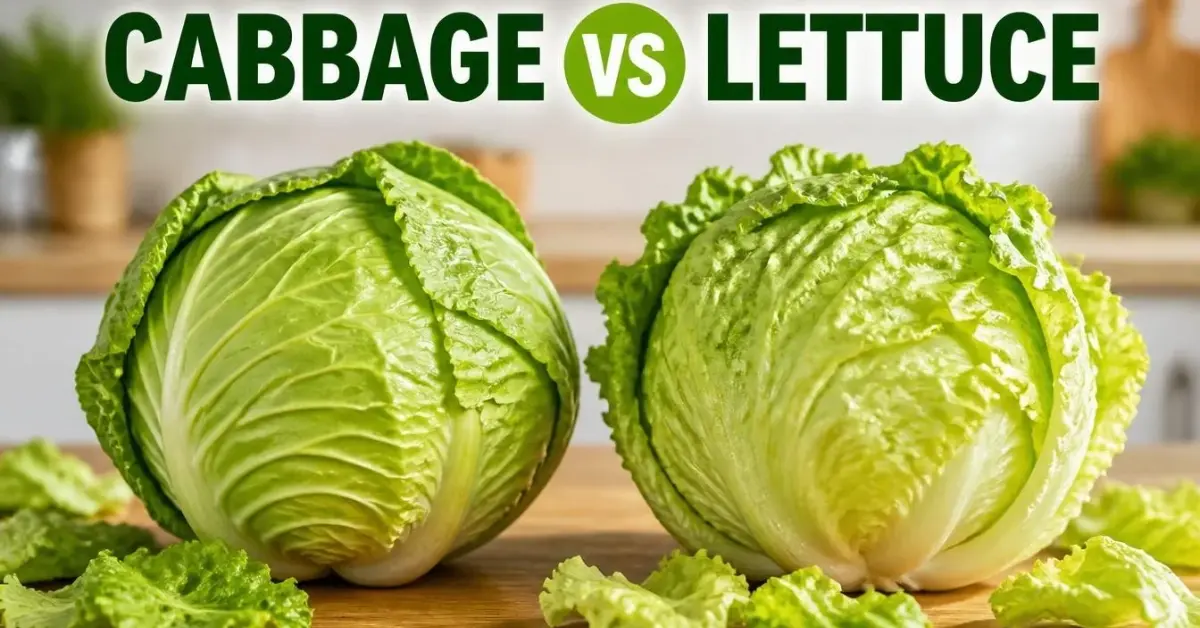
Cabbage and lettuce are two different leafy vegetables with different nutrients, tastes, and uses. Cabbage has more fiber and vitamin C than iceberg lettuce. Iceberg lettuce has fewer calories and more water.
Romaine lettuce offers more vitamin A-related nutrients and fiber than iceberg. Cabbage works well in cooked meals and crunchy salads, while lettuce is a popular choice for fresh salads, burgers, and wraps. The better choice depends on your meal and nutrition needs.
Key Takeaways
- Cabbage has more fiber and vitamin C than iceberg lettuce.
- Iceberg lettuce has fewer calories and more water.
- Romaine lettuce offers more fiber than iceberg lettuce.
- Cabbage has a firm texture and a mild peppery taste.
- Lettuce has a fresh taste, with texture that varies by type.
- Both vegetables can be eaten raw or cooked.
- Cabbage works well in slaws, soups, and stir-fries.
- Lettuce is ideal for salads, burgers, sandwiches, and wraps.
What Is the Difference Between Cabbage and Lettuce?
Cabbage and lettuce may look alike, but they are not the same vegetable. Both have leafy parts and are often used in salads. However, they belong to different plant families.
Cabbage belongs to the Brassicaceae family. This is the same family as broccoli, cauliflower, and Brussels sprouts. Lettuce belongs to the Asteraceae family. It is related to plants such as chicory and other members of the daisy family.
The main differences are their nutrients, taste, texture, and cooking uses.
What Is Cabbage?
Cabbage is a leafy vegetable that grows in a tight, round head. Its leaves are firm and packed close together.
Green cabbage is common in U.S. grocery stores. Other types include red, Savoy, and Napa cabbage.
Raw cabbage has a mild, peppery taste. When cooked, it becomes softer and tastes sweeter.
People use cabbage in:
- Coleslaw
- Stir-fries
- Soups and stews
- Fresh salads
- Tacos and wraps
- Sauerkraut and kimchi
Cabbage is also known for its firm leaves. They hold their shape well during cooking and storage.
What Is Lettuce?
Lettuce is a leafy vegetable that grows in loose bunches or tight heads. Its leaves can be soft, tender, or crisp.
Iceberg lettuce is a common type in the United States. Other popular types include romaine, butterhead, green leaf, and red leaf lettuce.
Lettuce has a mild and fresh taste. Its high water content gives it a light texture.
People commonly use lettuce in:
- Garden salads
- Caesar salads
- Burgers
- Sandwiches
- Tacos
- Wraps and fresh bowls
Some types, such as iceberg, are very crisp. Others, such as butterhead, have soft leaves.
Cabbage vs Lettuce: Nutritional Comparison
Cabbage and lettuce are both low in calories. They also provide vitamins, minerals, and water.
However, their nutrient levels are different. Cabbage offers more fiber and vitamin C than iceberg lettuce. Lettuce has fewer calories, while darker types can provide more vitamin A-related nutrients.
The table below compares 100 grams of raw green cabbage with 100 grams of raw iceberg lettuce.
| Nutrient | Green Cabbage | Iceberg Lettuce |
|---|---|---|
| Calories | 25 kcal | 14 kcal |
| Carbohydrates | 5.8 g | 3.0 g |
| Protein | 1.28 g | 0.9 g |
| Fat | 0.1 g | 0.14 g |
| Fiber | 2.5 g | 1.2 g |
| Vitamin C | 36.6 mg | 2.8 mg |
| Vitamin K | 76 mcg | About 24 mcg |
| Water | 92.18 g | 95.64 g |
Source: USDA FoodData Central food records. Values are approximate and apply to the specific raw varieties listed. Different growing and storage conditions can change nutrient levels.
Calories and Carbohydrates
Iceberg lettuce has fewer calories than green cabbage.
A 100-gram serving of iceberg lettuce provides about 14 calories. The same amount of raw green cabbage provides about 25 calories.
Cabbage also has more carbohydrates. This is partly because it contains more fiber. Both vegetables are low in calories and contain very little fat.
Fiber Content
Cabbage has more fiber than iceberg lettuce.
A 100-gram serving of raw cabbage contains about 2.5 grams of fiber. Iceberg lettuce provides about 1.2 grams.
Fiber helps food move through the digestive system. It also helps support regular bowel movements. Romaine lettuce has about 2.1 grams of fiber per 100 grams. This makes it a closer match to cabbage than iceberg lettuce.
Vitamin C and Vitamin K
Cabbage is a stronger source of vitamin C than iceberg lettuce.
Vitamin C helps the body make collagen. It also supports the immune system and helps the body absorb iron from plant foods.
Cabbage also provides vitamin K. This vitamin helps with normal blood clotting and supports bone health. Iceberg lettuce contains less of these vitamins. However, other types of lettuce can offer more nutrients.
Vitamin A and Other Nutrients
Darker lettuce varieties, especially romaine and red leaf, provide carotenoids. Carotenoids are plant pigments. Some of them, such as beta-carotene, can be changed into vitamin A in the body.
Vitamin A supports normal vision, growth, and immune function. This is one reason why iceberg lettuce should not represent every type of lettuce in a nutrition comparison.
Health Benefits of Cabbage and Lettuce
Both vegetables can be part of a healthy eating plan. They provide water, fiber, vitamins, minerals, and natural plant compounds.
Neither vegetable is a cure for disease. Their value comes from the nutrients they add to a varied diet.
Benefits of Cabbage
1. Provides dietary fiber
Cabbage contains fiber that helps support normal digestion and bowel movements.
2. Supplies vitamin C
Vitamin C helps the body make collagen and supports normal immune function.
3. Provides vitamin K
Vitamin K helps the body form blood clots and supports healthy bones.
4. Contains natural plant compounds
Cabbage belongs to the cruciferous vegetable group. It contains natural compounds called glucosinolates.
When cabbage is cut or chewed, these compounds can form other substances, including isothiocyanates.
These plant compounds are studied for their possible effects on health. However, eating cabbage should not be seen as a way to prevent or treat a disease.
Benefits of Lettuce
1. Adds water to your diet
Lettuce contains a large amount of water. Eating it can help add to your daily fluid intake.
2. Provides vitamin A-related nutrients
Romaine and red leaf lettuce contain carotenoids. Some of these can help the body meet its vitamin A needs.
3. Supplies vitamin K
Lettuce contains vitamin K, which supports normal blood clotting and bone health.
4. Adds freshness to meals
Lettuce adds crunch, color, and volume to meals. It works well in salads, sandwiches, and wraps.
Taste and Texture: Cabbage vs Lettuce
Taste and texture are two important differences between cabbage and lettuce.
| Feature | Cabbage | Lettuce |
|---|---|---|
| Taste | Mild and slightly peppery | Mild and fresh |
| Texture | Firm and dense | Soft or crisp |
| Water content | Lower | Higher |
| Raw use | Slaws and salads | Fresh salads and sandwiches |
| Cooked use | Soups and stir-fries | Some cooked dishes |
| Cooking effect | Becomes softer and sweeter | Often loses its crisp texture |
Cabbage has thick leaves that provide a strong crunch. It also holds its shape after mixing with salad dressing.
Lettuce has a lighter texture. Iceberg is crisp, romaine is firm, and butterhead is soft. Choose cabbage when you want a strong crunch that lasts. Choose lettuce when you want a fresh and mild taste.
Different Types of Cabbage and Lettuce
Not all cabbage and lettuce varieties look or taste the same. Their nutrient levels can also vary.
Common Types of Cabbage
Green cabbage
Green cabbage has firm, pale green leaves. It is often used in coleslaw, soups, and stir-fries.
Red cabbage
Red cabbage has purple-red leaves. It adds color and a slightly peppery taste to salads and cooked meals.
Savoy cabbage
Savoy cabbage has soft, wrinkled leaves. Its taste is mild, and its texture is less dense than green cabbage.
Napa cabbage
Napa cabbage has long, pale leaves with thick white stems. It has a mild taste and is common in Asian dishes.
Common Types of Lettuce
Iceberg lettuce
Iceberg has pale green leaves and a tight, round head. It is known for its crisp texture.
Romaine lettuce
Romaine has long leaves with firm centers. It is common in Caesar salads and contains more fiber than iceberg.
Butterhead lettuce
Butterhead has soft, rounded leaves. Boston and Bibb lettuce are common types.
Green leaf lettuce
Green leaf lettuce grows in loose bunches. Its leaves are tender and have a mild taste.
Red leaf lettuce
Red leaf lettuce has green leaves with red or purple edges. It adds color to salads and provides carotenoids.
Cooking Uses: Which Vegetable Is Better?
The best choice depends on what you are making.
When to Use Cabbage
Cabbage is a good choice for:
- Coleslaw and shredded salads
- Stir-fries and sautéed vegetables
- Soups and stews
- Sauerkraut and kimchi
- Tacos with crunchy toppings
- Recipes that need firm leaves
Cabbage holds its shape better than most lettuce types. This makes it useful in both raw and cooked meals.
When to Use Lettuce
Lettuce works well in:
- Garden salads
- Caesar salads
- Burgers and sandwiches
- Tacos and wraps
- Fresh vegetable bowls
- Meals that need a light, crisp topping
Lettuce is usually served raw. It can also be added to some cooked dishes, but heat often makes its leaves soft.
Can You Substitute Cabbage for Lettuce?
Yes. You can replace lettuce with cabbage in many meals. However, the taste and texture will change.
Here are some useful examples:
In salads: Shredded cabbage works well in fresh salads. It gives a stronger crunch than lettuce.
In tacos: Cabbage is a good topping for tacos because it stays firm after adding sauces.
In burgers: Thinly sliced cabbage can replace iceberg lettuce. It has a stronger taste, so the final burger will be different.
In wraps: Cabbage can add crunch when shredded. Large, flexible lettuce leaves may work better when you need a soft wrap.
In sandwiches: Iceberg or romaine is often a better choice when you want a mild taste.
For the best result, choose the vegetable based on the texture you want.
How to Choose and Store Cabbage and Lettuce
Fresh vegetables taste better and last longer when stored well.
How to Choose Fresh Cabbage
- Choose a firm and heavy head.
- Look for fresh outer leaves.
- Avoid soft spots and signs of decay.
- Pick cabbage with a fresh smell.
Keep whole cabbage in the refrigerator. Store it in a suitable produce bag to help maintain its quality.
How to Choose Fresh Lettuce
- Look for crisp, fresh leaves.
- Avoid wilted or slimy leaves.
- Check for brown or damaged areas.
- Choose heads with good color.
Keep lettuce in the refrigerator. Dry leaves before storage when needed, and avoid crushing them.
Food Safety Tips
Follow these simple steps when preparing cabbage and lettuce:
- Wash your hands before preparing food.
- Rinse fresh vegetables under clean running water.
- Do not use soap or household detergent to wash produce.
- Remove damaged or spoiled leaves.
- Keep cut vegetables in the refrigerator.
- Keep fresh produce away from raw meat and its juices.
The FDA recommends keeping perishable produce in a refrigerator at 40°F or below. Pre-cut and packaged produce should also stay refrigerated.
Cabbage often keeps its quality longer than lettuce, but the exact time depends on freshness, variety, and storage conditions.
FAQs:
Is cabbage healthier than lettuce?
Cabbage has more fiber and vitamin C than iceberg lettuce. However, romaine and red leaf lettuce offer other nutrients, including more vitamin A-related compounds. Both vegetables can be part of a healthy diet.
Which has more fiber, cabbage or lettuce?
Raw green cabbage has about 2.5 grams of fiber per 100 grams. Iceberg lettuce has about 1.2 grams. Romaine lettuce provides about 2.1 grams.
Which has fewer calories, cabbage or lettuce?
Iceberg lettuce has fewer calories. It provides about 14 calories per 100 grams, compared with 25 calories in raw green cabbage.
Is cabbage a type of lettuce?
No. Cabbage and lettuce belong to different plant families. Cabbage belongs to the Brassicaceae family, while lettuce belongs to the Asteraceae family.
Can you eat cabbage and lettuce raw?
Yes. Both vegetables can be eaten raw. Cabbage is often shredded for slaws and salads, while lettuce is common in fresh salads and sandwiches.
Can cabbage replace lettuce in salads?
Yes. Shredded cabbage can replace lettuce in many salads. It gives a firmer crunch and a stronger taste. Lettuce is a better choice when you want a softer texture.
Is romaine lettuce more nutritious than iceberg lettuce?
Romaine provides more fiber than iceberg lettuce. It also contains more vitamin A-related nutrients. However, the best choice depends on the nutrients and texture you want.
Conclusion:
Cabbage and Lettuce are both useful vegetables, but they have different strengths.
Cabbage is a better choice when you want more fiber and vitamin C than iceberg lettuce. Its firm leaves also make it useful for coleslaw, soups, stir-fries, and crunchy salads. Iceberg lettuce has fewer calories and more water.
Romaine and red leaf lettuce offer other nutrients, including more vitamin A-related compounds.
There is no need to choose only one. Use cabbage when you want a firm crunch and lettuce when you want a fresh, mild taste. Adding both to your meals gives you more variety in flavor, texture, and nutrients.

Harry Jack is a content writer at ReplyGenius.com who specializes in practical, natural sounding replies for texts, social media, relationships, and everyday conversations.