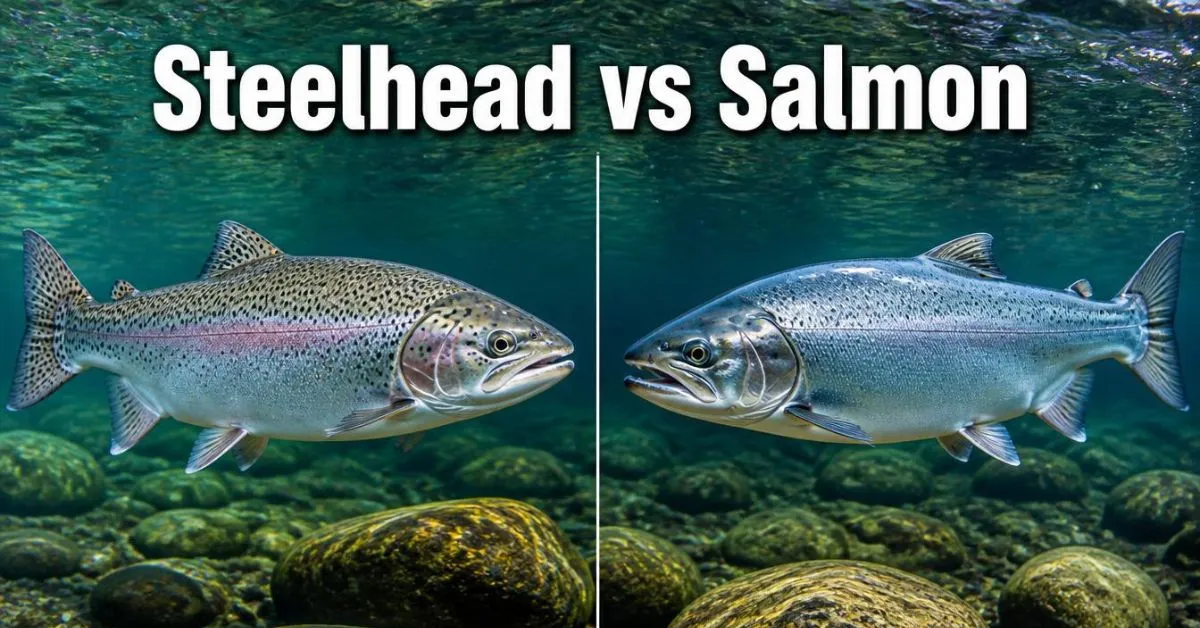
Steelhead vs salmon comes down to fish type, taste, nutrition, and cooking. Steelhead is the ocean-going form of rainbow trout.
Salmon includes several different fish species. Steelhead often has a mild taste and tender flesh, while salmon can range from mild to rich.
Both provide protein and omega-3 fats. You can use them in many of the same recipes, but their flavor and fat levels may differ.
Key Takeaways
- Steelhead is rainbow trout, not a true salmon.
- Steelhead often has a mild, delicate flavor.
- Salmon taste and texture vary by species.
- Both fish provide protein and omega-3 fats, but nutrient levels vary.
- Steelhead can replace salmon in most everyday recipes.
- Price, freshness, fish source, and cooking method all matter.
What Is the Difference Between Steelhead & Salmon?
The main difference is the type of fish. Steelhead is the ocean-going form of rainbow trout. Salmon is a common name for several fish species, including Atlantic salmon and Pacific salmon.
Both belong to the Salmonidae family. Many also share a similar life cycle. They hatch in freshwater, and some move to the ocean as they grow. Adults may later return to freshwater to spawn.
However, their species and life cycles are not the same. Steelhead can survive spawning and return to spawn again. Most Pacific salmon die after spawning, while Atlantic salmon can sometimes spawn more than once.
What Is Steelhead Trout?
Steelhead trout is a form of rainbow trout (Oncorhynchus mykiss). Steelhead move from freshwater to the ocean or other saltwater areas to grow. They later return to freshwater to spawn.
Rainbow trout that stay in freshwater throughout their lives are not called steelhead. The two forms belong to the same species, but their life patterns differ.
Steelhead flesh is often pink or orange. It can look and taste much like salmon. Its flavor is often mild, and its flesh is tender and flaky.
What Is Salmon?
Salmon includes several species with different flavors, textures, and fat levels.
Common types include:
- Atlantic salmon: Often sold farm-raised in U.S. stores. It usually has tender flesh and a rich flavor.
- Chinook salmon: Also called king salmon. It is known for its rich taste and high fat content.
- Sockeye salmon: Has deep red flesh and a bold flavor. Its texture is often firmer than that of fattier salmon types.
- Coho salmon: Often has a milder flavor and a medium-firm texture.
- Pink and chum salmon: Often have a lighter flavor and less fat than richer salmon types.
These differences matter when you compare steelhead with salmon. A rich Chinook fillet may taste very different from steelhead. A leaner salmon type may be closer in flavor and texture.
Steelhead vs Salmon: Key Differences
| Feature | Steelhead Trout | Salmon |
|---|---|---|
| Fish type | Ocean-going rainbow trout | Several fish species |
| Flavor | Often mild and delicate | Mild to rich, based on species |
| Texture | Tender and flaky | Tender to firm |
| Flesh color | Often pink to orange | Pink to deep red-orange |
| Fat content | Varies by source | Varies by species and source |
| Common cooking methods | Baking, pan-searing, grilling | Baking, grilling, roasting, smoking |
| Price | Depends on the product and market | Depends on species and source |
| Best use | Mild, salmon-like meals | A wide range of flavors and recipes |
These are general patterns, not fixed rules. Fish species, diet, farming methods, handling, and cooking can affect color, taste, and texture.
Does Steelhead Taste Like Salmon?
Yes. Steelhead often tastes similar to salmon, but its flavor is usually mild and delicate. It may have a light sweetness and a clean taste.
Salmon varies more by type. Farm-raised Atlantic salmon often has a rich flavor. Chinook is known for its rich flesh, while sockeye usually has a stronger taste and a firmer texture.
Choose steelhead if you prefer a gentle fish flavor. Choose a richer salmon type if you want a stronger taste and a fattier texture.
Cooking also affects the result. Overcooking can make either fish dry. Freshness, seasoning, and fillet thickness matter, too.
Steelhead vs Salmon Nutrition
Both fish provide high-quality protein, omega-3 fats, and other nutrients. Neither is always more nutritious than the other. The exact values depend on the fish type, serving size, source, and cooking method.
The FDA provides these reference values for 3 ounces of cooked seafood bought raw and cooked without added ingredients:
| Fish group | Calories | Protein | Total fat |
|---|---|---|---|
| Rainbow trout | 140 | 20 g | 6 g |
| Atlantic, coho, sockeye, and Chinook salmon | 200 | 24 g | 10 g |
| Chum and pink salmon | 130 | 22 g | 4 g |
These figures help show how nutrition can differ across fish groups. However, the rainbow trout figures are not a direct measurement of every steelhead product. Actual values can vary.
Which Fish Has More Omega-3s?
There is no single winner for every product. Fatty salmon types may provide more omega-3 fats than some steelhead products, but the exact amount depends on the fish.
If omega-3 intake matters to you, compare reliable nutrition data for the specific product. Do not rely on the fish name alone.
Both fish can fit into a balanced diet. The best choice depends on your food needs, serving size, and overall diet.
Which Fish Is Better for Cooking?
Steelhead and salmon work well with many of the same cooking methods. Your choice depends on the flavor you want and the recipe you plan to make.
When to Choose Steelhead
Choose steelhead if you want a mild fish that works well in salmon recipes.
It is a good option for:
- Baking: Add lemon, garlic, pepper, and herbs.
- Pan-searing: Start with the skin side down if the fillet has skin.
- Rice bowls: Serve with rice and vegetables.
- Tacos: Add cabbage, salsa, and lime.
- Salads: Flake cooked fish over fresh greens.
Check the fish early as it cooks. A thin fillet may finish before a thick one.
When to Choose Salmon
Choose salmon if you want a certain flavor or fat level.
It works well for:
- Grilling: Fatty salmon can stay moist during cooking.
- Roasting: Cook it with vegetables for an easy meal.
- Smoking: Salmon is a common choice for smoked fish dishes.
- Pasta: Add cooked fish to a lemon or cream sauce.
- Rice bowls: Pair it with rice, vegetables, and avocado.
Lean salmon types may dry out faster than fatty ones. Use the fish type and fillet thickness to guide your cooking time.
For food safety, the FDA advises cooking most seafood to an internal temperature of 145°F. Check the thickest part with a food thermometer.
Is Steelhead Cheaper Than Salmon?
Steelhead may cost less than some salmon products, but it is not always cheaper. Price depends on the fish type, location, season, supply, and whether it is wild-caught or farm-raised.
To compare value, check the price per pound. Also consider how much usable fish you get. Skin, bones, and trimming can affect the amount of food in a package.
When buying fresh fish, look for flesh that feels firm and smells mild. Avoid fish with a sour, rancid, or strong fishy smell. For frozen fish, check that the package is sealed and shows no signs of thawing and refreezing.
For safe storage, refrigerate seafood at 40°F or below. If you will not use it within two days, freeze it.
If prices are close, choose the fish that best fits your recipe and taste.
Which Fish Is Healthier & More Sustainable?
Neither fish is automatically healthier or more sustainable in every case.
Both provide protein and omega-3 fats. Their nutrient levels vary, so compare the specific fish rather than assuming one is always better.
Sustainability also depends on the source. Wild fish populations can face different pressures, and fish farms can have different effects on the environment. The species, location, fishing method, and farm practices all matter.
When buying fish, check the package or ask the seller about:
- The fish species.
- If it is wild-caught or farm-raised.
- Where it came from.
- Any trusted sustainability label or sourcing details.
If you catch your own fish, check local fish consumption advisories before eating it.
Salmon and trout are generally listed among the lower-mercury choices in the FDA/EPA fish advice. People who are pregnant, may become pregnant, or are breastfeeding, along with parents choosing fish for children, should check the official FDA/EPA fish advice. The advice helps readers choose fish and serving amounts based on mercury levels.
Can You Substitute Steelhead for Salmon?
Yes. Steelhead can replace salmon in most everyday recipes, including baked fillets, tacos, salads, pasta, and rice bowls.
Follow these tips for the best results:
- Check the thickness. Thin fillets cook faster than thick ones.
- Use familiar seasonings. Lemon, garlic, herbs, and pepper work well with both fish.
- Check the fish early. Do not rely only on the time listed in a salmon recipe.
- Use a thermometer. Cook fish to 145°F for food safety.
Steelhead may give a recipe a milder flavor than rich salmon. If a dish depends on the bold taste of sockeye or the high fat content of Chinook, the final result may taste different.
FAQs:
Is steelhead trout the same as salmon?
No. Steelhead is the ocean-going form of rainbow trout. Salmon includes several other fish species. They belong to the same broader family and can look similar, but they are not the same fish.
Which tastes better, steelhead or salmon?
It depends on your taste. Steelhead often has a mild flavor, while some salmon types taste richer. Choose steelhead for a delicate taste or a rich salmon type for a fuller flavor.
Is steelhead healthier than salmon?
Neither is always healthier. Both provide protein and omega-3 fats. Their calories, fat, and other nutrients depend on the fish type, source, and cooking method. Compare the nutrition data for the products you plan to buy.
Can you grill steelhead?
Yes. Steelhead works well on the grill. Use a clean, lightly oiled grate and handle the fish gently. A fish basket or foil can help keep the fillet from breaking apart.
Is steelhead safe to eat?
Steelhead is commonly eaten, but safe handling and cooking matter. Keep raw fish cold, prevent contact between raw fish and ready-to-eat foods, and cook it to 145°F. If you catch your own fish, check local health advice before eating it.
Conclusion:
Steelhead is a good choice if you want a mild fish that works in many salmon recipes. Salmon offers more variety, from mild types to rich, fatty fillets.
Both provide protein and omega-3 fats, but their nutrition values can differ. Neither is always cheaper, healthier, or more sustainable. Compare the exact fish, check its source, and choose the one that fits your taste, budget, and recipe.

Harry Jack is a content writer at ReplyGenius.com who specializes in practical, natural sounding replies for texts, social media, relationships, and everyday conversations.