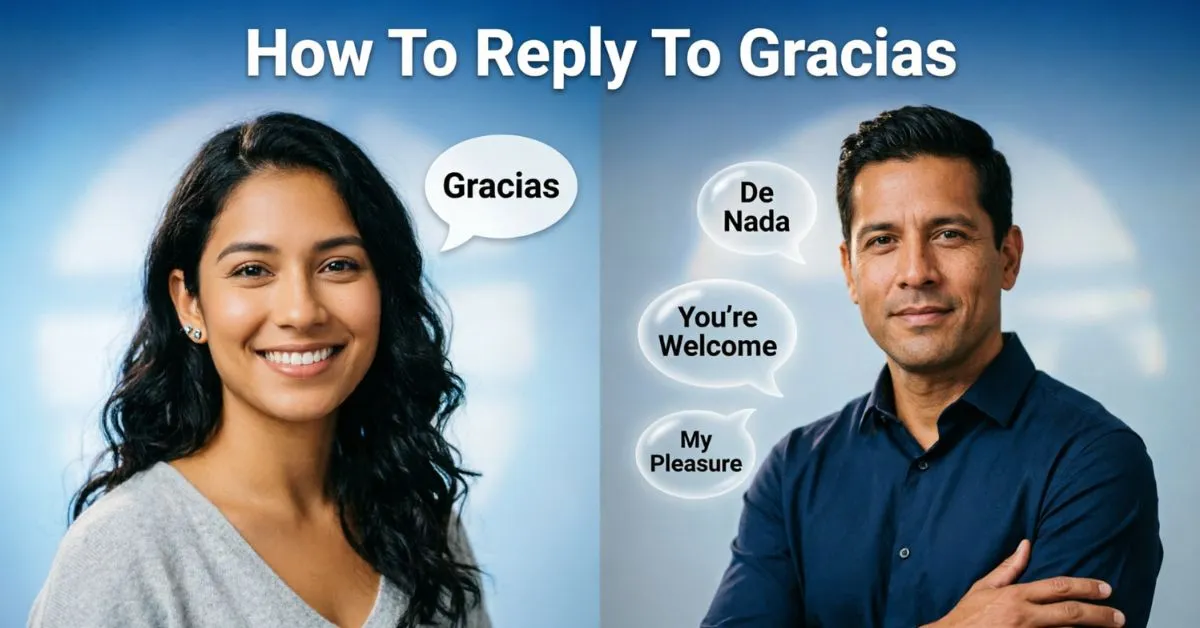
How to Reply to Gracias became something I wanted to learn after a simple conversation with one of my Spanish-speaking coworkers. I smiled when they said “Gracias,” but I froze because I wasn’t sure what to say next.
I quietly replied, “You’re welcome,” and later realized there were many better and more natural Spanish responses. That small moment inspired me to learn the right expressions, and now I use them with confidence.
If you’ve ever wondered how to reply to gracias, you’re in the right place. If you’re talking to a friend, coworker, customer, or someone while traveling, knowing the right response makes conversations feel warm and respectful.
In this guide, you’ll discover polite, casual, funny, romantic, and professional replies that native speakers actually use. You’ll also learn when each response fits best, helping you sound natural instead of memorized.
Table of Contents
- What Does Gracias Mean?
- Why Your Reply Matters
- Most Common Ways to Reply to Gracias
- Formal Replies
- Casual Replies
- Friendly Replies
- Professional Replies
- Funny Replies
- Romantic Replies
- Replies for Text Messages
- Regional Variations
- Common Mistakes
- FAQs
- Conclusion
What Does Gracias Mean?
“Gracias” simply means “Thank you.”
People use it every day in Spanish-speaking countries, just like English speakers say “thank you.”
You’ll hear it when someone:
- Receives help
- Gets a compliment
- Accepts a gift
- Finishes a meal
- Receives good service
- Appreciates your kindness
Since it’s one of the first Spanish words most people learn, knowing the proper response is equally important.
Why Knowing How To Reply To Gracias Matters
Replying correctly shows respect and good manners.
It also helps you:
- Build stronger relationships
- Sound more confident
- Improve your Spanish
- Keep conversations flowing
- Leave a positive impression
- Communicate naturally
Whether you’re visiting Mexico, Spain, or simply talking with Spanish-speaking friends in the United States, these replies make communication smoother.
The Most Common Replies To Gracias
These responses work in almost every situation.
1. De Nada
Meaning:
You’re welcome.
This is the most common response.
Example:
Person A:
Gracias.
Person B:
De nada.
2. No Hay De Qué
Meaning:
“It was nothing.”
or
“Don’t mention it.”
This reply sounds warm and humble.
Example:
Gracias por ayudarme.
No hay de qué.
3. Con Gusto
Meaning:
“My pleasure.”
This is polite and friendly.
Example:
Gracias por tu ayuda.
Con gusto.
4. Un Placer
Meaning:
“It was a pleasure.”
Great for formal conversations.
Example:
Gracias por todo.
Un placer.
5. Para Servirte
Meaning:
“At your service.”
This is often heard in customer service.
Example:
Gracias.
Para servirte.
Formal Ways To Reply To Gracias
If you’re speaking with a boss, customer, teacher, or older adult, choose respectful responses.
De nada.
Simple and professional.
Con mucho gusto.
Meaning:
“My pleasure.”
This sounds more elegant.
Ha sido un placer.
Meaning:
“It has been a pleasure.”
Perfect after meetings.
Para servirle.
Notice the formal le ending.
Used with customers and respected individuals.
Siempre a sus órdenes.
Meaning:
“Always at your service.”
Often used in business settings.
Casual Ways To Reply To Gracias
Friends usually keep conversations relaxed.
Popular options include:
- De nada.
- Claro.
- No hay problema.
- Cuando quieras.
- Dale.
- Está bien.
- Todo bien.
- No pasa nada.
- Sin problema.
- Con gusto.
Example:
Friend:
Gracias por llevarme.
You:
No hay problema.
Friendly Replies That Sound Natural
Want to sound warm instead of robotic?
These replies work perfectly.
Anytime!
Spanish:
Cuando quieras.
Happy to help!
Spanish:
Con gusto.
Don’t worry about it.
Spanish:
No pasa nada.
Of course.
Spanish:
Claro.
You’re always welcome.
Spanish:
Siempre.
Professional Replies To Gracias
Business conversations require polite language.
Here are excellent responses.
Customer Service
- Con mucho gusto.
- Para servirle.
- Estamos para ayudarle.
- Fue un placer asistirle.
- Gracias a usted.
These expressions are commonly used in:
- Hotels
- Banks
- Hospitals
- Airlines
- Offices
- Restaurants
How To Reply To Gracias At Work
“Gracias por terminar el reporte.”
Suppose your manager says:
Good replies include:
- Con gusto.
- Fue un placer.
- Gracias a usted.
- Siempre disponible para ayudar.
These responses show professionalism without sounding stiff.
How To Reply To Gracias From A Friend
Friends appreciate relaxed replies.
Examples include:
Friend:
Gracias por escucharme.
You:
- Siempre.
- Ya sabes.
- No hay problema.
- Cuando quieras.
- Para eso estamos.
These sound natural and caring.
Funny Ways To Reply To Gracias 😄
Sometimes a funny response can make the conversation more memorable. Use these only with friends, family, or people who enjoy humor.
Funny Replies You Can Use
- No refunds!
- That’ll be $100.
- I accept tacos as payment.
- You’re lucky I was available.
- Don’t tell anyone I’m this helpful.
- My superhero duties never end.
- You’re welcome… this time.
- I expect cookies later.
- I’m adding this to your bill.
- Just doing my job as your favorite person.
Example:
Friend: Gracias por ayudarme con la mudanza.
You: I accept pizza as payment.
Friend: Deal!
Humor can strengthen friendships and keep conversations light.
Romantic Ways To Reply To Gracias ❤️
If your partner, crush, or someone special says “Gracias,” a sweet reply can add warmth to the conversation.
Romantic Replies
- Siempre para ti. (Always for you.)
- Cualquier cosa por ti. (Anything for you.)
- Me encanta ayudarte. (I love helping you.)
- Para ti, siempre. (For you, always.)
- Tú lo vales. (You’re worth it.)
- Es un placer verte feliz. (It’s a pleasure seeing you happy.)
- Haría más por ti. (I’d do even more for you.)
- Siempre puedes contar conmigo. (You can always count on me.)
- Todo por tu sonrisa. (Anything for your smile.)
- Me alegra ayudarte. (I’m happy to help.)
Example:
Crush: Gracias por acompañarme.
You: Siempre para ti.
This sounds caring without being overly dramatic.
Best Text Message Replies To Gracias 📱
Texting is often more casual. Short replies work best.
Simple Text Replies
- De nada 😊
- Anytime!
- No problem!
- Con gusto 🙂
- Claro 👍
- Siempre 🙂
- You’re welcome!
- Happy to help!
- Anytime you need me.
- No worries!
Cute Text Replies
- For you, always ❤️
- Glad I could help 😊
- You got it!
- That’s what friends are for.
- Anytime, bestie!
- Happy to be useful 😂
50+ Real Conversation Examples
Below are practical examples you can copy and use immediately.
Casual Conversations
Example 1
Person: Gracias.
You: De nada.
Example 2
Person: Gracias por venir.
You: Con gusto.
Example 3
Person: Gracias por la ayuda.
You: No hay problema.
Example 4
Person: Gracias por escucharme.
You: Siempre.
Example 5
Person: Gracias por todo.
You: Fue un placer.
Example 6
Person: Gracias por llamarme.
You: Claro.
Example 7
Person: Gracias por esperar.
You: No pasa nada.
Example 8
Person: Gracias por el consejo.
You: Cuando quieras.
Example 9
Person: Gracias por compartir.
You: Con mucho gusto.
Example 10
Person: Gracias por estar aquí.
You: Siempre para ti.
Professional Conversations
Example 11
Customer: Gracias por su ayuda.
You: Para servirle.
Example 12
Client: Gracias por la reunión.
You: Ha sido un placer.
Example 13
Boss: Gracias por completar el proyecto.
You: Con mucho gusto.
Example 14
Manager: Gracias por quedarse tarde.
You: Fue un placer ayudar.
Example 15
Coworker: Gracias por cubrir mi turno.
You: No hay problema.
Example 16
Customer: Gracias por responder tan rápido.
You: Estamos para ayudarle.
Example 17
Client: Gracias por la información.
You: Gracias a usted.
Example 18
Customer: Gracias por resolver el problema.
You: Con gusto.
Example 19
Boss: Gracias por tu esfuerzo.
You: Encantado de ayudar.
Example 20
Client: Gracias por su tiempo.
You: Siempre a sus órdenes.
Friendly Conversations
Example 21
Friend: Gracias por el café.
You: Anytime!
Example 22
Friend: Gracias por acompañarme.
You: Ya sabes.
Example 23
Friend: Gracias por la comida.
You: Con gusto.
Example 24
Friend: Gracias por invitarme.
You: No hay de qué.
Example 25
Friend: Gracias por todo hoy.
You: Fue divertido.
Example 26
Friend: Gracias por esperarme.
You: No worries.
Example 27
Friend: Gracias por tu apoyo.
You: Siempre.
Example 28
Friend: Gracias por escucharme.
You: Para eso estoy.
Example 29
Friend: Gracias por tu tiempo.
You: Claro.
Example 30
Friend: Gracias por el regalo.
You: Me alegra que te guste.
Romantic Conversations
Example 31
Partner: Gracias por estar conmigo.
You: Siempre para ti.
Example 32
Partner: Gracias por la sorpresa.
You: Tú lo mereces.
Example 33
Crush: Gracias por ayudarme.
You: Haría más por ti.
Example 34
Partner: Gracias por escucharme.
You: Siempre puedes contar conmigo.
Example 35
Partner: Gracias por hacerme sonreír.
You: Todo por tu sonrisa.
Example 36
Crush: Gracias por venir.
You: Fue mi placer.
Example 37
Partner: Gracias por el detalle.
You: Me encanta verte feliz.
Example 38
Partner: Gracias por tu apoyo.
You: Siempre estaré aquí.
Example 39
Crush: Gracias por acompañarme.
You: Anytime for you.
Example 40
Partner: Gracias por todo.
You: Siempre.
Funny Conversations
Example 41
Friend: Gracias.
You: That’ll be $20.
Example 42
Friend: Gracias por ayudarme.
You: My invoice is coming soon.
Example 43
Friend: Gracias por el favor.
You: I accept tacos.
Example 44
Friend: Gracias.
You: No refunds.
Example 45
Friend: Gracias por estar aquí.
You: Somebody has to keep you out of trouble.
Example 46
Friend: Gracias por el regalo.
You: You’re worth at least half of it.
Example 47
Friend: Gracias.
You: Don’t get used to it.
Example 48
Friend: Gracias por el consejo.
You: Wisdom isn’t free.
Example 49
Friend: Gracias por ayudar.
You: Superhero mode activated.
Example 50
Friend: Gracias.
You: Just another day being amazing.
Regional Differences in Replying To Gracias 🌎
Spanish varies across countries. While most replies are understood everywhere, some expressions are more common in specific regions.
Mexico
Popular responses:
- De nada
- Con gusto
- No hay de qué
- Para servirte
Spain
Common replies:
- De nada
- No hay de qué
- A ti
- No pasa nada
Argentina
Frequently used:
- De nada
- No hay problema
- Dale
United States Spanish Speakers
You’ll often hear:
- De nada
- No problem
- Anytime
- Con gusto
Most Spanish speakers in the USA understand all major responses.
Common Mistakes To Avoid ❌
Many learners make small mistakes when responding to gracias.
1. Saying Nothing
Ignoring a thank-you can seem rude.
Always acknowledge it.
2. Using Overly Formal Responses with Friends
A very formal phrase may sound awkward in casual conversations.
Match your tone to the situation.
3. Translating Word for Word
Not every English expression works naturally in Spanish.
Learn common Spanish phrases instead.
4. Repeating De Nada Every Time
While correct, variety makes your Spanish sound more natural.
Mix in:
- Con gusto
- No hay problema
- No hay de qué
5. Forgetting Context
A workplace conversation needs different language than a chat with friends.
FAQs:
Q1. What is the best reply to gracias?
The best and most common reply is de nada, which means you’re welcome.
Q2. Can I say no problem after gracias?
Yes. You can say no hay problema, which translates to no problem.
Q3. What is a formal response to gracias?
Formal responses include:
- Con mucho gusto
- Ha sido un placer
- Para servirle
- Siempre a sus órdenes
Q4. What does no hay de qué mean?
It means don’t mention it or it was nothing.
Q5. Is de nada used in all Spanish-speaking countries?
Yes. It is widely understood and accepted throughout the Spanish-speaking world.
Q6. How do I reply to gracias in a text message?
Good text replies include:
- De nada 😊
- Anytime!
- No worries!
- Con gusto 🙂
- Happy to help!
Q7. What is the most polite way to respond to gracias?
Con mucho gusto and ha sido un placer are among the most polite responses.
Conclusion:
Learning How To Reply To Gracias is a simple skill that can make a big difference in your conversations. If you’re speaking with friends, coworkers, customers, or someone special, the right response helps you sound more confident, respectful, and natural.
While de nada remains the most common answer, you now have many alternatives such as con gusto, no hay de qué, no hay problema, and para servirle. Using different responses based on the situation can make your Spanish feel more authentic and engaging.
The next time someone says gracias, you’ll know exactly what to say and how to keep the conversation flowing smoothly.