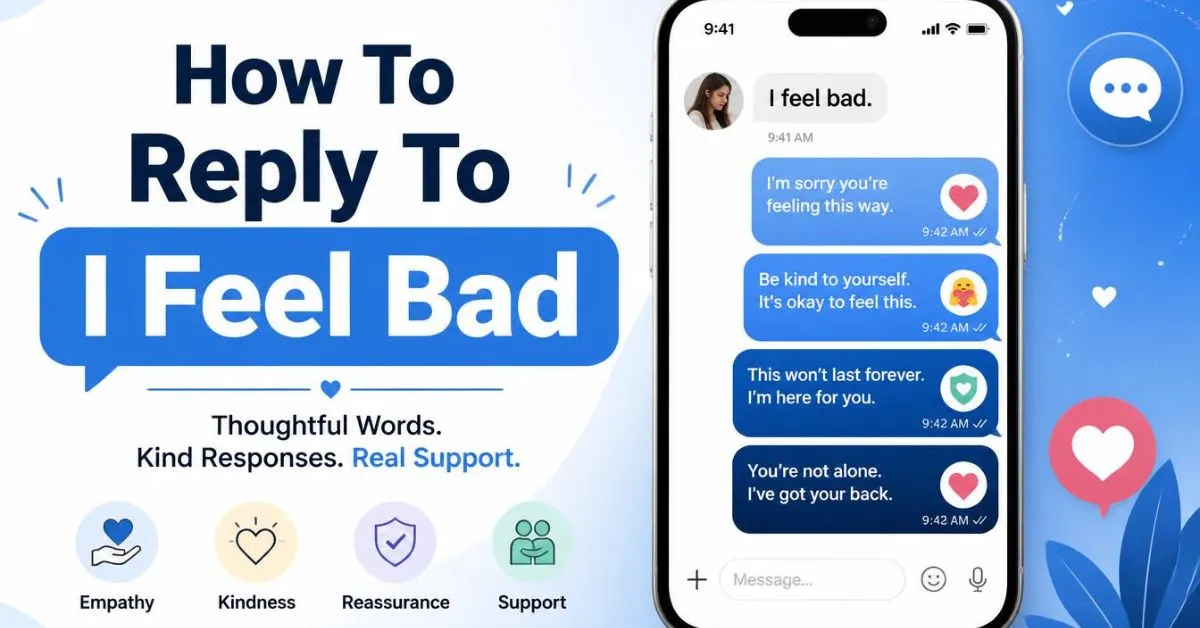
When someone says “I Feel Bad,” a simple reply can mean more than you think. They may be sad, guilty, sick, stressed, embarrassed, or dealing with something they do not know how to explain.
That is why knowing How To Reply To I Feel Bad depends on the person, the situation, and your relationship with them. A good response does not always need to solve the problem.
Sometimes, the best thing you can do is listen, show care, and let them know they are not alone. If a friend, partner, family member, coworker, or someone you care about sends you this message, choosing the right words can make the conversation feel safer and warmer.
In this guide, I’ll share thoughtful, casual, sweet, romantic, and supportive replies you can use when someone says, “I feel bad.”
What Does “I Feel Bad” Mean?
The phrase “I feel bad” can have different meanings.
Someone might mean:
- “I feel sad.”
- “I feel guilty.”
- “I feel sick.”
- “I regret what happened.”
- “I am stressed.”
- “I hurt someone.”
- “Something is bothering me.”
- “I need someone to talk to.”
So, before sending a reply, think about the context.
For example, if a friend says, “I feel bad about what happened,” they may need emotional support. If they say, “I feel bad today,” they may be talking about their health or mood.
A thoughtful response should leave room for them to explain.
How To Reply To “I Feel Bad”
The best response is usually simple, caring, and genuine. You do not need to write a long message.
Here are some helpful replies:
- “I’m sorry you’re feeling this way. Want to talk about it?”
- “I’m here for you. Tell me what’s going on.”
- “I hope you feel better soon.”
- “What happened? I’m listening.”
- “You don’t have to deal with this alone.”
- “I’m sorry you’re having a hard time.”
- “Take your time. I’m here whenever you’re ready.”
- “Is there anything I can do to help?”
- “I care about you. Please don’t keep it all inside.”
- “I’m sending you a big hug.”
These responses work because they show concern without forcing the person to talk.
Best Supportive Replies To “I Feel Bad”
Sometimes the person simply needs someone who will listen.
Try these supportive messages:
- “I’m right here if you need me.”
- “You can talk to me about anything.”
- “It’s okay to have a bad day.”
- “You don’t have to pretend you’re okay with me.”
- “I’m listening. Take your time.”
- “Whatever happened, we can talk through it.”
- “I’m sorry you’re hurting.”
- “You matter to me.”
- “I wish I could make things easier for you.”
- “Please be gentle with yourself today.”
When They Want to Talk
If they continue explaining their feelings, avoid immediately giving advice.
Instead, you can say:
- “That sounds really difficult.”
- “I understand why you’re upset.”
- “Thank you for telling me.”
- “That must have been hard for you.”
- “I’m glad you told me instead of keeping it inside.”
Listening can be more helpful than trying to fix everything.
How To Reply When a Friend Says “I Feel Bad”
A friend may use “I feel bad” because they are going through a difficult moment.
A friendly reply could be:
“I’m sorry, buddy. What happened? I’m here to listen.”
Other options include:
- “Hey, don’t go through this alone. Talk to me.”
- “I’ve got you. What’s bothering you?”
- “Want to call and talk about it?”
- “I’m always here when you need someone.”
- “Let’s figure out what’s making you feel this way.”
- “You can be completely honest with me.”
- “I may not have all the answers, but I’ll listen.”
A friendly tone makes the conversation feel natural rather than formal.
How To Reply To “I Feel Bad” From Someone You Love
When someone close to you says they feel bad, your reply can be more personal.
Try:
- “I’m sorry, love. I wish I could take the pain away.”
- “Come talk to me. I’m here for you.”
- “You never have to hide your feelings from me.”
- “I care about you more than you know.”
- “Whatever is wrong, we’ll talk through it together.”
- “I’m not going anywhere.”
- “You can lean on me when things feel heavy.”
- “I just want you to know that you’re not alone.”
These messages communicate emotional safety and care.
How To Reply To “I Feel Bad” In a Romantic Way
If your boyfriend, girlfriend, husband, wife, or romantic partner says, “I feel bad,” a warm response can help them feel loved.
Sweet Romantic Replies
- “I hate knowing that you’re hurting. I’m here for you.”
- “Come here and let me give you a hug.”
- “Your feelings matter to me.”
- “I wish I could make today easier for you.”
- “You don’t have to face this alone, sweetheart.”
- “Tell me what you need from me.”
- “I’m here to listen, not judge.”
- “Whatever happens, you can always talk to me.”
The goal is not to sound perfect. The goal is to sound sincere.
How To Reply When They Feel Bad About Something They Did
Sometimes “I feel bad” means the person feels guilty.
For example:
Them: “I feel bad about what I said yesterday.”
You could respond:
- “I appreciate you telling me.”
- “We can talk about it when you’re ready.”
- “Everyone makes mistakes.”
- “I know you didn’t mean to hurt me.”
- “Let’s talk about what happened.”
- “Thank you for being honest with me.”
- “We can work through this together.”
However, forgiveness and trust can take time. You do not have to pretend that everything is fine immediately.
How To Reply To “I Feel Bad” After An Argument
Arguments can leave people feeling confused or guilty.
A calm response can prevent the conversation from becoming worse.
Try:
- “I feel bad about what happened too. Let’s talk calmly.”
- “I don’t want us to stay upset with each other.”
- “Let’s take a moment and talk when we’re both calm.”
- “I’m willing to listen to your side.”
- “I don’t want this argument to come between us.”
- “Let’s focus on understanding each other.”
- “We both said things we may regret. Let’s work through it.”
Avoid Blaming Them
Instead of:
“This is all your fault.”
Try:
“I was hurt by what happened, but I want to understand your side too.”
This keeps the conversation respectful.
How To Reply To “I Feel Bad” Over Text
Text messages can be difficult because you cannot hear the person’s voice or see their body language.
Keep your response short and open-ended.
Good examples include:
- “I’m here. What happened?”
- “Are you okay?”
- “Want to talk?”
- “Tell me what’s going on.”
- “I’m listening.”
- “Do you want advice or just someone to listen?”
- “Can I call you?”
- “Take your time. I’m here.”
That last question “Do you want advice or just someone to listen?” can be especially useful because it lets the other person tell you what they need.
Short Replies To “I Feel Bad”
Sometimes you need a quick response.
Here are short messages you can send:
- “I’m here for you.”
- “I’m sorry.”
- “What happened?”
- “Are you okay?”
- “Talk to me.”
- “I’m listening.”
- “I’ve got you.”
- “Don’t face it alone.”
- “Sending you a hug.”
- “I hope things get better soon.”
- “You can talk to me.”
- “I care about you.”
Caring Replies To “I Feel Bad”
For a more caring tone, try these:
- “I’m really sorry you’re feeling bad. Please know I’m here.”
- “You don’t have to carry everything by yourself.”
- “Whatever is hurting you, you can tell me.”
- “I wish I could make you feel better right now.”
- “Your feelings are important, so don’t be afraid to share them.”
- “I’m here to listen whenever you need me.”
- “Please take care of yourself today.”
- “You deserve support too.”
- “I hope you remember that difficult moments do not last forever.”
- “I’m only a message away.”
Cute Replies To “I Feel Bad”
If the conversation is light and the person just needs some affection, you can use a cute reply.
- “Sending emergency hugs right now.”
- “Okay, who made my favorite person feel bad?”
- “Come here, you need a big hug.”
- “I’m officially assigning you a hug.”
- “No sad face allowed today.”
- “Let me try to make your day a little better.”
- “I’m sending you good vibes and virtual hugs.”
- “I wish I could teleport over there.”
Use playful replies only when you know the person would appreciate them.
Funny Replies To “I Feel Bad”
Humor can help in some situations, but be careful. If someone is deeply upset, a joke may make them feel ignored.
For a lighthearted situation, you might say:
- “Okay, who do I need to talk to?”
- “Emergency snack and movie session?”
- “Sounds like you need a professional hug.”
- “I’m reporting this bad mood immediately.”
- “Let’s fix this with food and a good conversation.”
The key is to read the mood first.
What To Say When Someone Feels Sick
If “I feel bad” means they feel physically unwell, respond differently.
Try:
- “I’m sorry you’re not feeling well. Have you had a chance to rest?”
- “Please take care of yourself and get some rest.”
- “Do you need anything?”
- “I hope you feel better soon.”
- “Have you talked to a doctor if you’re feeling seriously unwell?”
If someone describes severe or urgent symptoms, encourage them to seek appropriate medical care rather than relying only on a text conversation.
What NOT To Say When Someone Says “I Feel Bad”
A response can accidentally make someone feel worse.
Avoid saying:
- “Get over it.”
- “Everyone has problems.”
- “It’s not a big deal.”
- “You’re being too sensitive.”
- “Stop thinking about it.”
- “You always do this.”
- “I told you so.”
- “Just forget about it.”
These statements may dismiss what the person is feeling.
Instead, acknowledge their feelings before offering advice.
A Simple Formula That Works
You can use this three-step approach:
Acknowledge + Ask + Support
For example:
“I’m sorry you’re feeling this way. What happened? I’m here to listen.”
This works in many situations because it shows empathy, opens the conversation, and offers support.
How To Make Your Reply More Personal
A generic message is okay, but a personal response can feel much more meaningful.
Think about:
- Who is speaking to you?
- What happened before the message?
- Are they sad, guilty, sick, or stressed?
- Do they usually want advice?
- Is this a serious or casual conversation?
- What kind of relationship do you have?
For example, a close friend may appreciate:
“I know things have been rough lately. Talk to me. I’m here.”
A romantic partner may prefer:
“I’m sorry you’re hurting, love. Tell me what you need from me.”
The same phrase can mean different things depending on the situation.
Examples of Real Text Conversations
Example 1: Friend
Friend: “I feel bad today.”
You: “I’m sorry. What’s going on? I’m here if you want to talk.”
Example 2: Partner
Partner: “I feel bad about yesterday.”
You: “I appreciate you telling me. Let’s talk about it. I don’t want you to keep it inside.”
Example 3: Someone Who Feels Guilty
Them: “I feel bad about what I did.”
You: “I understand. Everyone makes mistakes. Let’s talk about what happened.”
Example 4: Someone Who Feels Sick
Them: “I feel bad today.”
You: “I’m sorry you’re not feeling well. Get some rest, and let me know if you need anything.”
Example 5: Someone Who Does Not Want to Talk
Them: “I feel bad.”
You: “That’s okay. You don’t have to talk right now. Just know I’m here whenever you’re ready.”
FAQs:
Q1.What is the best reply to “I feel bad”?
A caring response is: “I’m sorry you’re feeling this way. Do you want to talk about what happened?” It shows concern and gives the person space to explain.
Q2.How do I reply to “I feel bad” from a friend?
You can say, “I’m here for you. What happened?” Keep your message friendly and let your friend decide how much they want to share.
Q3.How do I respond to “I feel bad” from my partner?
Try a warm message such as, “I’m sorry you’re hurting. I’m here for you, and you can tell me anything.”
Q4.What should I say if someone feels guilty?
Acknowledge their feelings and invite an honest conversation. You could say, “I understand why you feel bad. Let’s talk about what happened.”
Q5.How do I reply to “I feel bad” over text?
Keep it short and supportive. For example: “I’m sorry. Are you okay? Want to talk?”
Q6.Should I give advice when someone says “I feel bad”?
Not always. First, listen and ask what they need. Some people want advice, while others simply want someone to hear them.
Q7.What is a sweet reply to “I feel bad”?
You can say, “I’m sorry, sweetheart. I wish I could make things easier for you. I’m here whenever you need me.”
Conclusion:
Knowing How To Reply To I Feel Bad is less about finding a perfect sentence and more about showing genuine care. The person may be looking for advice, comfort, forgiveness, or simply someone who will listen. Start with empathy, ask a gentle question, and give them room to share.
A simple message like “I’m here for you. Want to talk?” can be enough to open the door.
When you are unsure what to say, remember this: listen first, judge less, and show that you care.
If you found these responses helpful, save your favorite ones so you have the right words ready the next time someone you care about says, “I feel bad.”

Eric Walker, an author at replyygenius.com, where I create clear and helpful content for readers.
I focus on writing useful, engaging, and easy to understand articles that deliver real value.