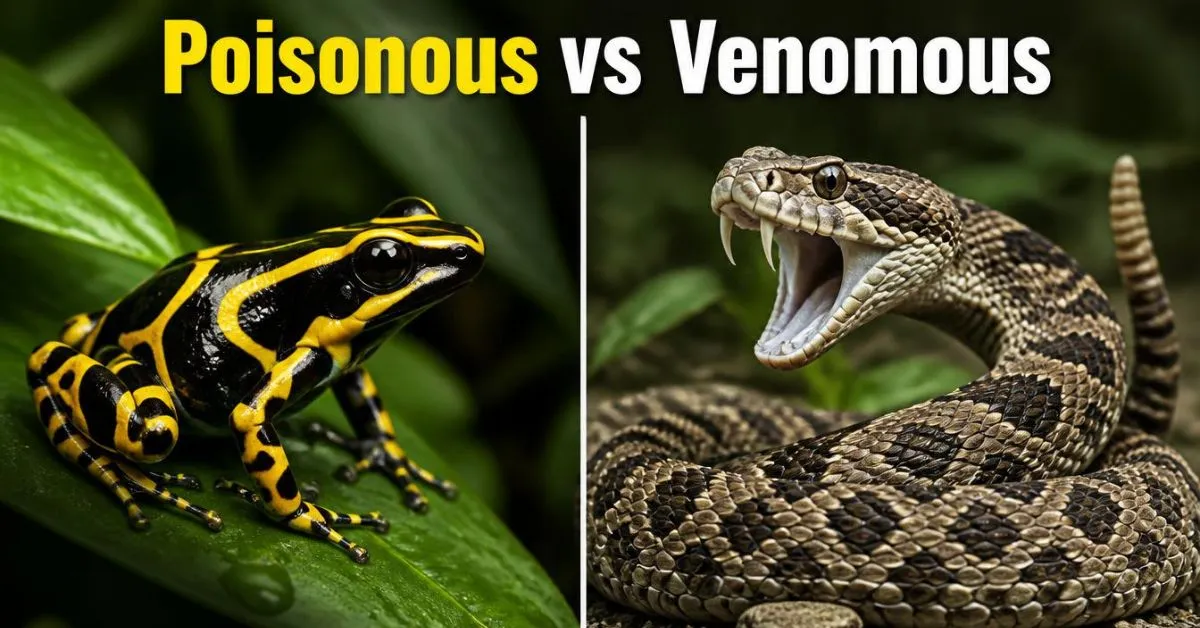
Poisonous vs. venomous comes down to how a harmful substance enters the body. A poisonous organism can harm you through exposure to its toxins, such as by eating a toxic mushroom or touching poison ivy.
A venomous animal delivers venom through a bite, sting, or other body part. Both can cause serious harm, but they work in different ways.
Key Takeaways
- Poisonous: Can cause harm when its toxic substances enter the body through a harmful route.
- Venomous: Delivers venom through a bite, sting, or similar method.
- Poison ivy: Can cause an itchy rash when its oil touches the skin.
- Rattlesnakes: Use fangs to deliver venom.
- Risk: Both poisons and venom can cause mild or severe harm.
What Is the Difference Between Poisonous & Venomous?
The main difference is how the harmful substance reaches the body.
A poisonous organism can cause harm through exposure to its toxins. For example, eating a toxic mushroom can cause poisoning. Touching poison ivy can cause an itchy skin rash.
A venomous animal has a way to deliver venom into another organism. A rattlesnake uses its fangs to inject venom through a bite. A bee uses its stinger to deliver venom.
Here is an easy way to remember the difference:
- Poisonous: Harm comes from exposure to a toxic substance.
- Venomous: An animal delivers venom through a bite, sting, or similar method.
This rule works for many common examples. However, the exact risk depends on the substance and how it enters the body.
What Does Poisonous Mean?
Something is poisonous if it can harm the body through exposure to a harmful substance.
Depending on the substance, exposure may happen when a person:
- Eats a toxic plant, mushroom, or animal.
- Touches a substance that can harm the skin.
- Breathes in harmful fumes or particles.
- Gets a harmful substance into the eyes or another body area.
For example, poison ivy contains an oil called urushiol. When this oil touches the skin, it can cause an itchy rash, swelling, or blisters.
Some mushrooms contain toxins that can cause severe illness when eaten. The effects depend on the type of mushroom, the amount eaten, and other factors.
Important: Not every poisonous organism harms you through touch. Some toxins must enter the body in a certain way to cause harm. Never assume that an unknown plant, mushroom, or animal is safe.
What Does Venomous Mean?
A venomous animal can deliver venom into another organism through a special body part.
Venom is a harmful substance or mixture made by an animal. It may contain chemicals that affect nerves, blood, or body tissues.
Animals may use venom to catch prey or defend themselves.
Common examples include:
- Snakes: Rattlesnakes use fangs to deliver venom through a bite.
- Bees and wasps: These insects use stingers to deliver venom.
- Spiders: Many spiders use fangs to deliver venom.
- Lionfish: Their venomous spines can deliver venom when they puncture the skin.
- Scorpions: They use a stinger to deliver venom.
Venom can cause pain, swelling, tissue damage, or other harmful effects. Some venoms can also affect breathing, blood clotting, or nerve function.
Not every venomous animal poses the same risk to humans. However, a bite or sting from a dangerous species may need urgent medical care.
Poisonous vs. Venomous: Key Differences
| Feature | Poisonous | Venomous |
|---|---|---|
| Main meaning | Can cause harm through exposure to a toxic substance | Can deliver venom into another organism |
| Common route | Eating, skin contact, or another form of exposure | Bite, sting, or puncture |
| Common examples | Poison ivy, toxic mushrooms, poison dart frogs | Rattlesnakes, bees, scorpions, lionfish |
| How harm occurs | Depends on the substance and route of exposure | Venom is delivered through a special body part |
| Possible effects | Rash, illness, organ damage, or death | Pain, swelling, tissue damage, or other serious effects |
| Safety rule | Avoid unknown plants, mushrooms, and toxic substances | Keep away from animals that may bite or sting |
The key point is that poisonous and venomous describe different ways a harmful substance can affect the body. Neither word tells you the exact level of danger on its own.
Examples of Poisonous & Venomous Organisms
Real examples make the difference easier to understand.
Poisonous Organisms
Poison dart frogs
Some poison dart frogs carry strong toxins in their skin. These toxins help protect them from predators. Certain species can be highly toxic, but their level of toxicity varies.
Pufferfish
Some pufferfish contain tetrodotoxin, a powerful toxin. Eating fish that contains a harmful amount can cause severe poisoning. Proper handling and preparation matter, but wild pufferfish should never be eaten unless handled by qualified professionals under the proper rules.
Poison ivy
Poison ivy is a plant, not an animal. Its oil, called urushiol, can cause an itchy rash after skin contact. It is a clear example of how a harmful substance can cause harm without a bite or sting.
Venomous Animals
Rattlesnakes
Rattlesnakes use fangs to deliver venom through a bite. A bite can cause serious injury and may be life-threatening. Seek emergency medical care if a rattlesnake bite is suspected.
Bees and wasps
Bees and wasps deliver venom through a sting. A sting often causes pain and swelling. In some people, it can trigger a severe allergic reaction that needs emergency care.
Lionfish
Lionfish have venomous spines. If a spine punctures the skin, it can deliver venom and cause severe pain. Do not handle a lionfish with bare hands.
Blue-ringed octopuses
Blue-ringed octopuses are venomous. Their bite can deliver venom that contains tetrodotoxin, which can cause paralysis and breathing failure. Never pick one up, even if it looks small or calm.
Can an Animal Be Both Poisonous & Venomous?
Yes, some animals can be both poisonous and venomous. The terms describe how a harmful substance causes harm, not just which animal carries it.
For example, some animals may carry toxins that harm a predator if eaten and also have a way to deliver a toxic substance through a bite or another body part.
However, each species must be assessed on its own. The blue-ringed octopus is a well-known example of a venomous animal because its bite delivers venom. Its venom contains tetrodotoxin, but that fact alone does not prove that eating the animal is a normal or established route of poisoning.
This distinction matters because an animal’s toxic nature and its method of delivering toxins are two different questions.
Poison vs. Venom vs. Toxin
These three terms are related, but they do not mean the same thing.
| Term | Simple meaning | Example |
|---|---|---|
| Poison | A substance that can harm the body through exposure | A toxic cleaning chemical |
| Venom | A harmful substance made by an animal and delivered through a bite, sting, or similar method | Rattlesnake venom |
| Toxin | A harmful substance made by a living organism | Tetrodotoxin |
A poison is a broad term for a substance that can cause harm when it enters or affects the body in a harmful way.
A venom is a type of poisonous substance that an animal delivers through a special body part.
A toxin is a harmful substance made by a living organism. Toxins can be found in plants, animals, bacteria, and other living things.
For example, tetrodotoxin is a toxin found in certain pufferfish. If someone eats fish containing a harmful amount, it can cause poisoning. A rattlesnake delivers venom through a bite.
In short, poison describes the harmful effect or substance, venom describes a form of delivery, and toxin describes a harmful substance made by a living organism.
Is Poison or Venom More Dangerous?
Neither is always more dangerous. The level of risk depends on several factors.
The substance: Different toxins affect the body in different ways. Some cause skin irritation, while others can damage organs or affect breathing.
The amount: The amount that enters the body can change the severity of the effects.
The route of exposure: Eating, touching, breathing in, or being injected with a harmful substance can lead to different effects.
The person’s response: Age, health, and individual sensitivity can affect the outcome. For example, a bee sting may cause mild swelling in one person but a life-threatening allergic reaction in another.
A small amount of one substance may cause serious harm, while a larger amount of another may cause less harm. The source alone does not tell you how dangerous an exposure will be.
Never assume that a small animal is harmless or that every bite or sting will be deadly.
FAQs:
Is a snake poisonous or venomous?
Snakes that deliver venom through their fangs are venomous. Rattlesnakes and coral snakes are examples found in the United States. People often use the word poisonous by mistake when they mean venomous.
Are spiders poisonous or venomous?
Spiders that deliver venom through their fangs are venomous. Many spider bites cause little harm, but some can lead to medical problems. Avoid handling spiders you cannot identify.
Is a poison dart frog poisonous or venomous?
Poison dart frogs are best known as poisonous. Some species carry toxins in their skin that can harm predators through contact or eating. They are not known for delivering venom through a bite.
Can venom hurt you if you swallow it?
Swallowing venom should never be treated as safe. The effects depend on the venom and the type of exposure. Do not taste venom or test it on your skin. If someone may have swallowed venom, contact Poison Control or seek medical help for advice.
Are poisonous animals always dangerous to touch?
No. The risk depends on the species and its toxins. Some harmful substances can affect the skin, while others cause harm mainly when swallowed or taken into the body in another way. Still, avoid touching unfamiliar wildlife.
How to Stay Safe Around Poisonous & Venomous Organisms
A few simple steps can help reduce the risk of harm.
- Do not touch unfamiliar plants, frogs, mushrooms, or wild animals.
- Keep a safe distance from snakes. Never try to catch or kill one.
- Wear boots and long pants in areas where snakes may hide.
- Never eat wild mushrooms or plants unless a qualified expert has confirmed they are safe.
- Avoid handling unfamiliar marine animals, even if they appear calm.
- Seek prompt medical care after a suspected bite from a venomous animal.
If someone is bitten by a snake, move away from the snake, keep the person calm and still, and seek emergency medical care. Do not wait for symptoms to appear. Do not cut the wound, suck out venom, apply ice, or use a tourniquet. Do not try to capture the snake.
In the United States, call Poison Control at 1-800-222-1222 for advice about a possible poisoning or toxic exposure. Call 911 for life-threatening symptoms, such as trouble breathing, collapse, or seizures.
Conclusion:
The difference between poisonous vs. venomous is how a harmful substance reaches the body. Poisonous organisms can cause harm through exposure to toxins, while venomous animals deliver venom through a bite, sting, or similar method.
Poison ivy, some poison dart frogs, and certain pufferfish are examples of poisonous organisms. Rattlesnakes, bees, scorpions, and blue-ringed octopuses are examples of venomous animals.
Remember: poison causes harm through exposure, while venom is delivered by an animal. Both can be dangerous, so avoid handling or eating unfamiliar organisms.

Harry Jack is a content writer at ReplyGenius.com who specializes in practical, natural sounding replies for texts, social media, relationships, and everyday conversations.