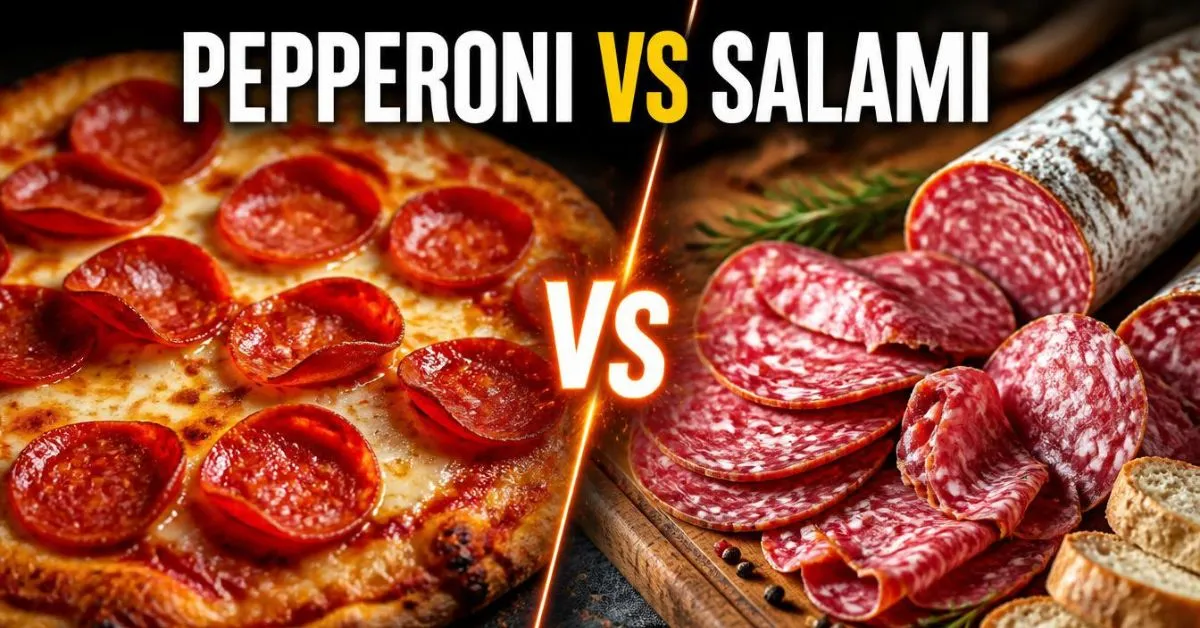
Pepperoni vs salami is mainly a comparison between a specific sausage and a much broader category. Pepperoni is an American-style cured sausage generally considered a type of salami, while salami includes many different cured sausage varieties.
Pepperoni is usually finely ground, boldly seasoned, and designed to work especially well as a pizza topping.
Key Takeaways
- Pepperoni is a type of salami, but salami includes many products that are not pepperoni.
- Pepperoni typically has a fine grind, softer bite, red color, and bold paprika-chili flavor.
- Salami can be mild, spicy, garlicky, peppery, tangy, or herb-forward depending on the variety.
- Pepperoni is especially suited to pizza because its fat and texture respond well to heat.
- Salami is highly versatile for sandwiches, antipasto, charcuterie, salads, and snacks.
- Neither one is automatically healthier; nutrition varies by product, ingredients, and serving size.
Pepperoni vs Salami: The Main Difference
At first glance, pepperoni and salami look almost interchangeable. Both can be sold in thin slices, both are cured sausage products, and both can appear on pizzas, sandwiches, and snack boards.
The biggest difference is how the two words are used.
Salami is a broad category. Pepperoni is a specific style within that category.
There are many types of salami, each with its own recipe, seasoning, texture, and production method. Pepperoni has a more recognizable American style, with a characteristic red color and a strongly seasoned flavor.
Food Network describes pepperoni as a spiced, cured, air-dried sausage made from beef and pork and notes that it is considered a type of salami when traditionally produced.
Think of it this way:
Salami = the larger family
Pepperoni = one member of that family
That simple distinction answers the biggest question behind this search.
Is Pepperoni a Type of Salami?
Yes.
Pepperoni is generally classified as a type of salami or cured sausage, but the two terms are not interchangeable.
You can have Genoa salami, soppressata, hard salami, finocchiona, and many other varieties without any of them being pepperoni.
This matters because “salami” does not tell you exactly what the product will taste or feel like. The specific style matters.
Pepperoni vs Salami Comparison Table
| Feature | Pepperoni | Salami |
| What it is | Specific sausage style | Broad family of cured sausages |
| Common U.S. meat | Often pork and beef | Varies by variety |
| Grind | Usually fine | Fine to coarse |
| Flavor | Bold, peppery, spicy | Mild to spicy; varies widely |
| Common seasonings | Paprika, chili, garlic, pepper | Garlic, pepper, fennel, herbs, spices |
| Texture | Usually softer and more uniform | Often firmer and more varied |
| Color | Usually bright red | Varies by style |
| Pizza use | Extremely common | Possible, depending on variety |
| Sandwich use | Good | Very common |
| Charcuterie use | Good | Very versatile |
These are general characteristics rather than rules for every brand. Recipes and manufacturing methods vary.
How Pepperoni & Salami Taste
Flavor is where the difference becomes much easier to notice.
Pepperoni Flavor
Pepperoni usually has a strong, savory, peppery taste. Paprika contributes to its familiar red color and seasoning profile, while chili or other pepper-based spices can add heat. Garlic and fermentation can add additional depth.
It is designed to stand out.
That is important on pizza because pepperoni has to compete with ingredients such as:
- Tomato sauce
- Mozzarella
- Garlic
- Herbs
- Other toppings
A mild meat could disappear among those flavors. Pepperoni brings a concentrated savory and spicy character.
Salami Flavor
Salami is much harder to describe with one flavor because there are many types of salami.
For example:
- Genoa-style salami can have a savory, garlicky and peppery profile.
- Soppressata may be mild or noticeably spicy depending on the recipe.
- Fennel-forward salami has a distinctive herbal character.
- Other varieties may emphasize garlic, black pepper, herbs, or fermented tang.
So if someone asks, “Does salami taste like pepperoni?” the best answer is:
Sometimes, but not necessarily.
A spicy salami may remind you of pepperoni, while a mild or fennel-heavy salami can taste completely different.
Pepperoni vs Salami: Texture and Appearance
Texture is another important difference.
Pepperoni is commonly made with a fine grind and relatively small fat particles, giving it a more consistent bite. Food Network specifically notes that pepperoni tends to be on the finer side compared with many salamis and is often softer as a result.
Salami can have a much wider range of textures.
Some varieties are:
- Firm
- Dense
- Coarse
- Chewy
- Soft
- Fatty
A dry-aged salami can have visible pieces of fat and a more pronounced meat texture.
Pepperoni also has a distinctive appearance. It is usually a deep red or reddish-orange color, partly because of its spice blend.
When cooked, the difference becomes even more noticeable.
Pepperoni can release fat and develop browned, crisp edges. Some varieties curl into small cups during baking, creating the familiar “cup and char” appearance associated with certain pizzas.
How Pepperoni & Salami Are Made
Both products can involve processes such as:
- Grinding meat
- Mixing meat with fat, salt, and seasonings
- Adding curing ingredients
- Fermenting or otherwise processing the sausage
- Drying or curing
- Slicing for serving or cooking
But there is no single production recipe for all salami.
The salami category includes many regional and commercial styles, so ingredients, fermentation, drying time, grind, and seasoning can vary.
Pepperoni has a more consistent identity. It is commonly made from pork and beef and seasoned with ingredients such as paprika, chili, garlic, and fennel.
The exact process still varies by manufacturer, so it is better to use those characteristics as general guidelines rather than universal rules.
Why Pepperoni Works So Well on Pizza
Pepperoni is almost synonymous with American pizza for a reason.
Its combination of fine texture, fat, seasoning, and heat response makes it particularly suitable for baking.
As the pizza cooks, pepperoni can:
- Release flavorful fat
- Brown around the edges
- Become crisp
- Curl depending on the casing and slice
- Concentrate its seasoning
That creates contrast with soft cheese and tomato sauce.
Salami can also be used on pizza, but the result depends heavily on the specific variety. A dense, dry salami may not behave like a typical pepperoni slice.
Can You Use Salami Instead of Pepperoni?
Yes.
Salami can replace pepperoni on pizza, especially if you want a different flavor.
For a closer match to pepperoni, choose a spicy salami with chili or paprika.
For something different, try a salami with:
- Garlic
- Fennel
- Black pepper
- Herbs
The important point is that substitution changes the final dish.
If the recipe specifically expects pepperoni’s spicy flavor and fat-rendering behavior, ordinary mild salami may produce a noticeably different pizza.
Which Is Better for Sandwiches?
Both can work, but salami offers more variety.
Salami is commonly used in:
- Italian sandwiches
- Cold-cut subs
- Hoagies
- Antipasto sandwiches
- Deli sandwiches
Its many styles let you adjust the flavor of the sandwich.
For example, a mild salami can work with provolone and lettuce without overwhelming them. A spicy salami can add more heat to a sandwich with roasted peppers or a creamy spread.
Pepperoni also works well in sandwiches, especially when you want a bold, pizza-like flavor.
It can pair nicely with:
- Mozzarella
- Provolone
- Tomato
- Roasted peppers
- Italian herbs
Which Works Better on a Charcuterie Board?
Salami gives you more options because the category contains so many styles.
You can choose one mild salami and one spicy salami to create contrast, or pair a particular variety with different cheeses and fruit.
Pepperoni can absolutely belong on a charcuterie board, especially a casual or pizza-inspired board.
The choice comes down to the experience you want.
Want variety? Explore different salamis.
Want a familiar spicy flavor? Pepperoni is an easy choice.
Pepperoni vs Salami Nutrition
It is tempting to ask which is healthier, but there is no universal answer.
“Salami” represents many different products, and pepperoni recipes also vary by manufacturer.
When comparing two packages, look at:
- Serving size
- Calories
- Total fat
- Saturated fat
- Sodium
- Protein
- Ingredients
Both pepperoni and many salami products are processed meats, and some products can be high in sodium and saturated fat.
Therefore, the most useful comparison is product versus product, rather than assuming every salami is nutritionally better or worse than every pepperoni.
If nutrition is a major concern, the Nutrition Facts label gives you a much more meaningful comparison.
Which One Should You Choose?
The easiest way to decide is to start with the food you’re making.
| If you’re making… | Consider |
| Classic American pizza | Pepperoni |
| Spicy pizza with a different flavor | Spicy salami |
| Italian-style sandwich | Salami |
| Charcuterie board | Salami varieties |
| Pizza-inspired snack board | Pepperoni |
| Mild cold-cut sandwich | Mild salami |
| Bold, spicy sandwich | Pepperoni or spicy salami |
There is no need to treat them as competing foods in every situation. They overlap, but each can serve a different purpose.
FAQs:
Is pepperoni a type of salami?
Yes. Pepperoni is generally considered a specific type of cured sausage within the broader salami family. The major distinction is that salami describes a broad range of products, while pepperoni describes a particular American-style sausage with a recognizable seasoning and texture.
Is pepperoni spicier than salami?
Pepperoni is often spicier than many mild salamis, but salami has no single spice level. Some salamis are mild, while others contain chili and can be quite spicy. Comparing a specific salami variety with a specific pepperoni brand is more accurate than comparing the categories as a whole.
Can I substitute salami for pepperoni?
Yes. Salami can be used instead of pepperoni on pizza, sandwiches, flatbreads, and other dishes. Choose a spicy salami if you want a flavor closer to pepperoni. Keep in mind that salami may have a firmer texture and may cook differently.
Are pepperoni and salami made from the same meat?
Not necessarily. Many U.S. pepperoni products use pork and beef, while salami can be made from different meats depending on the variety and recipe. Always check the ingredient label when the specific meat matters.
Does salami taste like pepperoni?
Some salami can taste similar to pepperoni, especially spicy varieties, but many do not. Salami can have garlic, fennel, herbs, black pepper, or other flavors. Pepperoni generally has a more recognizable paprika-and-chili seasoning profile.
Which is better for pizza?
Pepperoni is the classic choice for American-style pizza because its seasoning and cooking characteristics work particularly well with cheese and tomato sauce. However, spicy or flavorful salami can also be used when you want a different result.
Conclusion:
The pepperoni vs salami question becomes much easier once you understand that they are not equal categories.
Salami is the broad family. Pepperoni is a specific style within that family.
Pepperoni is generally finer, softer, boldly seasoned, and strongly associated with pizza. Salami covers a much wider range of cured sausage styles, so its flavor and texture can change significantly from one variety to another.
For a classic pizza, pepperoni gives you the familiar spicy, savory flavor and characteristic behavior under heat. For sandwiches, antipasto, or charcuterie, different salamis offer much more variety.
So the simplest answer is:
Pepperoni is salami, but salami is not necessarily pepperoni.

Eric Walker, an author at replyygenius.com, where I create clear and helpful content for readers.
I focus on writing useful, engaging, and easy to understand articles that deliver real value.