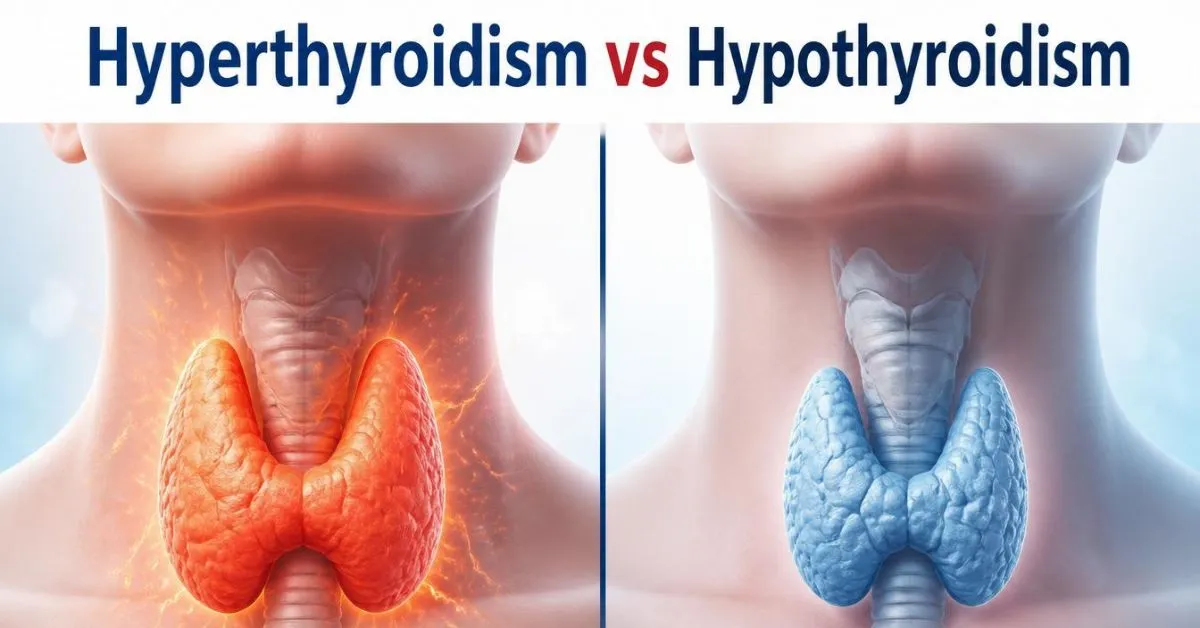
Hyperthyroidism and hypothyroidism are two thyroid conditions with opposite effects. Hyperthyroidism means your thyroid makes too much hormone.
Hypothyroidism means it makes too little. One often speeds up body functions, while the other slows them down.
Both can affect your weight, heart rate, mood, and energy. However, they have different causes, test results, and treatments.
Key Takeaways
- Hyperthyroidism: Too much thyroid hormone may cause weight loss, sweating, shaking, and a fast heartbeat.
- Hypothyroidism: When the thyroid makes too little hormone, you may feel tired, feel cold more often, have dry skin, and gain weight.
- Diagnosis: Blood tests, often starting with TSH, help doctors check thyroid function.
- Treatment: Hyperthyroidism treatment depends on its cause. Hypothyroidism often needs thyroid hormone replacement.
- Important: Symptoms alone cannot confirm either condition. A medical check and blood tests are needed.
Hyperthyroidism vs Hypothyroidism: Key Differences
Your thyroid is a small, butterfly-shaped gland at the front of your neck. It makes two main hormones: thyroxine (T4) and triiodothyronine (T3).
These hormones help control how your body uses energy. They also affect your heart, digestion, body temperature, muscles, and brain.
The main difference is how much thyroid hormone your body has.
| Feature | Hyperthyroidism | Hypothyroidism |
| Other name | Overactive thyroid | Underactive thyroid |
| Main problem | Too much thyroid hormone | Too little thyroid hormone |
| Common weight change | Weight loss | Weight gain may occur |
| Heart rate | Often fast or irregular | May be slow |
| Body temperature | Heat sensitivity | Cold sensitivity |
| Bowel movements | More frequent | Constipation |
| Energy and mood | Restlessness or anxiety | Tiredness or low mood |
| Skin | Often warm and moist | Often dry or rough |
| Common cause | Graves’ disease | Hashimoto’s disease |
| Common treatment | Depends on the cause; may include medicine, radioactive iodine, or surgery | Often levothyroxine |
These are common patterns, not fixed rules. Both conditions can cause tiredness, mood changes, and other symptoms. Some people have mild symptoms or none at all.
What Is Hyperthyroidism?
Hyperthyroidism happens when your thyroid makes more hormone than your body needs. It is also called an overactive thyroid.
Too much thyroid hormone makes many body functions work faster. Your heart may beat faster, you may feel too warm, and you may lose weight without trying.
Symptoms of Hyperthyroidism
Common symptoms include:
- Weight loss without trying
- Fast or irregular heartbeat
- Shaky hands or fingers
- Nervousness, anxiety, or irritability
- Heavy sweating
- Trouble sleeping
- Feeling too hot
- Muscle weakness
- More frequent bowel movements
- Changes in menstrual periods
- A swollen thyroid gland, called a goiter
- Tiredness despite feeling restless
Some people with Graves’ disease develop eye problems. Their eyes may look larger or bulge forward. They may also have dry eyes, eye pain, or double vision.
Older adults may show fewer typical signs. They may mainly feel weak, lose their appetite, or become less active.
Does Hyperthyroidism Always Cause Weight Loss?
No. Weight loss is common, but it does not happen to everyone. Some people feel hungrier because their bodies use energy faster. Their weight may stay the same or even increase.
Weight changes alone cannot confirm an overactive thyroid.
Causes of Hyperthyroidism
Several conditions can cause an overactive thyroid.
Graves’ disease: This is a common cause of hyperthyroidism. It is an autoimmune disease, which means the immune system attacks the body by mistake. In Graves’ disease, antibodies signal the thyroid to make too much hormone.
Overactive thyroid nodules: Some lumps in the thyroid make too much hormone on their own. These lumps are often not cancerous.
Thyroiditis: This means the thyroid is inflamed. Some types release stored hormone into the blood. This can cause a temporary period of high thyroid hormone levels, even though the gland is not making extra new hormone.
Too much iodine: Some supplements, seaweed products, and medicines contain high levels of iodine. Too much iodine can cause thyroid problems in some people.
Too much thyroid medicine: Taking more thyroid hormone medicine than needed can cause high hormone levels. This is different from a thyroid gland that makes too much hormone on its own.
The cause matters because not every form of hyperthyroidism needs the same treatment.
For example, antithyroid medicines do not treat the hormone release caused by thyroiditis.
What Is Hypothyroidism?
Hypothyroidism happens when your thyroid does not make enough hormone. It is also called an underactive thyroid.
Low thyroid hormone levels slow many body functions. You may feel tired, have trouble staying warm, or find that your bowel movements become less frequent.
Symptoms often develop slowly. You may not notice them for months or even years.
Symptoms of Hypothyroidism
Common symptoms include:
- Weight gain
- Tiredness or low energy
- Feeling cold more often
- Dry skin
- Dry or thinning hair
- Constipation
- Muscle aches or joint pain
- A slower heart rate
- Low mood or depression
- Trouble with memory or focus
- Heavy or irregular menstrual periods
- Fertility problems in some people
Not everyone has all these symptoms. Some people have only a few mild signs.
Does Hypothyroidism Always Cause Weight Gain?
No. Hypothyroidism may cause weight gain, but not everyone gains weight. Some of the increase may come from extra salt and water in the body.
Weight gain can also have many other causes. It cannot confirm an underactive thyroid by itself.
Causes of Hypothyroidism
Common causes include:
Hashimoto’s disease: This autoimmune disease causes the immune system to attack the thyroid. Over time, the gland may not make enough hormone. It is a common cause of hypothyroidism in the United States.
Thyroid surgery: Removing part or all of the thyroid can lower hormone production. People who have their whole thyroid removed need thyroid hormone replacement.
Radioactive iodine treatment: This treatment can reduce thyroid activity. Some people later develop an underactive thyroid.
Thyroiditis: Inflammation can damage the gland or reduce its ability to make enough hormone. Some cases improve over time, while others lead to lasting hypothyroidism.
Certain medicines: Some medicines can affect thyroid function. Tell your doctor about all medicines and supplements you take.
Pituitary problems: The pituitary gland helps control thyroid hormone production. If it does not send enough TSH, the thyroid may not make enough hormone. This is less common and can cause a different blood test pattern from typical hypothyroidism.
Treatment depends on the cause and how well the thyroid works.
How Do Thyroid Blood Test Results Differ?
Symptoms can point to a thyroid problem, but blood tests help doctors confirm it. Doctors often start with a test called TSH.
TSH stands for thyroid-stimulating hormone. The pituitary gland, located at the base of your brain, makes it. TSH tells your thyroid how much T4 and T3 to produce.
When thyroid hormone levels fall, the pituitary usually sends more TSH. When thyroid hormone levels rise, it usually sends less.
What Do TSH, T3, and T4 Results Mean?
| Blood test | Typical overt hyperthyroidism | Typical primary hypothyroidism |
| TSH | Low | High |
| Free T4 | High | Low |
| T3 | High in some cases; it can be the only high hormone early on | Often normal early on, but may fall as disease progresses |
These are common patterns, not a diagnosis by themselves. Results can vary with the cause, other health problems, medicines, and pregnancy.
What Does a Low or High TSH Mean?
Low TSH: This often suggests that the thyroid is making too much hormone. However, some medicines, other health problems, and pituitary conditions can affect TSH.
High TSH: This often suggests that the thyroid is not making enough hormone. The pituitary sends more TSH to try to make the thyroid work harder.
Normal TSH: A normal result often makes common thyroid disease less likely. However, a normal TSH does not rule out every thyroid problem. For example, pituitary disease can cause low thyroid hormone levels without the expected rise in TSH.
Doctors may order a free T4 test to check the amount of thyroid hormone that is not bound to blood proteins. A T3 test can help when hyperthyroidism is suspected, even if T4 is normal.
Thyroid antibody tests may help identify Graves’ disease or Hashimoto’s disease. An ultrasound or other imaging test may be needed if the thyroid has lumps or the cause remains unclear.
Some supplements, especially biotin, can affect certain thyroid lab tests. Tell your healthcare professional about your supplements and follow their advice before testing.
What Is Subclinical Thyroid Disease?
Subclinical thyroid disease means that TSH is outside the usual range while free T4 remains within the lab’s normal range.
- Subclinical hyperthyroidism: TSH is low, but free T4 and T3 are usually normal.
- Subclinical hypothyroidism: TSH is high, but free T4 is normal.
These forms may cause no clear symptoms. Some people need treatment, while others may only need follow-up blood tests.
The choice depends on factors such as the TSH level, age, symptoms, pregnancy status, heart health, bone health, and the cause of the problem. A doctor may repeat the tests before deciding what to do.
Do not diagnose yourself from one result. Your doctor must interpret your results along with your symptoms and health history.
How Are Hyperthyroidism & Hypothyroidism Treated?
Treatment depends on the cause, hormone levels, symptoms, pregnancy status, and your overall health. The two conditions often need different treatments.
Hyperthyroidism Treatment
The goal is to lower excess thyroid hormone or control its effects.
- Antithyroid medicines: Drugs such as methimazole help the thyroid make less hormone. They work for some causes of hyperthyroidism but do not treat the hormone release caused by thyroiditis.
- Radioactive iodine: This treatment reduces thyroid activity by damaging hormone-producing cells. It is not used during pregnancy or breastfeeding.
- Surgery: A surgeon may remove part or all of the thyroid in certain cases.
- Beta-blockers: These medicines can ease a fast heartbeat, shaking, and nervousness. But they do not lower the amount of hormone the thyroid makes.
Each option has benefits and risks. Radioactive iodine or surgery may lead to hypothyroidism, so follow-up tests and thyroid hormone medicine may be needed.
Your doctor will choose a treatment based on the cause and your needs.
Hypothyroidism Treatment
The usual treatment is levothyroxine. This medicine replaces the thyroid hormone your body lacks.
Many people need it for life, especially when the thyroid can no longer make enough hormone. However, some people develop temporary hypothyroidism, such as during certain types of thyroiditis. They may need treatment for a limited time and later be checked to see if they still need it.
Doctors use blood tests to see if the dose is right. They often check TSH again about six to eight weeks after starting treatment or changing the dose. The timing may vary based on the person’s health and treatment plan.
Take levothyroxine as directed. Food, supplements, and some medicines can affect how well your body absorbs it. Ask your pharmacist or doctor how to take it and how to space it from other medicines.
Do not stop the medicine or change the dose on your own. Too little or too much thyroid hormone can cause health problems.
Can Thyroid Function Change Over Time?
Yes. Thyroid function can change over time.
For example, thyroiditis may first cause high thyroid hormone levels as stored hormone leaks into the blood. Later, the gland may not make enough hormone. Some people recover, while others develop lasting hypothyroidism.
Treatment can also change thyroid function. Radioactive iodine and thyroid surgery may lead to an underactive thyroid. People who receive these treatments need follow-up care.
In some cases, thyroid levels may move between high and low over time. The cause, medicines, and treatment history help explain these changes.
If your symptoms return or change, tell your healthcare professional. Do not assume your thyroid levels are the same as they were at your last test.
Which Condition Is More Serious?
Neither condition is always worse than the other. Both can cause serious problems if they are severe or left untreated.
Untreated hyperthyroidism can cause irregular heart rhythms, heart problems, bone loss, and fertility problems. In rare cases, it can cause thyroid storm, a life-threatening condition.
Untreated hypothyroidism can contribute to high cholesterol and other health problems. In rare, severe cases, it can cause myxedema coma, a medical emergency.
Both conditions need careful care during pregnancy. Abnormal thyroid hormone levels can affect both the pregnant person and the baby. If you are pregnant or planning a pregnancy, contact your healthcare professional to review testing and treatment.
Get emergency help for chest pain, fainting, or severe trouble breathing. A very fast or uneven heartbeat with serious symptoms also needs urgent care. A high fever with severe confusion or restlessness can be a medical emergency in someone with hyperthyroidism. Severe confusion or extreme sleepiness in someone with hypothyroidism also needs urgent care.
Do not wait for every warning sign to appear before getting help.
When Should You See a Doctor?
Make an appointment if you have ongoing symptoms such as:
- Unexplained weight changes
- A racing or unusually slow heartbeat
- Ongoing tiredness or weakness
- Increased sensitivity to heat or cold
- Changes in bowel movements
- A swelling in your neck
- Changes in your menstrual cycle
Your doctor may ask about your symptoms, family history, medicines, supplements, and past thyroid treatment. They may order blood tests to check thyroid function.
Tell your doctor if you are pregnant, planning a pregnancy, or recently gave birth. Thyroid problems around pregnancy need special care.
Do not start iodine supplements or thyroid medicines without medical advice. Too much iodine can worsen some thyroid conditions, and the wrong dose of thyroid hormone can be harmful.
FAQs:
What is the main difference between hyperthyroidism and hypothyroidism?
Hyperthyroidism means your thyroid makes too much hormone, which often speeds up body functions. Hypothyroidism means it makes too little hormone, which often slows them down. Their symptoms may overlap, but their causes, test patterns, and treatments differ.
Which is worse, hyperthyroidism or hypothyroidism?
Neither is always worse. The risk depends on how severe the condition is, its cause, and whether it is treated. Both can lead to serious health problems if left untreated. Proper testing and treatment help lower these risks.
Can you have hyperthyroidism and hypothyroidism at the same time?
Usually, a person has one main pattern of thyroid hormone imbalance at a time. However, thyroid function can change over time. Thyroiditis or treatment for an overactive thyroid can lead to low thyroid hormone levels later.
Can thyroid problems cause anxiety and fatigue?
Yes. Hyperthyroidism may cause anxiety, restlessness, and trouble sleeping. Hypothyroidism often causes tiredness, low energy, and trouble focusing. Fatigue can occur with either condition, so symptoms alone cannot show the cause.
Can diet cure hyperthyroidism or hypothyroidism?
No specific diet can reliably cure either condition. A balanced diet supports general health, but it does not replace medical treatment. Too much iodine can worsen some thyroid problems. Ask your healthcare professional before taking iodine or thyroid supplements.
Can thyroid problems affect pregnancy?
Yes. Thyroid hormones play an important role in pregnancy. Untreated thyroid disease can raise risks for both the pregnant person and the baby. If you are pregnant or planning a pregnancy, talk with your healthcare professional about testing and treatment.
Conclusion:
Hyperthyroidism and hypothyroidism affect the body in different ways. An overactive thyroid often speeds up body functions, while an underactive thyroid often slows them down.
Symptoms can offer clues, but blood tests help doctors confirm the problem and find its cause. The right treatment depends on the type of thyroid disorder and your health needs.
If you have ongoing symptoms or concerns about your thyroid, seek medical advice rather than trying to diagnose yourself.

Aiden Robert, an author at ReplyyGenius.com, where I share smart conversation tips, flirty replies, and practical communication ideas to help people reply with confidence.