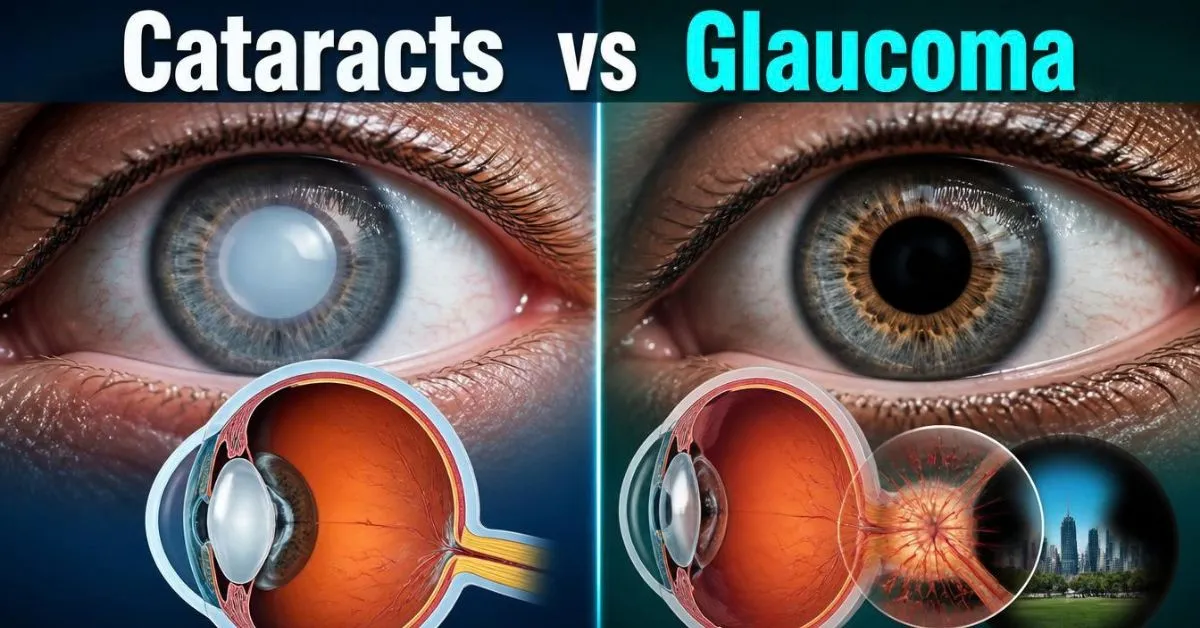
Cataracts and glaucoma can both affect your vision, but they damage different parts of the eye. Cataracts make the eye’s natural lens cloudy. Glaucoma damages the optic nerve, which carries visual signals from the eye to the brain.
The main difference in cataracts vs glaucoma is how each condition affects sight. Cataracts often cause blurry vision, faded colors, and glare. Glaucoma may cause no early symptoms, even while damage develops.
Both conditions become more common with age, and one person can have both. Knowing the warning signs, treatment options, and key differences can help you understand why regular eye exams matter.
Cataracts vs Glaucoma: Key Differences
| Feature | Cataracts | Glaucoma |
| What it affects | The eye’s natural lens | The optic nerve |
| Main problem | Cloudy lens | Nerve damage |
| Early symptoms | Often none | Often none |
| Common vision changes | Blurry or hazy vision | Loss of side vision over time |
| Other signs | Glare, faded colors, poor night vision | Blind spots or tunnel vision in later stages |
| Diagnosis | Eye exam, often with dilated pupils | Comprehensive eye exam and visual field testing |
| Main treatment | Surgery when needed | Eye drops, laser treatment, or surgery |
| Can lost vision return? | Surgery often improves vision caused by cataracts | Existing optic nerve damage cannot be reversed |
| Main risk | Reduced clarity of vision | Permanent vision loss |
In simple terms: Cataracts make it harder to see clearly. Glaucoma can damage the nerve that helps you see. Both need proper eye care, but they require different treatments.
The National Eye Institute provides detailed information about cataracts and glaucoma.
What Are Cataracts?
A cataract is a cloudy area in the natural lens inside your eye. This lens helps focus light onto the retina at the back of the eye. When the lens becomes cloudy, light cannot pass through it as clearly, and your vision may become hazy or blurred.
Most cataracts develop as part of aging. They often grow slowly, so you may not notice a problem at first. As they progress, reading, driving, and other daily tasks may become harder.
Common Symptoms of Cataracts
Cataracts may cause:
- Blurry or cloudy vision
- Colors that look faded or yellow
- Trouble seeing at night
- Glare from sunlight, lamps, or headlights
- Halos around lights
- Double vision in some cases
- Frequent changes in glasses or contact lens prescriptions
Mild cataracts may not cause noticeable problems. These symptoms can also occur with other eye conditions, so an eye exam is needed to find the cause.
What Causes Cataracts?
Age-related changes in proteins inside the lens are the most common cause. Other factors can raise the risk, including diabetes, smoking, a family history of cataracts, eye injuries, previous eye surgery, long-term use of certain steroid medicines, and too much sun exposure.
You cannot prevent every cataract. Protecting your eyes from UV rays, avoiding smoking, and managing health conditions may help lower some risks. These steps do not guarantee that cataracts will not develop.
What Is Glaucoma?
Glaucoma is a group of eye diseases that damage the optic nerve. This nerve sends visual information from the retina to the brain. When the nerve is damaged, parts of your vision can be lost.
Open-angle glaucoma is the most common type in the United States. It often develops slowly and may cause no clear symptoms in its early stages. Some people do not notice a problem until they have lost part of their side vision.
High pressure inside the eye is an important risk factor, but it does not tell the whole story. Some people have high eye pressure without glaucoma. Others develop glaucoma even when their pressure is within the usual range.
Common Symptoms of Glaucoma
Early glaucoma often has no noticeable symptoms.
As damage progresses, a person may develop:
- Loss of side vision
- Blind spots
- Trouble noticing objects off to the side
- Tunnel vision in advanced stages
- Severe vision loss if the disease progresses
Not every type of glaucoma develops in the same way. Acute angle-closure glaucoma can cause sudden, severe symptoms and requires emergency care.
Because early glaucoma can be silent, waiting for vision changes is not a safe way to check for it. A comprehensive eye exam is the best way to find the disease.
Cataracts vs Glaucoma Symptoms: How Can You Tell?
The symptoms can offer clues, but they cannot confirm a diagnosis.
Cataracts often affect how clear things look. You may feel as if you are looking through a foggy window. Bright lights may seem too strong, colors may look dull, and night driving may become difficult.
Glaucoma often affects side vision first. You may still see clearly when looking straight ahead, even as parts of your side vision are lost. This can make early glaucoma difficult to notice.
| Vision change | More typical of cataracts | More typical of glaucoma |
| Cloudy or hazy vision | Yes | Not a typical early sign |
| Faded colors | Yes | Not a typical early sign |
| Glare from headlights | Yes | Not a typical early sign |
| Gradual loss of side vision | Not typical | Yes |
| No early symptoms | Possible | Very common |
| Sudden severe eye pain and red eye | Not typical | Possible in acute angle-closure glaucoma |
These are general patterns, not a self-diagnosis guide. Other eye problems can cause similar symptoms, and both conditions may occur at the same time.
How Are Cataracts & Glaucoma Diagnosed?
An eye doctor can check for both conditions during a comprehensive eye exam. The tests depend on your symptoms, health, age, and risk factors.
Cataract Tests
Your doctor checks your vision and examines the lens for clouding. Dilating drops may widen your pupils so the doctor can see the lens, retina, and other parts of the eye more clearly.
The exam helps show whether a cataract is present and how much it may affect your sight. Your doctor may also ask how vision changes affect tasks such as reading and driving.
Glaucoma Tests
Glaucoma testing may include:
- Dilated eye exam: Checks the optic nerve for signs of damage.
- Eye pressure test: Measures the pressure inside the eye.
- Visual field test: Checks for areas of missing vision, including side vision.
- Optic nerve imaging: Helps the doctor look for structural changes.
- Other eye measurements: May help assess risk and track changes over time.
One eye pressure reading cannot confirm or rule out glaucoma. Doctors consider several findings together, including the optic nerve, visual field, and other test results.
How Are Cataracts Treated?
Treatment depends on how much the cataract affects your daily life.
Early Cataracts
If your vision is still good enough for your needs, your doctor may recommend regular checkups rather than surgery right away. Brighter lighting, anti-glare sunglasses, magnifying tools, or an updated glasses prescription may help for a time.
These changes do not remove the cataract. They may only make daily tasks easier while the cataract is mild.
Cataract Surgery
Surgery is the only way to remove a cataract. During the procedure, the surgeon removes the cloudy lens and usually replaces it with a clear artificial lens called an intraocular lens, or IOL.
Doctors often recommend surgery when cataracts interfere with daily activities such as reading, driving, or watching TV. You do not usually need surgery as soon as a cataract is found. You and your doctor can discuss the benefits, risks, and timing.
About 9 out of 10 people see better after cataract surgery, according to the National Eye Institute. However, other eye conditions can limit how much vision improves.
How Is Glaucoma Treated?
Glaucoma treatment aims to protect the optic nerve and reduce the risk of further vision loss. It cannot restore vision already lost from nerve damage.
Treatment may include:
- Prescription eye drops: Often lower pressure inside the eye.
- Laser treatment: Can help fluid drain from the eye.
- Surgery: May be recommended when drops or laser treatment do not control the condition well enough.
The best option depends on the type of glaucoma, the amount of damage, your eye pressure, and your overall health. Many people need long-term treatment and regular checkups.
Do not stop prescribed glaucoma medicine just because your eyes feel normal. Early glaucoma may not cause symptoms, even when treatment is protecting your vision. Ask your doctor before changing your treatment plan.
Which Is Worse: Cataracts or Glaucoma?
Glaucoma can be more dangerous to long-term vision because it may cause permanent damage without early warning signs. Cataracts can also cause major vision loss, but surgery often improves the vision problems caused by the cloudy lens.
The conditions are not directly interchangeable. The seriousness of either one depends on its severity, how it affects daily life, and how early it is found.
The key difference is that cataract surgery can often improve cataract-related vision loss, while glaucoma treatment aims to prevent further damage rather than reverse existing nerve damage.
Neither condition should be ignored. If you notice vision changes, arrange an eye exam.
Can You Have Cataracts & Glaucoma at the Same Time?
Yes. Cataracts and glaucoma can occur together, especially as people get older. Having one does not mean you will definitely develop the other.
When both are present, treatment must account for each condition. Cataract surgery may improve blurry vision caused by the cataract, but it does not cure glaucoma or repair existing optic nerve damage.
In some cases, a surgeon may treat both conditions during one operation. For example, selected people with mild to moderate open-angle glaucoma may have cataract surgery combined with minimally invasive glaucoma surgery, or MIGS. This may help lower eye pressure or reduce the need for some medicines, but it does not guarantee that glaucoma drops can be stopped.
Combined surgery is not right for everyone. The doctor considers glaucoma severity, eye pressure, current treatment, cataract-related vision problems, and the risks of each approach. Some people need separate procedures or a different treatment plan.
When Should You Seek Urgent Eye Care?
Get emergency medical care if you develop sudden, intense eye pain, a red eye, blurry vision, halos around lights, nausea, or sudden vision changes. These symptoms can indicate acute angle-closure glaucoma, which needs immediate treatment.
Do not wait for a routine appointment if these symptoms occur. Sudden vision loss also needs urgent medical assessment.
For gradual blurry vision, glare, poor night vision, or changes in side vision, arrange an eye exam soon. These signs can have several causes, and only an eye-care professional can determine what is happening.
FAQs:
Can cataracts turn into glaucoma?
No. Cataracts cloud the lens, while glaucoma damages the optic nerve. They are different conditions, although a person can have both.
Can cataracts cause blindness?
Severe cataracts can cause major vision loss. Cataract surgery often improves vision by removing the cloudy lens, but the result may depend on other eye conditions.
Can glaucoma be cured?
There is no cure for glaucoma at this time. Treatment can often slow or stop further damage, especially when the disease is found early. It cannot reverse optic nerve damage that has already occurred.
Does high eye pressure always mean glaucoma?
No. Some people have high eye pressure without optic nerve damage, while others develop glaucoma at normal pressure. Doctors use several tests to assess the condition.
Which condition causes blurry vision?
Cataracts commonly cause blurry or cloudy vision. Glaucoma often affects side vision first and may cause no clear symptoms early on. Other eye problems can also blur vision, so an exam is important.
How often should I get an eye exam?
The right schedule depends on your age, medical history, family history, and risk factors. People at higher risk of glaucoma may need more frequent exams. Ask your eye doctor how often you should be checked.
Conclusion:
The main difference between cataracts vs glaucoma is the part of the eye each condition affects. Cataracts cloud the natural lens and often make vision blurry. Glaucoma damages the optic nerve and can lead to permanent vision loss.
Cataract surgery can often improve vision when a cloudy lens interferes with daily life. Glaucoma needs early diagnosis and ongoing care to help protect the vision you still have. Since both conditions may develop without clear early symptoms, regular eye exams are important.
If your vision changes, do not guess at the cause or wait for symptoms to become severe. An eye doctor can check your eyes, explain the results, and help you choose the right care.

Emily Carter is a dedicated author at ReplyGenius.com, creating helpful, natural, and engaging content focused on replies, messages, and everyday conversations.