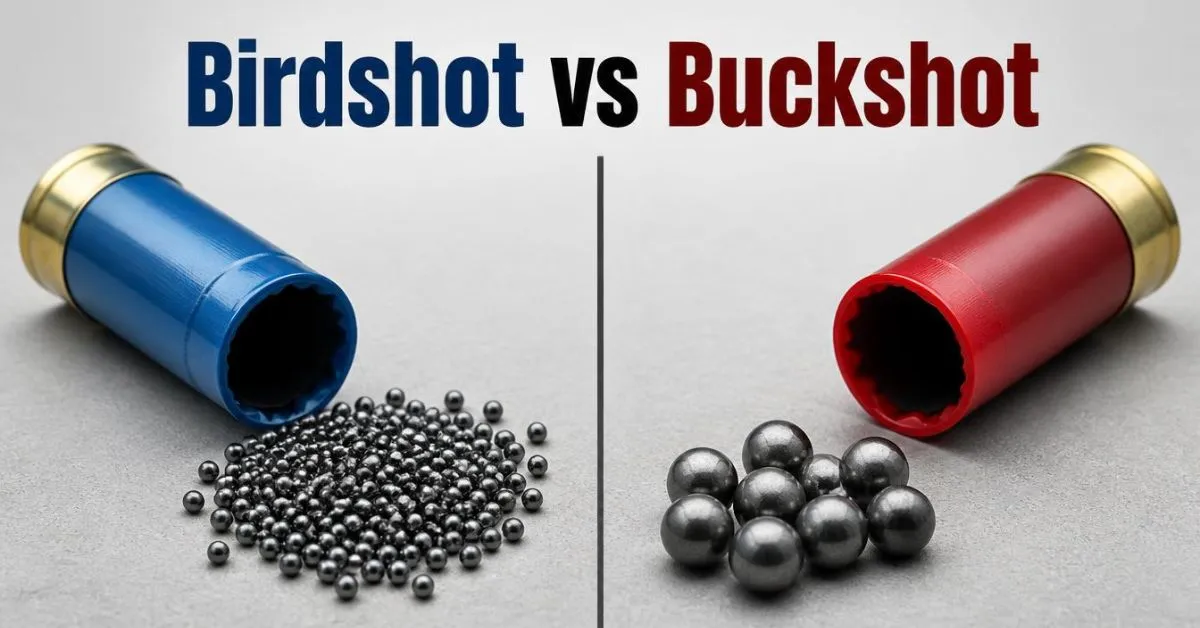
Birdshot vs buckshot mainly differs in pellet size, pellet count, and use. Birdshot has small pellets. It is often used for bird hunting, small game, and clay target sports.
Buckshot has larger pellets. It is used for some types of big-game hunting and other special uses. Both types can cause serious injury or death. Safe handling is always important.
Key Takeaways
- Birdshot has small pellets and usually more pellets per shell.
- Buckshot has larger pellets and usually fewer pellets per shell.
- No. 4 birdshot and No. 4 buckshot are different sizes.
- Pellet size alone does not tell you how wide a shot pattern will be.
- Always check the shell label and firearm manual before use.
What Is Birdshot?
Birdshot is shotgun ammo with many small pellets. These pellets are much smaller than buckshot pellets.
Birdshot is often used to hunt some birds and small game. It is also used in clay target sports, such as trap, skeet, and sporting clays.
A shell can hold many small pellets. When fired, the pellets spread out into a pattern. The pattern can change based on the ammo, firearm, choke, and distance.
Birdshot comes in many sizes and materials. Common options include lead and steel. Some loads also use bismuth or tungsten-based materials. Pellets of the same size can have different weights if they use different materials.
Hunting laws also matter. In the United States, hunters must use approved non-toxic shot when hunting waterfowl. Check current hunting rules before choosing ammo.
What Is Buckshot?
Buckshot is shotgun ammo with larger pellets than birdshot. Each pellet takes up more space, so a shell usually holds fewer pellets.
Buckshot is used for some types of big-game hunting, such as deer hunting where legal. It is also made for other special uses.
Common US buckshot labels include No. 4 buck, No. 1 buck, No. 0 buck, No. 00 buck, and No. 000 buck. The names can be confusing. More zeros usually mean larger pellets.
Buckshot is not the same as a slug. Buckshot has many pellets. A slug has one main projectile.
Birdshot vs Buckshot: Key Differences
| Feature | Birdshot | Buckshot |
|---|---|---|
| Pellet size | Small | Large |
| Pellet count | Usually higher | Usually lower |
| Common uses | Bird hunting, small game, clay targets | Some big-game hunting and special uses |
| Common labels | No. 9, No. 8, No. 7½, No. 6 | No. 4 buck, No. 1 buck, No. 0 buck, No. 00 buck |
| Materials | Lead, steel, and other options | Often lead; other materials are also used |
| Shot pattern | Changes by load and firearm | Changes by load and firearm |
| Projectile type | Many pellets | Many pellets |
These are general differences. Exact pellet size, count, and material depend on the product.
Birdshot vs Buckshot Size Chart
This chart shows common US pellet sizes. It also shows why you cannot compare birdshot and buckshot by number alone.
| Shot type | Size label | Approx. diameter |
|---|---|---|
| Birdshot | No. 8 | 0.09 in |
| Birdshot | No. 7½ | 0.095 in |
| Birdshot | No. 6 | 0.11 in |
| Birdshot | No. 4 | 0.13 in |
| Buckshot | No. 4 buck | 0.24 in |
| Buckshot | No. 1 buck | 0.30 in |
| Buckshot | No. 0 buck | 0.32 in |
| Buckshot | No. 00 buck | 0.33 in |
| Buckshot | No. 000 buck | 0.36 in |
Look at No. 4 birdshot and No. 4 buckshot. No. 4 birdshot is about 0.13 inches wide. No. 4 buckshot is about 0.24 inches wide.
The number is the same, but the pellet size is not. Birdshot and buckshot use different size ranges.
Why Are Birdshot & Buckshot Labels Confusing?
Three common mistakes can cause confusion.
Mistake 1: Thinking the same number means the same size.
No. 4 birdshot and No. 4 buckshot have different sizes. Always read the full label.
Mistake 2: Thinking a larger number means a larger pellet.
In the common US birdshot system, a lower number usually means a larger pellet. Buckshot uses a different size range, so the numbers do not match across both types.
Mistake 3: Thinking all countries use the same labels.
Shot-size names can change by country. Imported ammo may use different labels.
Check the full shell label and the maker’s guide to confirm the size.
Does Birdshot Spread More Than Buckshot?
Not always. Pellet size alone does not tell you how wide a shot pattern will be.
A few things can change the pattern:
- Ammo design: Different loads can make different patterns.
- Choke: This is a narrow part near the end of the barrel. It can affect how pellets spread.
- Firearm: Different firearms may make different patterns with the same load.
- Distance: The pattern can change as the pellets travel farther.
Pellet count also matters, but it does not tell you the full story. More pellets do not always mean a certain pattern or result.
Keep these three terms separate:
- Pellet size: How wide each pellet is.
- Pellet count: How many pellets are in a shell.
- Shot pattern: How the pellets spread after firing.
These ideas are linked, but they do not mean the same thing.
Birdshot vs Buckshot vs Slugs
Birdshot and buckshot both have many pellets. A slug has one main projectile.
| Type | What it contains | Common uses |
|---|---|---|
| Birdshot | Many small pellets | Bird hunting, small game, clay target sports |
| Buckshot | Many large pellets | Some big-game hunting and special uses |
| Slug | One main projectile | Some types of big-game hunting |
Slugs come in different designs. Some are made for smoothbore barrels. Sabot slugs are made for rifled barrels.
Not all ammo works in every firearm. Always follow the firearm maker’s instructions.
How to Read a Shotgun Shell Label
A shell label gives key facts about the ammo.
- Gauge or bore: Shows the firearm’s size class.
- Shell length: Shows the listed shell length.
- Shot size: Tells you the pellet size group.
- Shot material: Shows what the pellets are made of.
- Maker’s details: Give product facts and use rules.
Gauge and shell length are not the same thing. Both must match the firearm’s needs.
Never choose ammo by color or looks alone. Read the full label and check the firearm manual. If you are not sure, ask the maker or a qualified gunsmith.
Safety Facts About Birdshot & Buckshot
Both birdshot and buckshot can cause serious injury or death. Small pellets are not harmless.
Follow these basic safety rules:
- Treat every firearm as if it is loaded.
- Keep the muzzle pointed in a safe direction.
- Keep your finger off the trigger until it is safe and lawful to fire.
- Know your target and what is beyond it.
- Store firearms safely and keep them away from children and others who should not use them.
- Use only ammo approved for your firearm.
Do not assume that walls, doors, or other common items will stop pellets. Follow the maker’s safety rules. Get help from a trained firearm safety teacher if needed.
FAQs:
Is birdshot smaller than buckshot?
Yes. Birdshot has smaller pellets than buckshot. A shell usually holds more birdshot pellets, but the exact count depends on the load, material, and design.
Which has more pellets, birdshot or buckshot?
Birdshot usually has more pellets because each pellet is smaller. Buckshot has larger pellets, so fewer usually fit in a similar load. Check the maker’s details for the exact count.
Is No. 4 birdshot the same as No. 4 buckshot?
No. No. 4 birdshot is about 0.13 inches wide. No. 4 buckshot is about 0.24 inches wide. The same number refers to different sizes in these two groups.
Is birdshot harmless at close range?
No. Birdshot can cause severe injury or death. Small pellets can hurt sensitive parts of the body and break the skin. Never treat birdshot as harmless.
Are birdshot and buckshot interchangeable?
Do not assume they are. They have different pellet sizes and uses. The gauge, shell length, and other details must also match your firearm.
What is the difference between buckshot and a slug?
Buckshot has many pellets in one shell. A slug has one main projectile. Their designs differ, so follow the firearm and ammo maker’s instructions.
Is lead shot allowed for waterfowl hunting?
In the United States, hunters must use approved non-toxic shot for waterfowl. Check current federal and local rules before hunting.
Conclusion:
The main difference between birdshot and buckshot is pellet size. Birdshot has small pellets and is often used for birds, small game, and clay target sports. Buckshot has larger pellets and is used for some big-game hunting and other special uses.
The key label mistake is thinking No. 4 birdshot and No. 4 buckshot are the same size. They are not. Pellet count and shot pattern also depend on more than the size label.
Check the ammo details, make sure they match your firearm, and follow safe handling rules. This gives you a clearer view of birdshot vs buckshot.

Harry Jack is a content writer at ReplyGenius.com who specializes in practical, natural sounding replies for texts, social media, relationships, and everyday conversations.