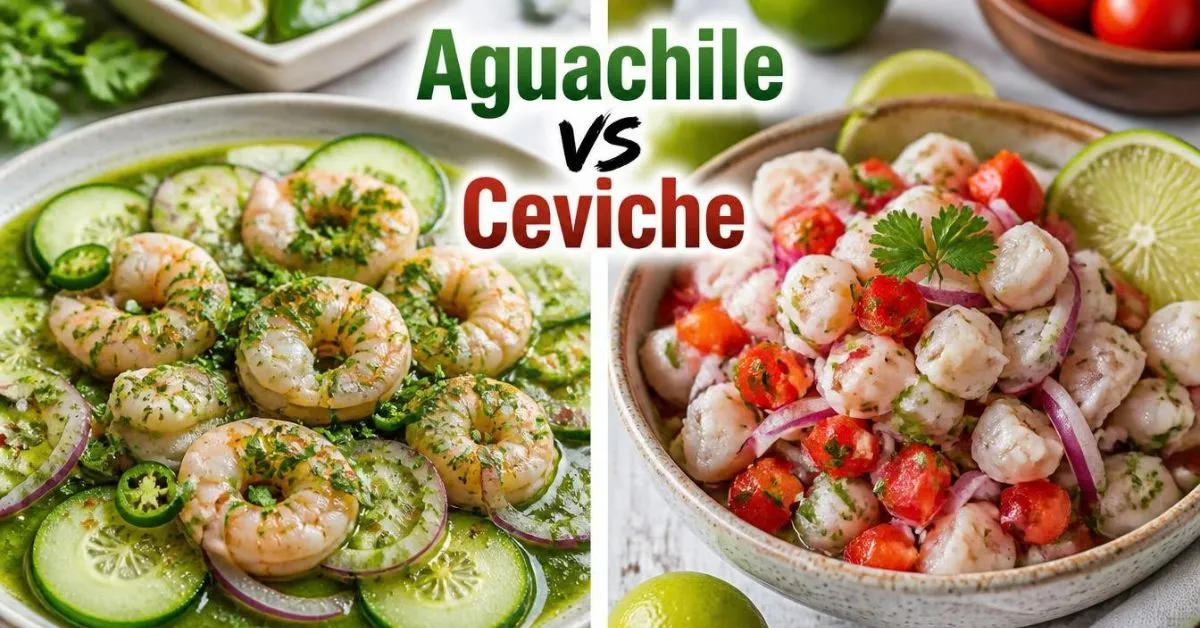
Aguachile and ceviche are similar seafood dishes, but they are not the same. Aguachile is a Mexican dish strongly associated with Sinaloa and commonly features shrimp, lime, chile, and fresh vegetables.
Ceviche is a broader seafood preparation with many regional styles, including the well-known Peruvian version. Both can use raw seafood and citrus, but their ingredients, preparation, flavor, and culinary traditions can differ.
Key Takeaways
- Aguachile is a Mexican seafood dish strongly associated with Sinaloa.
- Ceviche is a broader seafood preparation found in several Latin American culinary traditions.
- Aguachile commonly features shrimp, lime, chile, cucumber, and onion.
- Ceviche can use fish, shrimp, or other seafood, depending on the style.
- Aguachile usually has a strong chile-lime flavor.
- Ceviche varies more widely because recipes differ by country and region.
- Neither dish is automatically healthier than the other.
- Lime juice changes seafood’s texture but does not make raw seafood as safe as heat-cooked seafood.
Aguachile vs Ceviche at a Glance
Aguachile: A Mexican seafood dish, commonly made with shrimp, lime, chile, and fresh vegetables. It is especially associated with Sinaloa and is often served soon after the seafood is dressed.
Ceviche: A broader seafood preparation that commonly uses raw seafood, citrus, salt, chile, onion, and other ingredients. Peruvian ceviche is one of the best-known regional styles.
In simple terms, aguachile is a specific Mexican dish, while ceviche is a broader family of seafood preparations.
What Is Aguachile?
Aguachile is a Mexican seafood dish strongly associated with the Pacific coast, especially Sinaloa. A common version uses fresh shrimp with lime juice, chile, salt, cucumber, red onion, and cilantro.
The name aguachile refers to the chile-infused liquid used with the seafood. The dish is known for its fresh ingredients and bright combination of citrus and chile.
Shrimp is the seafood most commonly associated with aguachile today, although modern versions can use other seafood.
Aguachile is generally prepared close to serving time. The seafood is dressed with the lime and chile mixture rather than being treated as a dish that needs a long marinade.
What Does Aguachile Taste Like?
Aguachile is usually:
- Bright
- Citrusy
- Spicy
- Salty
- Fresh
- Light
The level of heat depends on the chile. Serrano and chiltepín are common choices, but recipes vary.
The overall flavor is often built around a simple combination:
Fresh seafood + lime + chile + vegetables
What Is Ceviche?
Ceviche is a broad seafood preparation with many regional styles. It commonly uses raw seafood treated with citrus or another acidic mixture, along with ingredients such as salt, chile, onion, herbs, or vegetables.
Peruvian ceviche is one of the most famous versions. Peru has a strong cultural tradition of ceviche, and UNESCO recognized traditional Peruvian ceviche and related preparation and consumption practices as intangible cultural heritage in 2023.
Fish is central to many traditional Peruvian ceviche preparations, but ceviche can also be made with shrimp and other seafood.
Ceviche is not limited to Peru. Mexico and other Latin American countries have their own ceviche traditions, with different ingredients and preparation methods.
What Does Ceviche Taste Like?
Ceviche can be:
- Tangy
- Fresh
- Citrus-forward
- Salty
- Spicy or mild
- Savory
The final taste depends on the seafood, citrus, chile, onion, herbs, vegetables, and regional style.
Aguachile vs Ceviche: Main Differences
| Feature | Aguachile | Ceviche |
|---|---|---|
| Culinary association | Mexico, especially Sinaloa | Peru and other Latin American regions |
| Common seafood | Shrimp | Fish, shrimp, and other seafood |
| Citrus | Usually lime | Citrus varies by recipe |
| Chile | Often a major flavor | Common but varies |
| Preparation | Usually served very fresh | Varies by regional style |
| Flavor | Bright, spicy, citrusy | Tangy, fresh, savory |
| Common ingredients | Cucumber, onion, cilantro | Onion, chile, herbs, regional ingredients |
| Culinary identity | A distinct Mexican dish | A broad family of preparations |
The biggest difference is culinary identity and preparation, not simply whether lime juice is used.
Aguachile has a distinct Mexican tradition, while ceviche covers many regional seafood preparations.
Aguachile vs Ceviche: What Seafood Is Used?
Aguachile is most strongly associated with shrimp.
Ceviche is more flexible. Fish is especially important in many Peruvian versions, while shrimp and other seafood are also used in different regional recipes.
This means the seafood alone does not determine whether a dish is aguachile or ceviche.
For example:
- Shrimp does not automatically mean aguachile.
- Fish does not automatically mean ceviche.
- The overall preparation, seasoning, and culinary tradition matter too.
Which Is Spicier: Aguachile or Ceviche?
Aguachile is often spicier, especially when it is made with hot chiles such as serrano or chiltepín.
Chile is usually a major part of the aguachile flavor profile. Ceviche can also be spicy, but the amount and type of chile vary greatly between recipes.
So, as a general guide:
Aguachile = usually more chile-forward
Ceviche = can range from mild to very spicy
There is no universal rule because individual recipes can be very different.
Does Aguachile Marinate Like Ceviche?
Not exactly.
Aguachile is commonly prepared close to serving time. The shrimp or other seafood is combined with the chile-lime mixture shortly before it is eaten.
Ceviche has more variation. Some versions are prepared shortly before serving, while others allow the seafood to sit in an acidic mixture for longer.
Acid can change the proteins in seafood. This can make the seafood look opaque and give it a firmer, cooked-like texture.
However, acid treatment is not the same as cooking with heat and should not be treated as an equivalent food-safety method.
Does Lime Juice Cook Seafood?
No. Lime juice does not cook seafood in the same food-safety sense as heat.
The acid in lime juice can change the structure of proteins in seafood. That is why seafood in ceviche or aguachile can look and feel different after it is exposed to citrus.
But this does not mean that all harmful microorganisms have been eliminated.
If seafood is raw or undercooked, it can still carry foodborne pathogens.
For people who want the lowest food-safety risk, thoroughly cooked seafood is the safer choice.
Is Aguachile Just Spicy Ceviche?
No.
Aguachile and ceviche have some similarities. Both can use seafood, citrus, salt, chile, and fresh ingredients.
That overlap explains why they can look similar.
But aguachile is a distinct Mexican preparation with a strong connection to Sinaloa. Ceviche is a broader culinary tradition with many regional forms.
A simple way to think about it is:
Aguachile and ceviche are related in ingredients and technique, but they are not the same dish.
Is Ceviche Mexican or Peruvian?
Ceviche is associated with multiple Latin American culinary traditions.
Peruvian ceviche has a particularly strong cultural identity and is one of Peru’s best-known traditional foods. UNESCO recognized traditional Peruvian ceviche as intangible cultural heritage in 2023.
Mexico also has its own ceviche traditions, as do other countries and regions across Latin America.
So saying “ceviche is only Peruvian” would be too narrow.
A more accurate answer is:
Ceviche has multiple regional traditions, with Peruvian ceviche being one of the most internationally recognized.
Is Aguachile Mexican?
Yes. Aguachile is a Mexican seafood dish strongly associated with the country’s Pacific coast, particularly Sinaloa.
Modern versions can vary in seafood and ingredients, but shrimp, chile, and lime are strongly associated with the dish.
Its Mexican regional identity is one of the main things that separates aguachile from the broader category of ceviche.
Can Ceviche Be Made With Shrimp?
Yes.
Shrimp ceviche is common in several regional styles.
However, shrimp does not automatically make a dish ceviche. Shrimp can also be used in aguachile and other seafood preparations.
The preparation matters just as much as the seafood.
For example:
Shrimp + chile-lime aguachile preparation = aguachile
Shrimp + a regional ceviche preparation = shrimp ceviche
The ingredients can overlap, but the dish’s overall style is different.
Is Aguachile Always Spicy?
No.
Aguachile is often spicy because chile is an important part of many traditional and modern versions. However, the amount and type of chile can vary.
A restaurant may offer:
- Mild aguachile
- Medium-spicy aguachile
- Very spicy aguachile
So spicy is common, but it is not an absolute requirement for every version.
Is Aguachile Healthier Than Ceviche?
Neither is automatically healthier.
Both can be relatively light seafood dishes, but their nutritional value depends on:
- Seafood type
- Portion size
- Toppings
- Sauces
- Added ingredients
- Side dishes
For example, a simple seafood preparation with fresh vegetables may have a different nutritional profile from one served with heavy sauces or large portions of high-calorie sides.
Food safety also matters.
Both aguachile and ceviche may contain raw or undercooked seafood. The FDA advises that raw or undercooked seafood carries a greater risk of foodborne illness than thoroughly cooked seafood.
For people at higher risk of severe foodborne illness, avoiding raw or undercooked seafood is especially important.
Can You Substitute Aguachile for Ceviche?
You can use similar ingredients to create a dish inspired by either preparation, but the result may not be traditional.
For example, shrimp, lime, chile, cucumber, and onion can create an aguachile-style dish.
A different combination of seafood, citrus, seasoning, and regional ingredients can create a ceviche-style dish.
If you want the traditional character of each dish, it is better to follow a recipe based on its specific culinary tradition.
Which Is Better: Aguachile or Ceviche?
There is no universal winner.
Choose aguachile if you want:
- Shrimp
- Strong chile flavor
- Bright lime
- Fresh cucumber
- A spicy Mexican seafood dish
- A Sinaloa-associated preparation
Choose ceviche if you want:
- Fish or different types of seafood
- More regional variety
- Citrus-treated seafood
- Peruvian-style flavors
- Different combinations of onion, chile, herbs, and sides
Your choice mostly comes down to flavor, seafood preference, and the regional style you want to try.
Aguachile vs Ceviche: Which Should You Try First?
If you enjoy spicy, fresh, chile-forward seafood, aguachile is a great place to start.
If you prefer fish, varied regional styles, and a wider range of preparations, try ceviche.
If you are ordering at a restaurant, ask what seafood is used and how spicy the dish is. Recipes can differ significantly from one restaurant to another.
FAQs:
Is aguachile the same as ceviche?
No. Aguachile is a distinct Mexican seafood dish strongly associated with Sinaloa. Ceviche is a broader seafood preparation with many regional traditions, including Peruvian and Mexican styles.
What is the main difference between aguachile and ceviche?
Aguachile is a specific Mexican preparation that commonly emphasizes shrimp, lime, and chile. Ceviche is a broader category of seafood preparations with many regional variations.
Is aguachile always made with shrimp?
No. Shrimp is the seafood most strongly associated with aguachile, but other seafood can be used in modern versions.
Can ceviche be made with shrimp?
Yes. Shrimp ceviche is common, although fish is central to many traditional Peruvian versions.
Which is spicier, aguachile or ceviche?
Aguachile is often spicier because chile is usually a major part of its flavor profile. However, ceviche can also be very spicy depending on the recipe.
Does lime juice cook seafood?
No. Lime juice changes the proteins and texture of seafood, but it does not provide the same food-safety effect as heat cooking.
Is ceviche Mexican or Peruvian?
Both countries have ceviche traditions. Peruvian ceviche is especially well known and has strong cultural significance, while Mexico has its own regional ceviche styles.
Is aguachile healthier than ceviche?
Neither is automatically healthier. Nutrition depends on the seafood, portion size, toppings, sauces, and side dishes.
Can you eat aguachile or ceviche while pregnant?
Raw or undercooked seafood can pose food-safety risks during pregnancy. People who are pregnant should follow current medical and food-safety guidance and choose thoroughly cooked seafood when advised.
Conclusion:
Aguachile and ceviche are similar, but they are not the same dish.
Aguachile is a Mexican seafood preparation strongly associated with Sinaloa, commonly featuring shrimp, lime, chile, and fresh vegetables. Its flavor is often bright, fresh, and spicy.
Ceviche is a broader seafood tradition with many regional styles. Peruvian ceviche is especially well known, but Mexico and other Latin American regions have their own versions. Fish is common in many ceviches, while shrimp and other seafood can also be used.
The easiest way to remember the difference is:
Aguachile = Mexican, chile-forward, often shrimp-focused.
Ceviche = broader regional seafood tradition with many styles.
Both can be fresh, acidic, spicy, and flavorful, but their culinary traditions, preparation methods, and typical ingredients make them distinct.

Harry Jack is a content writer at ReplyGenius.com who specializes in practical, natural sounding replies for texts, social media, relationships, and everyday conversations.