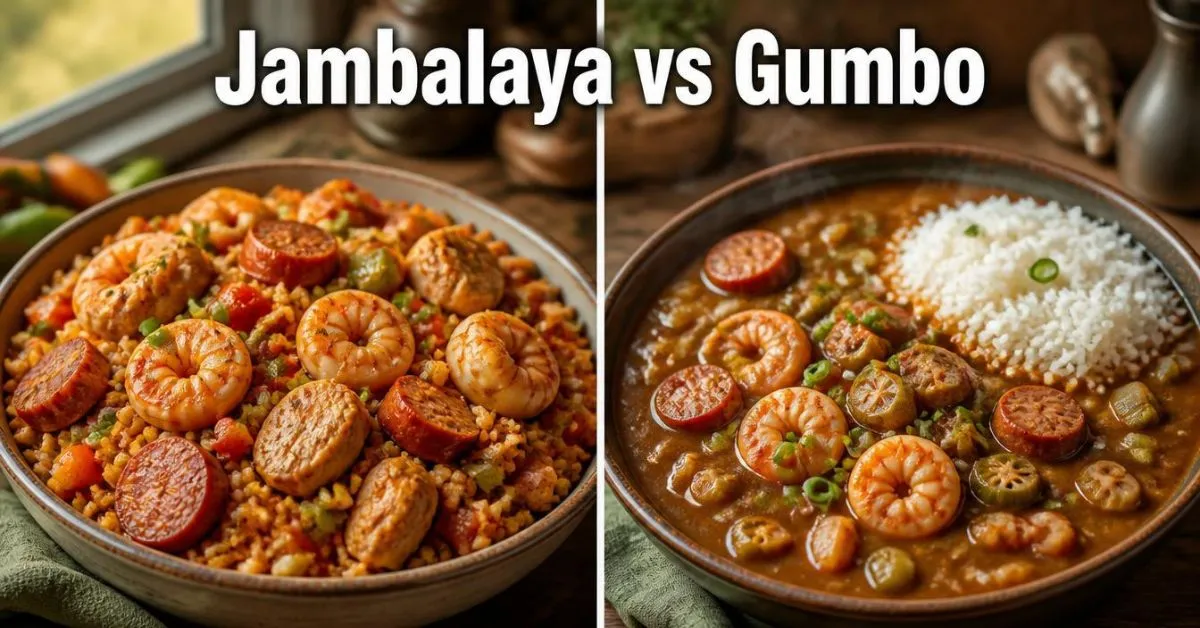
Jambalaya and gumbo are two famous Louisiana dishes, but they use rice in different ways. Jambalaya cooks rice with meat, vegetables, broth, and spices in one pot. Gumbo is a stew served with rice cooked on the side.
Jambalaya is usually moist and rice-based, while gumbo has more broth. Both can include chicken, sausage, shrimp, and other seafood.
Key Takeaways
- Jambalaya: Rice cooks with the meat, vegetables, and seasonings.
- Gumbo: A savory stew served with separately cooked rice.
- Texture: Jambalaya is moist and rice-based. Gumbo has more loose liquid.
- Thickener: Gumbo may use roux, okra, or filé powder. Jambalaya usually needs none.
- Tomatoes: Creole jambalaya often includes tomatoes, while Cajun jambalaya usually does not.
- Best choice: Choose jambalaya for seasoned rice or gumbo for a rich stew.
What Is the Difference Between Jambalaya & Gumbo?
The biggest difference is how each dish uses rice.
In jambalaya, the rice cooks in the same pot as the other ingredients. It absorbs the broth, spices, and juices from the meat and vegetables.
In gumbo, the cook makes a stew first. The rice cooks in a separate pot and is served with the stew.
Both dishes come from Louisiana’s Cajun and Creole food traditions. They can use many of the same ingredients, but their cooking methods give them different results.
| Feature | Jambalaya | Gumbo |
|---|---|---|
| Main dish | Rice-based meal | Stew |
| Rice | Cooks with the other ingredients | Cooked separately |
| Texture | Moist rice with little loose liquid | Brothy or thick stew |
| Thickener | Usually none | Roux, okra, or filé powder |
| Common meats | Chicken, pork, sausage | Chicken, sausage, ham |
| Seafood | Shrimp and other seafood | Shrimp, crab, oysters |
| Tomatoes | Common in Creole versions | Used in some versions |
| Cooking method | Usually one pot | Stew and rice cooked separately |
| Serving style | Served as a rice dish | Served in a bowl with rice |
The easiest way to remember the difference is this: jambalaya cooks the rice into the meal, while gumbo pairs rice with a stew.
What Is Jambalaya?
Jambalaya is a Louisiana rice dish made with meat or seafood, vegetables, broth, and seasonings.
Rice is the heart of the dish. It cooks with the other ingredients and absorbs their flavor. This gives the whole meal a rich, seasoned taste.
Many recipes start with the Holy Trinity of Louisiana cooking: onion, celery, and bell pepper. Garlic, smoked sausage, chicken, and spices often follow.
Some recipes use shrimp, pork, ham, or other meats. Others focus on chicken and sausage.
Jambalaya is often cooked in one large pot. This makes it a good choice for family dinners, parties, and other group meals.
Common Jambalaya Ingredients
Many jambalaya recipes use:
- Long-grain rice
- Chicken or pork
- Andouille or other smoked sausage
- Shrimp or other seafood, if desired
- Onion, celery, and bell pepper
- Garlic
- Chicken stock or broth
- Black pepper, paprika, and cayenne
- Tomatoes, depending on the style
Not every recipe uses all these foods. The ingredients depend on the cook, family tradition, and style of jambalaya.
Cajun vs. Creole Jambalaya
Jambalaya has two well-known styles: Cajun and Creole.
Cajun jambalaya is often called brown jambalaya. It usually does not contain tomatoes. The cook browns the meat and builds flavor from the browned bits left in the pot. This helps give the rice its brown color and deep taste.
Creole jambalaya is often called red jambalaya. It commonly includes tomatoes, tomato sauce, or tomato paste. These add color, moisture, and a mild tang.
These are common patterns, not strict rules. Family recipes vary, and color alone does not tell you everything about a dish.
What Is Gumbo?
Gumbo is a Louisiana stew made with broth, vegetables, seasonings, and meat, seafood, or both.
It is usually served with a scoop of separately cooked rice. The rice absorbs some of the broth as you eat, but it does not cook in the gumbo pot.
Gumbo can contain chicken, andouille sausage, shrimp, crab, oysters, or other foods. Some recipes focus on meat, while others highlight seafood.
Many versions begin with onion, celery, and bell pepper. The cook then adds stock, spices, and one or more ingredients that help give the stew its body.
Gumbo can be light and brothy or thick and rich. Its final texture depends on the recipe, the thickener, and how the cook prepares it.
Common Gumbo Ingredients
Common ingredients include:
- Chicken or seafood stock
- Onion, celery, and bell pepper
- Chicken or andouille sausage
- Shrimp, crab, or oysters in seafood versions
- Flour and fat for roux
- Okra or filé powder, depending on the recipe
- Garlic and other seasonings
- Separately cooked rice
Some gumbo recipes use tomatoes, while others leave them out. No single ingredient list covers every style.
How Roux, Okra & Filé Powder Work
These three ingredients can add body to gumbo, but they work in different ways.
Roux: Roux is a mix of flour and fat cooked together. It thickens the stew and adds a toasted flavor. A light roux thickens more, while a dark roux has a deeper flavor but less thickening power. This happens because long cooking breaks down some of the flour’s starch.
Okra: Okra is a green vegetable that releases natural thickening substances as it cooks. It can make gumbo thicker and add its own flavor.
Filé powder: Filé powder is made from dried, ground sassafras leaves. It adds an earthy flavor and can help thicken gumbo. Cooks often add it near the end or serve it at the table.
A gumbo may use roux, okra, filé powder, or a mix of these. The choice depends on the recipe and the texture the cook wants.
Jambalaya vs Gumbo: 5 Main Differences
1. Rice & Cooking Method
Jambalaya cooks rice with the meat, vegetables, broth, and seasonings. As the rice cooks, it absorbs the liquid and takes on the flavor of the whole dish.
Gumbo cooks as a stew, with rice prepared separately. This lets the cook control the stew’s texture and the amount of rice in each serving.
This is the clearest difference between the two dishes.
2. Texture & Consistency
Jambalaya should be moist, with tender grains and little free liquid. It should not be dry, mushy, or swimming in broth.
Gumbo has more loose liquid. It may be thick because of roux or other ingredients, but some versions have a lighter broth.
So, gumbo is not always thicker than jambalaya. The dishes have different textures because they use rice in different ways.
3. Flavor
Jambalaya gets much of its flavor from the liquid that the rice absorbs. Browned meat, sausage, vegetables, and spices season the rice as it cooks.
Gumbo gets its flavor from the broth, meat or seafood, vegetables, spices, and any thickener used. A dark roux can add deep, toasted notes. Seafood stock can bring a different flavor from chicken stock.
Both dishes can be mild, smoky, savory, or spicy. The recipe and seasoning decide the final taste.
4. Tomatoes
Tomatoes are common in Creole jambalaya and usually absent from Cajun jambalaya.
Gumbo is less simple to classify. Some Creole gumbo recipes use tomatoes, while many Cajun versions do not. Regional and family choices play a role.
Tomatoes can add color, moisture, sweetness, and acidity. They are a common style choice, not a rule for every Louisiana dish.
5. Cooking Time & Effort
Jambalaya often uses a simple one-pot method. However, the rice needs the right amount of liquid and enough time to cook without becoming mushy.
Gumbo requires the cook to prepare the stew and rice separately. Making a dark roux also takes patience because flour can burn if it is not watched.
Both dishes can be made ahead. However, the texture may change during storage and reheating.
What Do Jambalaya & Gumbo Have in Common?
Jambalaya and gumbo share several features.
- Louisiana roots: Both are linked to Cajun and Creole cooking.
- The Holy Trinity: Onion, celery, and bell pepper are common in both.
- Meat and seafood: Chicken, sausage, shrimp, and other seafood can appear in either dish.
- Seasonings: Garlic, black pepper, cayenne, and other spices help build flavor.
- Rice: Rice is important to both, even though each dish uses it differently.
Both dishes also reflect Louisiana’s mix of cultural traditions. African, French, Spanish, and Native American influences helped shape the region’s food. Recipes have changed over time, and cooks still adapt them to local ingredients and family tastes.
Which Is Better: Jambalaya or Gumbo?
Neither dish is always better. The right choice depends on what you want to eat.
Choose jambalaya if you want:
- A hearty rice-based meal.
- Rice that absorbs the flavor of meat, vegetables, and broth.
- A one-pot dish for a family dinner.
- A choice between red and brown styles.
Choose gumbo if you want:
- A stew with savory broth.
- A dish made with roux, okra, or filé powder.
- Rice served on the side.
- A meal built around chicken, sausage, seafood, or a mix of proteins.
If you enjoy seasoned rice, jambalaya may be your first choice. If you prefer a stew with a rich broth, gumbo may suit you better.
Tips for Making Better Jambalaya & Gumbo
How to Avoid Mushy Jambalaya
Use the amount of liquid your recipe calls for, and check which type of rice it recommends. Different rice types absorb liquid in different ways.
Avoid stirring too often if your recipe calls for gentle cooking. Too much movement can break the grains and change the texture.
Let the rice finish cooking before serving. If you use shrimp or other seafood, add it at the time your recipe recommends. This helps prevent overcooking.
How to Make Better Gumbo
Take care when making roux. Stir it often and watch its color because it can burn. A burnt roux may give the whole pot a bitter taste.
Choose a stock that suits your main ingredients. Chicken stock works well in many chicken gumbos, while seafood stock can support a seafood version.
Follow your recipe’s directions for okra and filé powder. If you use filé, adding it near the end can help control the texture.
Can You Use the Same Ingredients in Both Dishes?
Yes. Chicken, sausage, shrimp, onion, celery, bell pepper, and spices can work in both dishes.
However, the cooking method must fit the dish. Jambalaya needs the right balance of rice and liquid. Gumbo needs enough broth to create a stew.
Adding uncooked rice directly to finished gumbo changes the dish and may cause the rice to absorb too much broth. For a classic gumbo, cook the rice separately.
Can You Make Them Ahead?
Yes, but store them with care.
Jambalaya contains cooked rice, so cool and refrigerate leftovers promptly. Gumbo can also be made ahead, and keeping the rice separate helps preserve its texture.
Refrigerate cooked food within two hours. Use shallow containers to help it cool faster. Keep the refrigerator at 40°F or below, and reheat leftovers to 165°F.
FAQs:
Is jambalaya thicker than gumbo?
Jambalaya usually has less loose liquid because the rice absorbs most of it during cooking. Gumbo has a stew base that may be thick or light. The two dishes have different textures, but neither has one fixed consistency.
Does gumbo contain rice?
Gumbo is usually served with rice, but the rice is cooked separately. This lets the cook control the texture of the stew and the amount of rice in each serving. Jambalaya cooks the rice directly with the other ingredients.
Does jambalaya always have tomatoes?
No. Creole jambalaya often uses tomatoes, while Cajun jambalaya usually does not. These are common patterns, not strict rules. Family recipes can differ.
Which dish is spicier?
Neither dish is always spicier. Both can use cayenne, black pepper, hot sauce, or other seasonings. The heat depends on the recipe and the cook. You can make either dish mild or hot.
Can gumbo and jambalaya use the same meat?
Yes. Both can use chicken, andouille sausage, shrimp, and other seafood. The difference is how the ingredients are cooked. Jambalaya cooks them with the rice, while gumbo combines them in a stew served with rice on the side.
Are gumbo and jambalaya the same as étouffée?
No. Étouffée is another Louisiana dish, often made with shellfish in a thick, seasoned sauce and served over rice. Gumbo is a stew, while jambalaya is a rice dish in which the rice cooks with the other ingredients.
Can you make gumbo without roux?
Yes. Some gumbo recipes rely on okra or filé powder for body and flavor instead of using a traditional flour-and-fat roux. Other recipes combine two or more methods.
Conclusion:
Jambalaya and gumbo share Louisiana roots, common ingredients, and bold flavors, but they are not the same dish.
Jambalaya is seasoned rice cooked with the other ingredients. Gumbo is a stew served with separately cooked rice.
Choose jambalaya for a hearty rice meal or gumbo for a bowl of rich broth, meat, or seafood. Once you know how each dish uses rice, the difference is easy to remember.

Emily Carter is a dedicated author at ReplyGenius.com, creating helpful, natural, and engaging content focused on replies, messages, and everyday conversations.