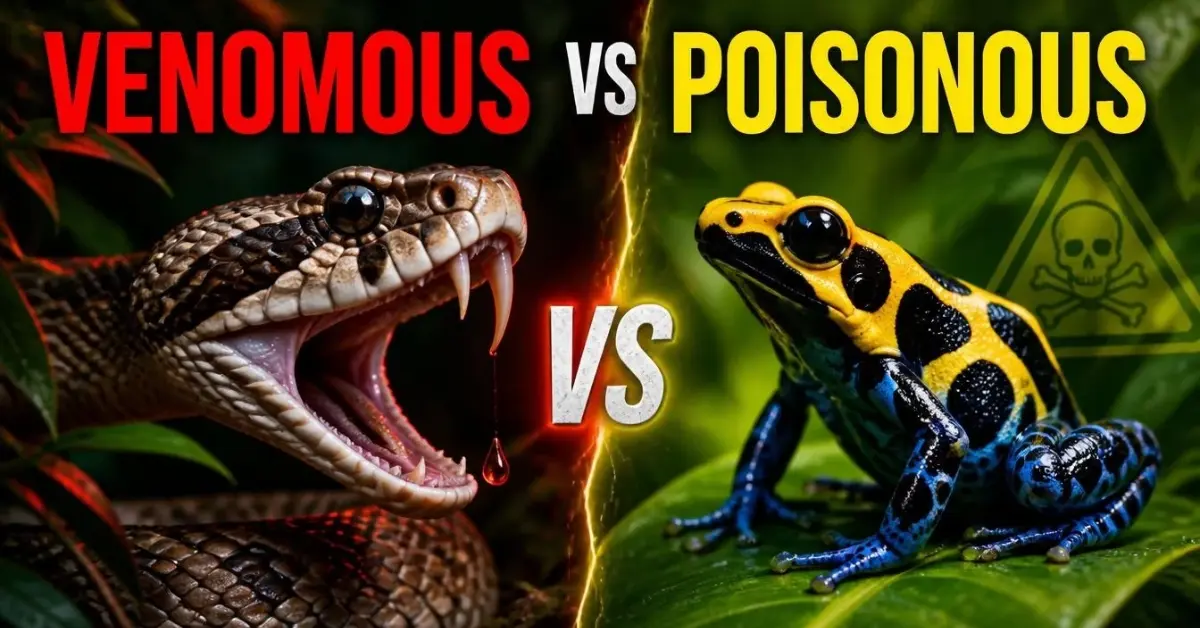
The difference between Venomous and Poisonous is how a toxic substance enters the body. Venomous animals inject toxins through a bite, sting, or similar wound.
Poisonous animals or substances cause harm when their toxins are swallowed, inhaled, or absorbed through the skin. Snakes are usually venomous, while poison dart frogs are poisonous.
Key Takeaways
- Venomous animals inject toxins through bites or stings.
- Poisonous animals contain toxins that can harm you when swallowed, inhaled, or absorbed.
- Rattlesnakes and cobras are examples of venomous animals.
- Poison dart frogs and pufferfish are examples of poisonous animals.
- Some animals can be both venomous and poisonous.
What Is The Difference Between Venomous and Poisonous?
The main difference between venomous and poisonous is the way a toxin enters the body.
A venomous animal has a special way to inject toxins into another animal. It may use fangs, teeth, or a stinger. A poisonous animal carries harmful chemicals that can cause illness when another living thing touches, eats, or absorbs them.
Both words describe something that can be dangerous. However, they are not always used in the same way.
Think about these two examples:
- A rattlesnake uses its fangs to inject venom into its victim. It is venomous.
- A poison dart frog has toxic chemicals on its skin. An animal can become sick if it touches or eats the frog. It is poisonous.
The easiest way to understand this difference is to look at how the toxin is delivered.
What Does Venomous Mean?
Venomous describes an animal that produces or carries venom and uses a special method to inject it into another living thing.
Most venomous animals use a bite or sting to deliver their toxins. These toxins can affect the nervous system, blood, muscles, or other parts of the body.
Common examples include:
- Rattlesnakes
- Cobras
- Black widow spiders
- Scorpions
- Wasps
- Bees
For example, when a rattlesnake bites a person, it may inject venom through its fangs. The venom can cause pain, swelling, and serious health problems.
Not every bite delivers venom. Some venomous animals can give a dry bite, meaning little or no venom enters the victim’s body.
What Does Poisonous Mean?
Poisonous describes an animal, plant, or substance that contains chemicals that can harm a living thing through exposure.
Poison can enter the body in different ways, including:
- Swallowing contaminated food or substances.
- Breathing in harmful fumes.
- Absorbing chemicals through the skin.
- Getting toxic substances into the eyes or other sensitive areas.
For example, poison dart frogs have toxic chemicals on their skin. These chemicals help protect them from predators.
Other examples include:
- Certain mushrooms
- Pufferfish
- Poison ivy
- Poisonous berries
- Some toxic insects
Remember that touching something poisonous can sometimes be enough to cause harm. You do not always need to eat it.
Venomous vs Poisonous: Quick Comparison
The following table makes the difference easy to understand.
| Feature | Venomous | Poisonous |
| Meaning | Delivers venom | Contains harmful toxins |
| Main delivery method | Injection | Swallowing, inhaling, or absorption |
| Common examples | Snakes and scorpions | Poison frogs and pufferfish |
| Special equipment | Fangs, stingers, or similar structures | May have toxic skin, tissues, or chemicals |
| Main purpose in animals | Catch prey or defend themselves | Usually protect against predators |
| Common exposure | Bite or sting | Eating or touching |
Simple example: A cobra injects venom through its bite, while a poison dart frog carries toxins on its skin.
That is why the cobra is venomous and the frog is poisonous.
Examples of Venomous Animals
Many animals use venom to catch food or protect themselves. Some are small, while others can cause serious injuries.
Snakes
Snakes are among the best-known venomous animals.
Examples include:
- Rattlesnakes: Found in the Americas, these snakes use specialized fangs to inject venom.
- Cobras: These snakes can deliver venom through a bite. Some species can also spit venom.
- Copperheads: Found in parts of the United States, copperheads are venomous snakes with distinctive copper-colored heads.
- Coral snakes: These brightly colored snakes have venom that can affect the nervous system.
Not every snake is venomous. Many snake species are harmless to humans.
Spiders and Scorpions
Many spiders are venomous because they use their fangs to deliver venom when they bite.
The black widow is a well-known example. Its bite can cause serious symptoms and may require medical attention.
Scorpions also use venom. They deliver it through a stinger at the end of their tails. Some species have venom that can cause severe reactions in humans.
Wasps and Bees
Wasps and bees use stingers to inject venom.
A sting may cause pain, redness, and swelling. Some people can also experience severe allergic reactions.
This is why even small animals can be dangerous in certain situations.
Examples of Poisonous Animals
Poisonous animals carry harmful substances that can affect other living things through contact or ingestion.
Poison Dart Frogs
Poison dart frogs are famous for their bright colors and toxic skin.
They are found in Central and South America. Their skin contains chemicals that can harm predators.
Some species have extremely potent skin toxins. Their bright colors also serve as a warning to animals that might try to eat them.
Pufferfish
Pufferfish are another well-known example of poisonous animals.
Some species contain tetrodotoxin, a powerful neurotoxin found in certain body tissues and organs.
This toxin can cause serious illness and can be fatal if consumed. Pufferfish must never be prepared or eaten without proper professional handling.
Other Poisonous Animals
Other examples include:
- Fire salamanders: Some species release toxic substances from their skin.
- Certain newts: Some carry powerful defensive skin toxins.
- Poisonous caterpillars: Certain species have hairs or spines that can cause harmful reactions.
- Some marine animals: Certain species contain toxins that can harm predators or humans.
These examples show that poisonous animals use different methods to protect themselves.
Can An Animal Be Both Venomous and Poisonous?
Yes. An animal can be both venomous and poisonous if it can deliver toxins through an injection and also carry harmful chemicals that affect predators through contact or ingestion.
One example is the Japanese tiger keelback snake, also known as Rhabdophis tigrinus.
This snake has venom-delivery structures and can also store defensive toxins obtained from the poisonous toads it eats.
It uses venom to capture prey and defensive toxins to protect itself from predators.
This example shows that the difference between venomous and poisonous depends on how the toxins enter another animal’s body.
What Is The Difference Between Poison, Venom and Toxin?
These three words are closely related, but they do not mean exactly the same thing.
Poison: A harmful substance that can damage or disrupt the normal functions of a living body.
Venom: A type of poisonous substance delivered into another animal through a specialized injection method, such as a bite or sting.
Toxin: A poisonous substance produced by a living organism, such as an animal, plant, fungus, or bacterium.
For example, a rattlesnake produces venom, which contains different toxic components. A poisonous mushroom contains natural toxins that can make someone sick if eaten.
In simple terms, poison is a broad term for harmful substances, venom describes a particular delivery method, and toxin usually refers to a harmful substance made by a living organism.
How To Remember Venomous vs Poisonous
If you often mix up these words, remember this simple rule:
If it bites you and injects a toxin, it is venomous. Its toxins are poisonous if they are eaten or absorbed.
Here are a few examples:
- A rattlesnake bites you and injects venom. It is venomous.
- A scorpion stings you and injects venom. It is venomous.
- A poison dart frog has toxic skin. It is poisonous.
- A poisonous mushroom can make you sick when eaten.
This is a helpful memory trick, but it is not a complete scientific definition. Some poisons can enter through inhalation or skin contact, not just eating.
FAQs:
Is a snake venomous or poisonous?
Most snakes that deliver toxins through their bites are venomous, not poisonous. Rattlesnakes, cobras, and copperheads are common examples. A small number of snake species can also carry defensive toxins, making them both venomous and poisonous.
Are spiders venomous or poisonous?
Most spiders are venomous because they use their fangs to inject venom into prey. Black widow spiders and brown recluse spiders are examples. However, not every spider bite is dangerous to humans, and many spiders pose little risk.
Is a poison dart frog venomous or poisonous?
A poison dart frog is poisonous because its skin contains toxic chemicals. These substances can harm animals that touch or eat the frog. Unlike venomous animals, poison dart frogs do not inject toxins through fangs or stingers.
Is a pufferfish poisonous or venomous?
Pufferfish are generally considered poisonous, not venomous. Some species contain tetrodotoxin in certain tissues and organs. This toxin can cause severe illness or death if the fish is eaten. Their body spikes do not normally inject this toxin.
Can something be both venomous and poisonous?
Yes. Some animals use venom to inject toxins and also carry defensive poisons on or inside their bodies. The Japanese tiger keelback snake is an example. It can deliver venom through a bite and store toxins obtained from its prey.
Conclusion
Understanding Venomous vs Poisonous is easier when you remember one important difference: how the toxin enters the body.
Venomous animals inject toxins through bites, stings, or similar methods. Poisonous animals and substances cause harm through swallowing, inhaling, or absorbing toxic chemicals.
A rattlesnake is venomous, while a poison dart frog is poisonous. Some animals can even be both.
Learning these terms helps you understand animal behavior, use the correct English words, and recognize why different toxic animals can be dangerous in different ways.
Always keep a safe distance from unknown wildlife. Never touch, taste, or handle an animal just to find out whether it is poisonous or venomous.

Olivia Smith is a professional author at ReplyGenius.com, where I create clear and engaging content on communication and writing.