The main difference between a Goose and a Duck is their size, body shape, and behavior. Geese are generally larger, have longer necks, and spend more time grazing on land.
Ducks are usually smaller, have shorter necks, and often search for food in water. Both are waterbirds from the same biological family, Anatidae.
Key Takeaways
- Geese are usually larger and have longer necks than ducks.
- Ducks have shorter necks and often broader, flatter bills.
- Geese mainly graze on grass, while ducks eat a wider variety of food.
- Geese commonly make loud honking sounds, while many ducks produce quacks.
- Both birds have webbed feet, swim well, and live in wetland habitats.
- Geese and ducks belong to the same bird family but have different physical and behavioral traits.
What Is A Goose?
A goose is a large waterbird that belongs to the Anatidae family. This family also includes ducks and swans. Geese are known for their long necks, strong bodies, and loud honking calls.
Many geese spend time on land as well as in water. They often walk across grassy fields to find food. Their diet mainly includes grass, leaves, roots, seeds, and other plant material.
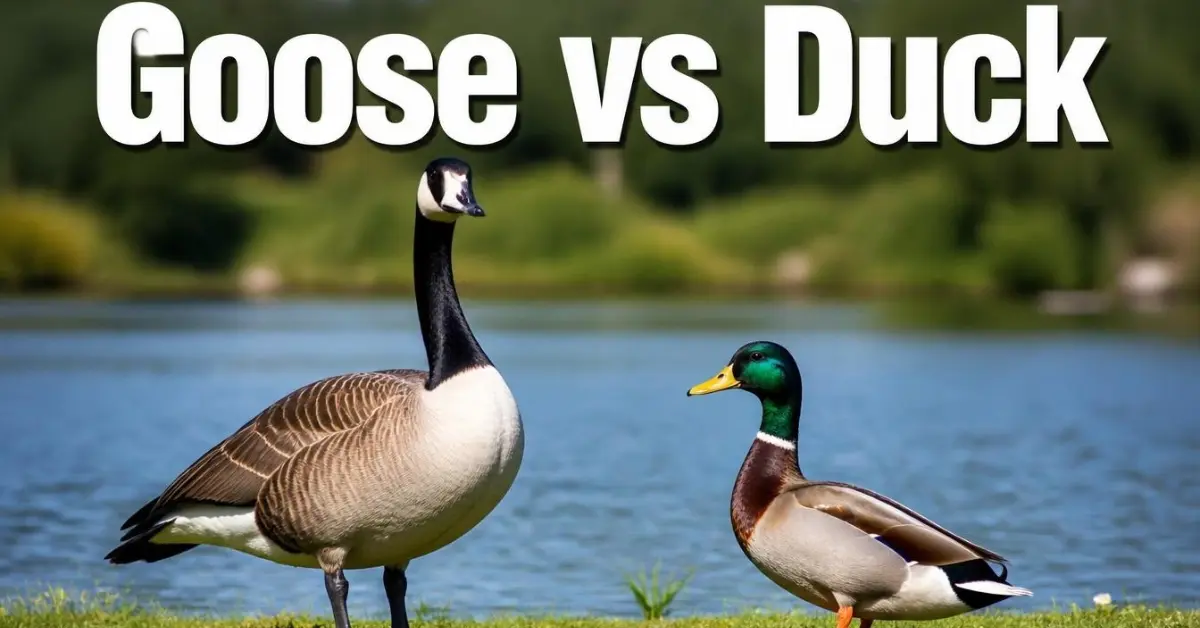
One familiar example in the United States is the Canada goose. It has a brown body, black neck, black head, and white cheek patches. People commonly see Canada geese near parks, ponds, golf courses, and lakes.
Geese are also social birds. They often travel in groups and form strong family bonds. Many species maintain long-term partnerships and both parents help care for their young.
What Is A Duck?
A duck is a waterbird from the same Anatidae family as geese. Ducks are generally smaller than geese and have shorter necks, compact bodies, and broad bills.
Many ducks spend much of their time swimming and searching for food in water. Some species feed near the surface, while others dive underwater to find plants and small animals.
The mallard is one of the best-known duck species in the United States. Male mallards have shiny green heads, yellow bills, and gray bodies. Females usually have brown, patterned feathers that help them blend into their surroundings.
Ducks live in many different environments, including ponds, lakes, rivers, marshes, and coastal wetlands. Their feeding habits and appearance vary depending on the species.
Goose vs Duck: Key Differences
Although geese and ducks look similar at first, several physical and behavioral features help distinguish them.
The following table explains the main differences.
| Feature | Goose | Duck |
| Body size | Usually larger | Usually smaller |
| Neck | Longer | Shorter |
| Body shape | Larger and more elongated | Compact and rounded |
| Bill | Often shorter and more tapered | Often broader and flatter |
| Legs | Positioned more centrally | Often positioned farther back |
| Diet | Mainly plant-based | Plants and small animals |
| Common sound | Honking | Quacking, whistles, and other calls |
| Behavior | Often territorial | Varies by species |
| Feeding | Frequently grazes on land | Often feeds in water |
| Young | Goslings | Ducklings |
These are general differences, not strict rules. Some duck species are large, and some geese are smaller than people expect.
1. Size and Body Shape
Size is one of the easiest ways to recognize the difference between a goose and a duck.
Geese generally have larger, heavier bodies. Their bodies look longer and more substantial, especially when they stand on land. They also tend to have longer necks and stronger legs.
Ducks usually have smaller, more compact bodies. Their rounded shape and shorter necks give them a different appearance.
For example, a Canada goose is usually much larger than a mallard duck. If you see both birds near the same pond, the goose will generally stand out because of its larger body and taller posture.
However, size should not be your only identification clue. Different species can vary greatly.
2. Neck and Bill Shape
Neck length and bill shape provide two useful clues when comparing these birds.
Geese usually have longer necks that help them reach grass and vegetation while feeding. Their bills are often shorter and more tapered than those of many ducks.
Ducks generally have shorter necks and wider, flatter bills. These bills help many species collect food from the water’s surface, mud, and shallow areas.
For example, a mallard uses its broad bill to filter and collect food from shallow water. A Canada goose often stretches its neck toward the ground to graze on grass.
3. Appearance and Feathers
Geese and ducks also differ in their typical appearance.
Many geese have fairly similar coloring between males and females. Their feathers are often brown, gray, black, or white, although some species have distinctive patterns.
Ducks show greater variety in feather colors. In several species, males have bright feathers while females have more muted patterns.
The mallard is a familiar example. The male has a green head, while the female usually has brown patterned feathers.
However, not all ducks are colorful. Some species have similar coloring between the sexes, and some geese have distinctive markings.
4. Diet and Feeding Habits
Food is another important difference in the goose vs duck comparison.
Geese mainly eat plant material. They commonly graze on grass, leaves, seeds, roots, and agricultural crops. Their longer necks and feeding habits make them well suited to finding food on land.
Ducks have more varied diets.
Depending on the species, they may eat:
- Aquatic plants
- Seeds and grains
- Insects
- Worms
- Small aquatic animals
- Crustaceans
Some ducks feed by dipping their bills into shallow water. Others dive below the surface to find food.
This difference is not absolute because some ducks eat mostly plants, while geese may also consume aquatic vegetation.
5. Behavior and Temperament
Geese are often more territorial than ducks, especially during breeding season. They may protect their nesting areas, partners, and young from animals or people that get too close.
Their large size and strong social bonds can make them appear more intimidating.
Ducks are also social birds, but their behavior depends on the species and situation. Some gather in large flocks, while others spend more time in smaller groups.
Neither group has one fixed personality. Individual birds can behave differently, and both geese and ducks may become defensive when protecting their young.
6. Sounds and Communication
The sounds made by geese and ducks are another simple way to tell them apart.
Geese are well known for their loud honking calls. They use different sounds to communicate with family members, warn other birds, and stay connected while flying.
Ducks are commonly associated with quacking. However, they also produce whistles, grunts, squeaks, and other calls.
For example, female mallards make familiar quacking sounds, while male mallards often produce softer, rasping calls.
Not every duck quacks, so sound alone is not always enough to identify a bird.
7. Family Life and Parenting
Geese and ducks have different patterns of family behavior.
Many goose species form long-term pair bonds. Both parents often help protect their young, which are called goslings. Families may remain together for extended periods.
Ducks generally form seasonal breeding pairs, although their mating systems vary across species. In many species, the female builds the nest, incubates the eggs, and leads the ducklings after they hatch.
Baby ducks are called ducklings, while baby geese are called goslings.
These parenting differences are general patterns rather than rules for every species.
Where Do Geese and Ducks Live?
Geese and ducks live in many of the same environments. Both depend on suitable water sources, food, and safe places to rest or raise their young.
Common habitats include:
- Lakes: Both birds use lakes for swimming, resting, and finding food.
- Ponds: Ducks and geese often gather around ponds in parks and residential areas.
- Rivers: Flowing water provides food and shelter for many species.
- Wetlands: Marshes and wetlands offer plants, insects, and nesting areas.
- Grasslands: Geese often visit open grassy areas to graze.
In the United States, Canada geese are commonly seen in parks, golf courses, and near lakes. Mallards are also widespread and can live in both natural wetlands and urban ponds.
One important difference is that geese often spend more time feeding on land, while many ducks spend more time searching for food in water. However, both groups use land and water throughout their daily lives.
How To Identify A Goose or Duck In The Wild
You do not need expert birdwatching skills to recognize most geese and ducks. A few simple observations can help you identify them.
Use these clues when watching waterbirds:
- Check the size: A large, heavy-bodied bird is more likely to be a goose.
- Look at the neck: A long neck usually suggests a goose, while a short neck often suggests a duck.
- Observe the feeding style: A bird grazing on grass may be a goose. A bird dipping its bill into water may be a duck.
- Listen to its call: Loud honking often points to a goose, while quacking or whistling may suggest a duck.
- Notice its body shape: Geese generally have longer bodies, while ducks often look rounder and more compact.
For example, a large bird with a long black neck, white cheek patches, and a brown body is likely a Canada goose. A smaller bird with a green head and broad bill may be a male mallard.
Remember that no single feature identifies every species. Looking at several characteristics together gives you a more reliable answer.
Can Ducks and Geese Live Together?
Yes. Ducks and geese can live together because they share many habitat needs. Both groups use ponds, lakes, wetlands, and other freshwater environments.
You may see them swimming, resting, or feeding in the same area. They can also gather in mixed flocks when suitable food and shelter are available.
However, geese may become territorial during nesting season. This can lead to conflicts with ducks or other animals that approach their nesting areas.
If you observe them in a park or natural habitat, it is best to watch from a respectful distance. Avoid disturbing nests or trying to feed wild birds unsuitable food.
FAQs:
1. What is the main difference between a goose and a duck?
The main difference is their physical appearance and feeding behavior. Geese are generally larger, have longer necks, and often graze on grass. Ducks are usually smaller, have shorter necks, and commonly search for food in water. Both belong to the Anatidae family.
2. Are geese bigger than ducks?
Yes, most geese are larger than most ducks. Geese usually have heavier bodies, longer necks, and stronger legs. However, some duck species are quite large, so size alone is not a perfect way to identify every bird.
3. Do geese quack like ducks?
No, geese are generally known for honking rather than quacking. Ducks make a wider range of sounds, including quacks, whistles, and grunts. Their calls help them communicate with other birds, attract mates, and warn their groups about potential threats.
4. Do geese and ducks belong to the same family?
Yes. Both geese and ducks belong to the Anatidae family of waterbirds. Swans are also members of this family. Although these birds share features such as webbed feet and water-resistant feathers, they have different body shapes, feeding habits, and behaviors.
5. What is a baby goose called?
A baby goose is called a gosling. A baby duck is called a duckling. Both begin life with soft down feathers and depend on adult birds for protection and guidance. Goose parents commonly work together to protect their goslings.
6. Are geese more aggressive than ducks?
Geese are often more territorial, especially during breeding season when they protect their nests and young. Ducks can also defend themselves and their offspring. However, behavior varies by species and individual bird, so it is not accurate to describe every goose as aggressive or every duck as friendly.
7. Can ducks and geese swim and fly?
Yes. Most ducks and geese can both swim and fly. Their webbed feet help them move through water, while their wings allow many species to travel between feeding and nesting areas. Some domestic or flight-restricted birds may have limited flying ability.
Conclusion
Understanding the difference between a Goose and a Duck becomes easier when you compare their size, neck length, body shape, diet, and behavior. Geese are generally larger, have longer necks, and spend more time grazing on land. Ducks are usually smaller, have shorter necks, and often feed in or around water.
Although they share the same biological family, each group has its own characteristics and habits. Whether you see a Canada goose near a park or a mallard swimming in a pond, observing these simple differences can help you identify the bird with greater confidence.

Aiden Robert, an author at ReplyyGenius.com, where I share smart conversation tips, flirty replies, and practical communication ideas to help people reply with confidence.